
This post contains affiliate links. As an Amazon Associate I earn from qualifying purchases.
Single Statement Plant — One Plant, Maximum Impact
One plant. One perfect container. Zero clutter. A single statement plant is the most underrated design move — bold, architectural, and impossible to ignore.
Why a Single Statement Plant
A single statement plant is the design equivalent of a perfectly tailored black dress — one bold piece, zero competition, all attention. On a front porch, it eliminates the clutter of multiple pots and creates a clean focal point that draws the eye directly to the entrance. The simplicity itself is the luxury.
Statement Urn
A large ceramic urn on the doorstep, holding one sculptural plant, creates the most refined entry in existence — clean, intentional, unforgettable.
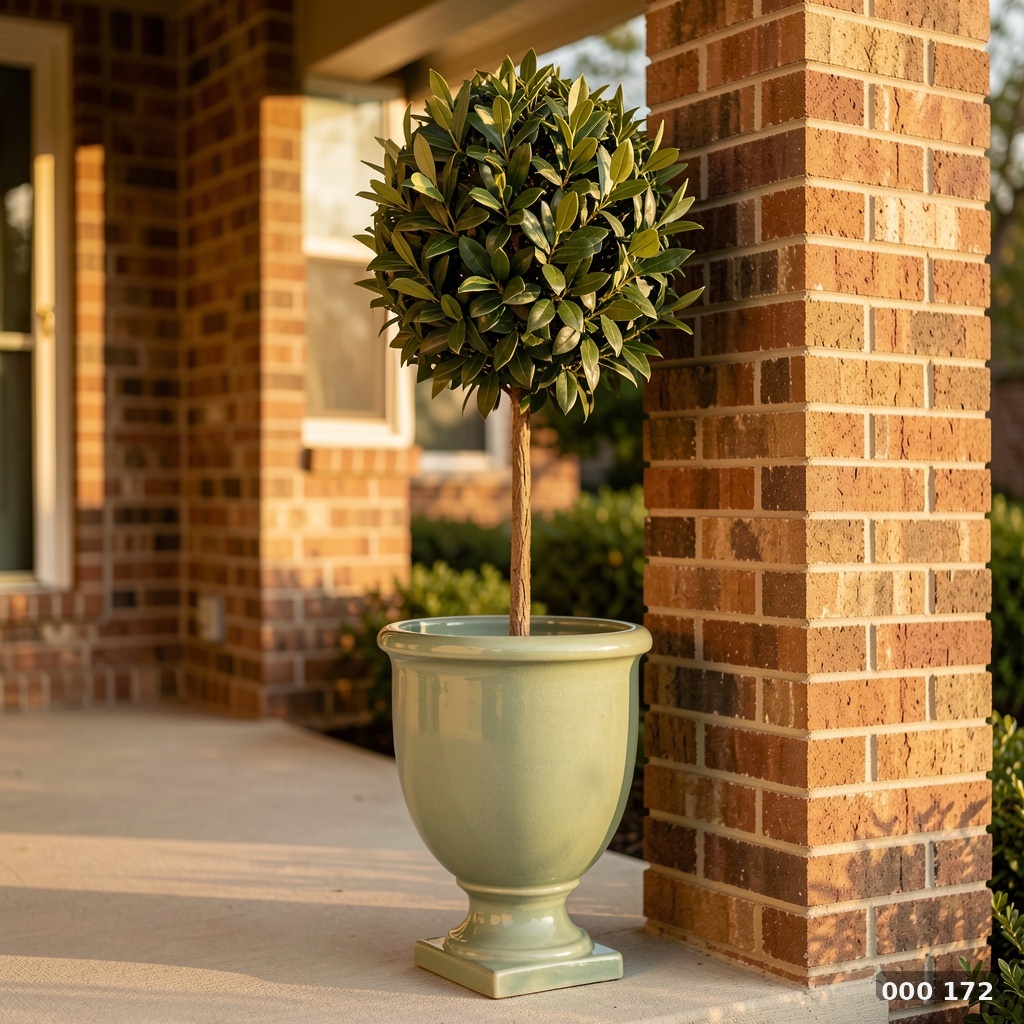
A tall glazed ceramic urn in soft sage holds a single clipped bay laurel topiary. The ball-on-stick form echoes the porch column proportions. No flowers, no trailing plants — just clean green geometry against warm brick. The urn alone carries the composition.
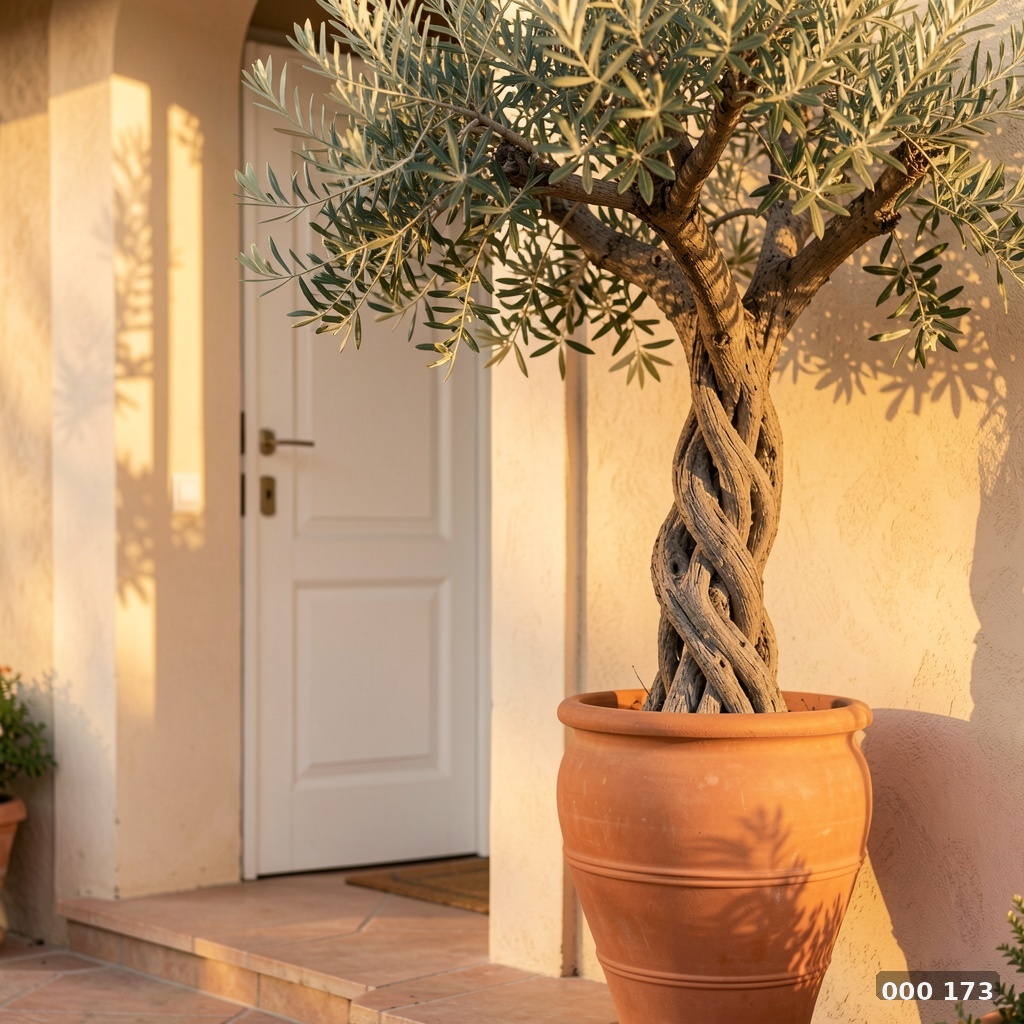
A twisted olive tree rises from a matte terracotta urn beside a white front door. The gnarled trunk tells a story; the silver-green leaves catch afternoon light. One tree, one pot, one perfect spot — all the Mediterranean warmth a porch needs.
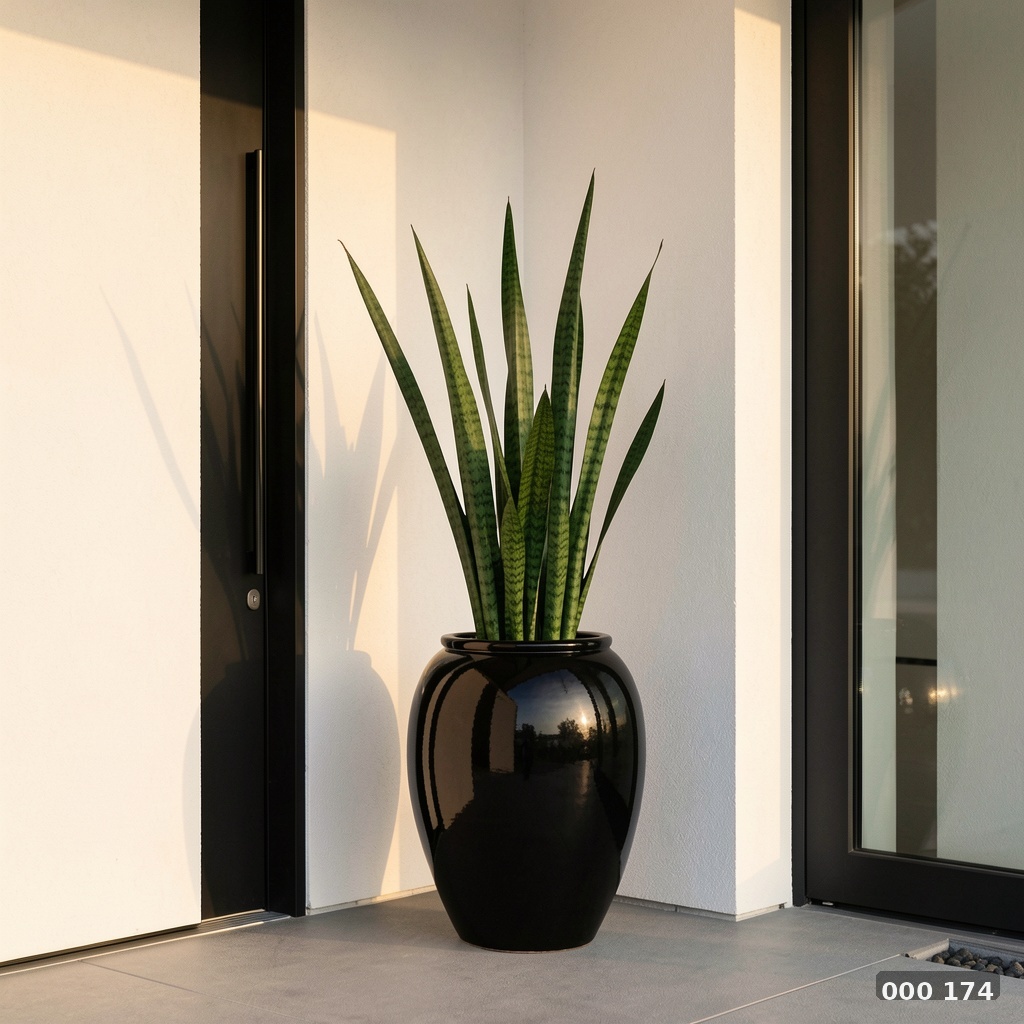
A glossy black ceramic urn with a single snake plant creates a minimalist entry. The upright tendrils echo the vertical lines of the doorframe. Nothing competes, nothing distracts — just black, green, and the clean shape of a modern entrance.
Floor Planter
A large floor-standing planter placed at the doorway acts as a living sculpture — grounded, substantial, impossible to walk past without noticing.
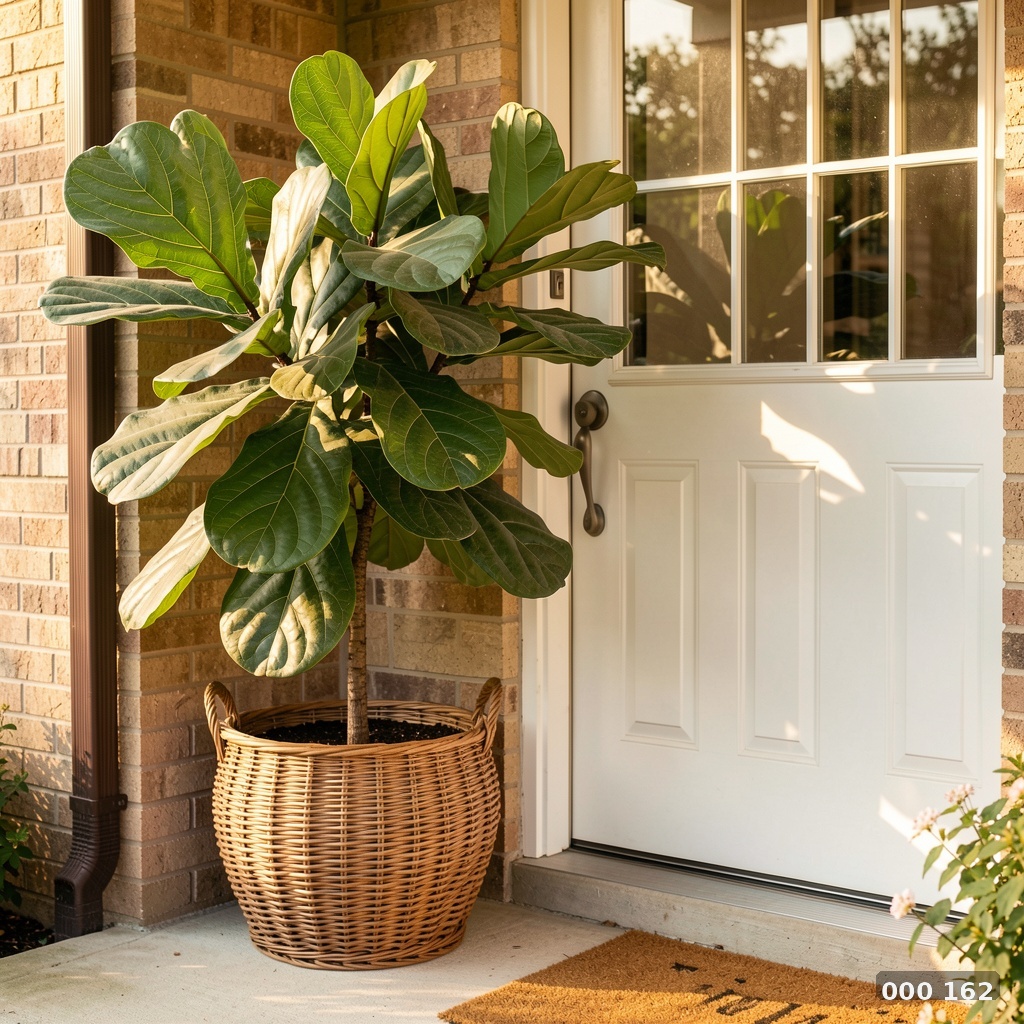
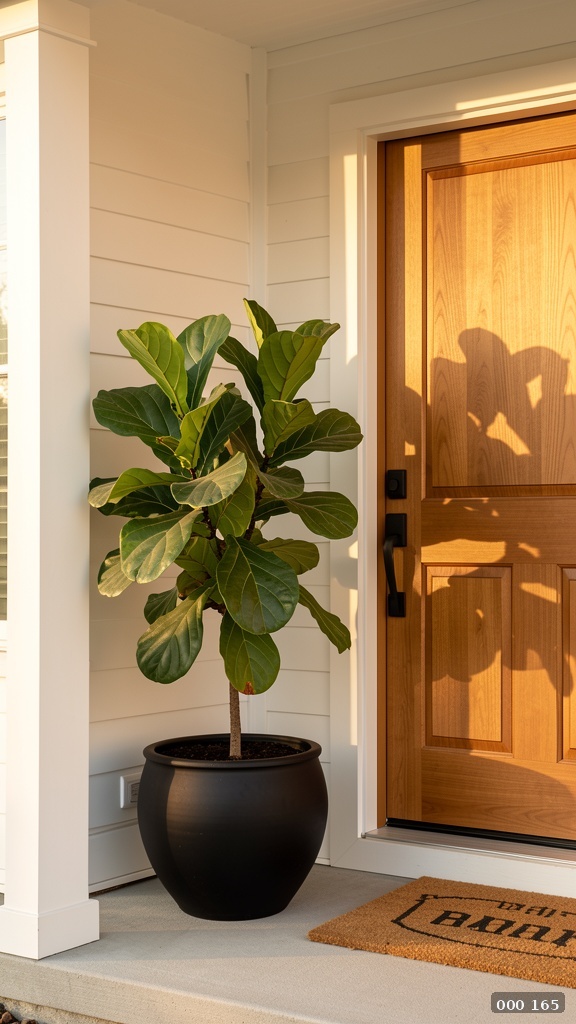
A towering fiddle-leaf fig in a woven basket fills the corner beside the door. The large leaves create a natural canopy at eye level. Floor planters read as furniture — substantial, grounded, making the porch feel furnished rather than decorated.
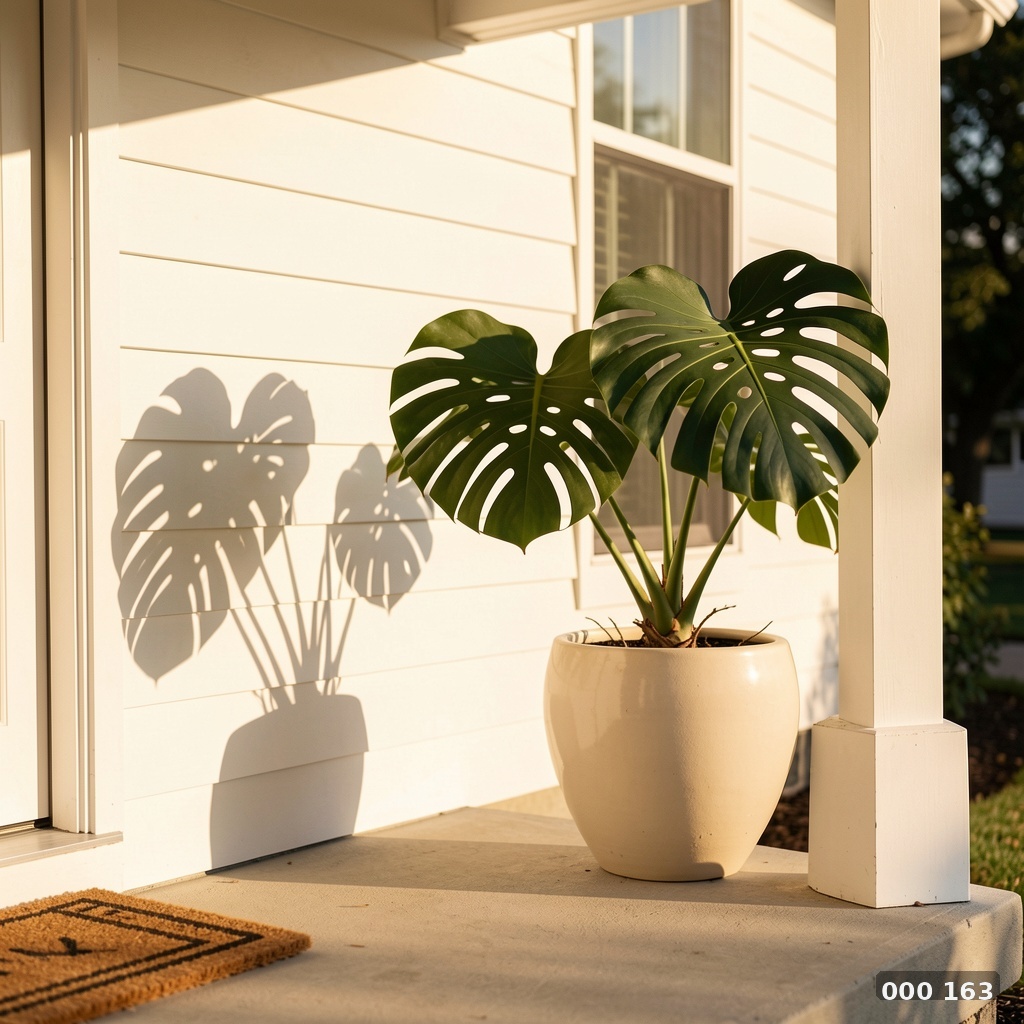
A large monstera in a cream ceramic floor pot anchors the far side of a wide porch. The split leaves create a silhouette against the white house. Seen from the street, it signals that this entrance is intentional — curated, not accidental.
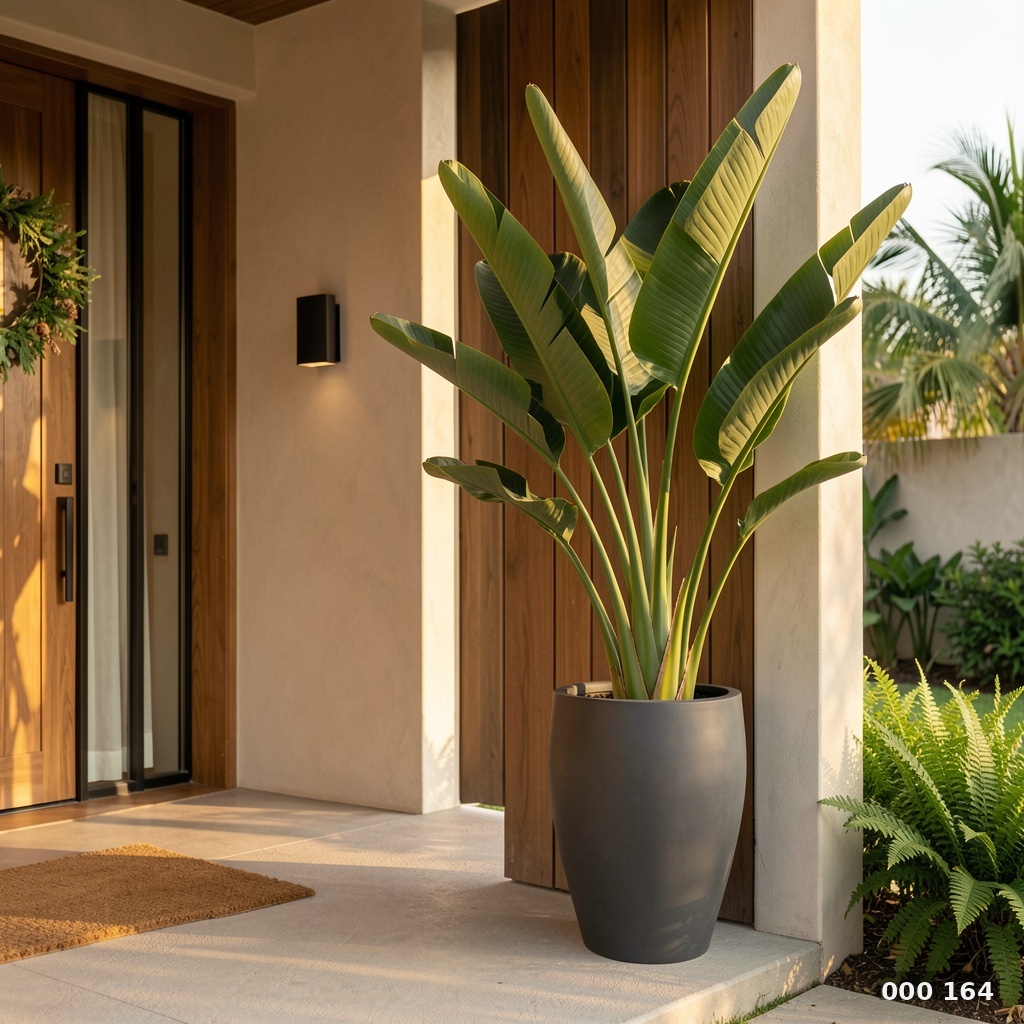
A bird of paradise in a tall matte charcoal pot stands sentinel by the door. The paddle-shaped leaves reach shoulder height, their tropical geometry creating a resort-entry feel. One plant, full height, full drama.
Pedestal Display
Elevating a single plant on a pedestal changes how we see it — the plant becomes art, the pedestal becomes the frame, the porch becomes a gallery.
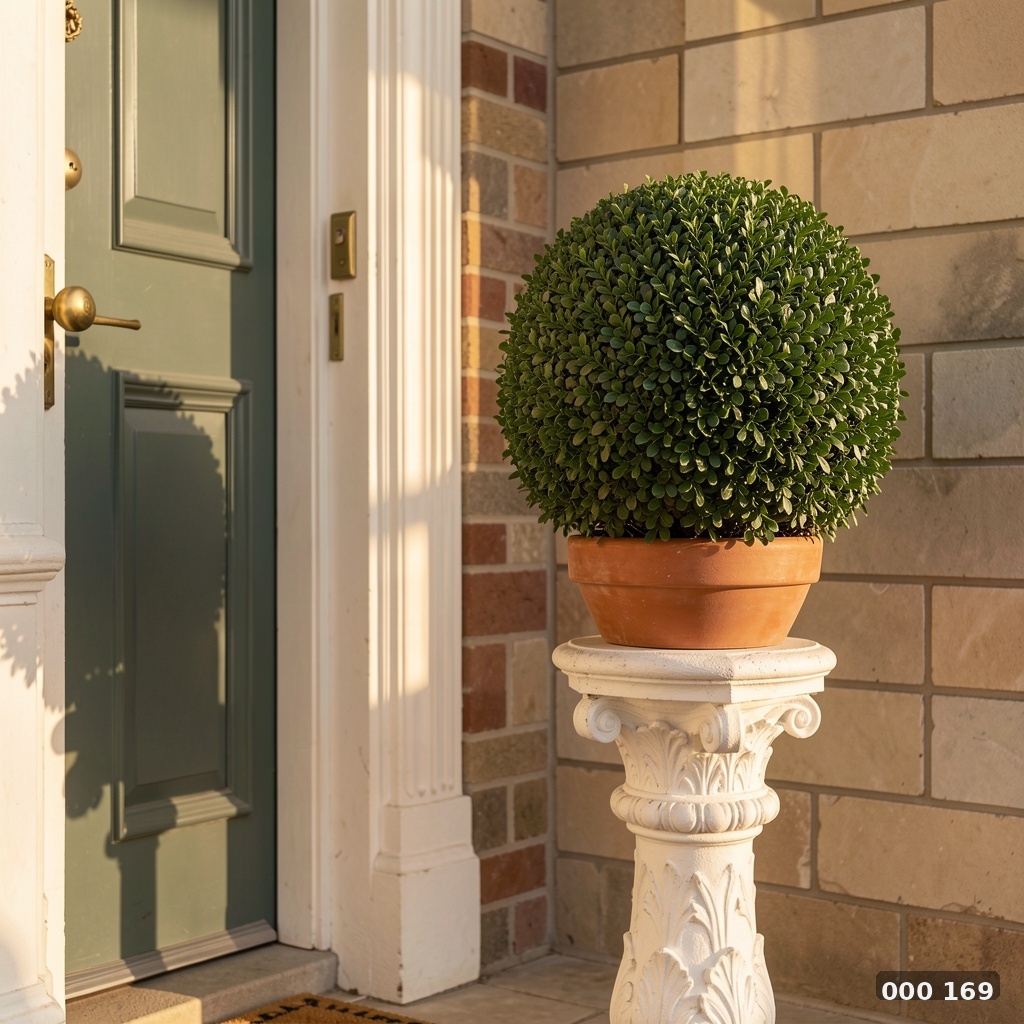
A clipped boxwood sphere in a terracotta pot sits on a white cast-iron pedestal beside the door. The elevation lifts the plant to eye level, making the sphere float against the house wall. It mimics the formality of a classical garden in miniature.
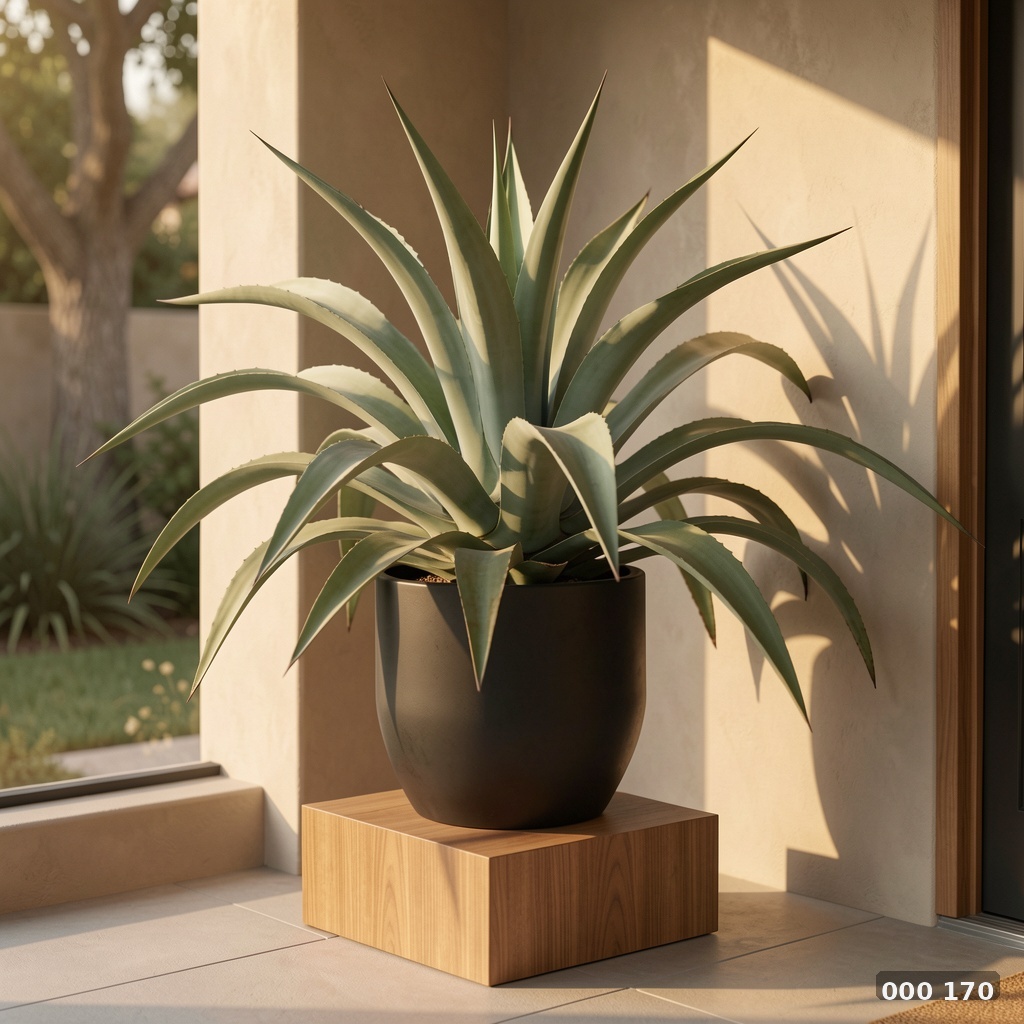
A large Agave attenuata in a matte black pot on a wooden pedestal creates a sculptural moment at the porch corner. The plant's soft arching leaves read as living sculpture, the pedestal as a plinth. The empty space around it makes the statement louder.
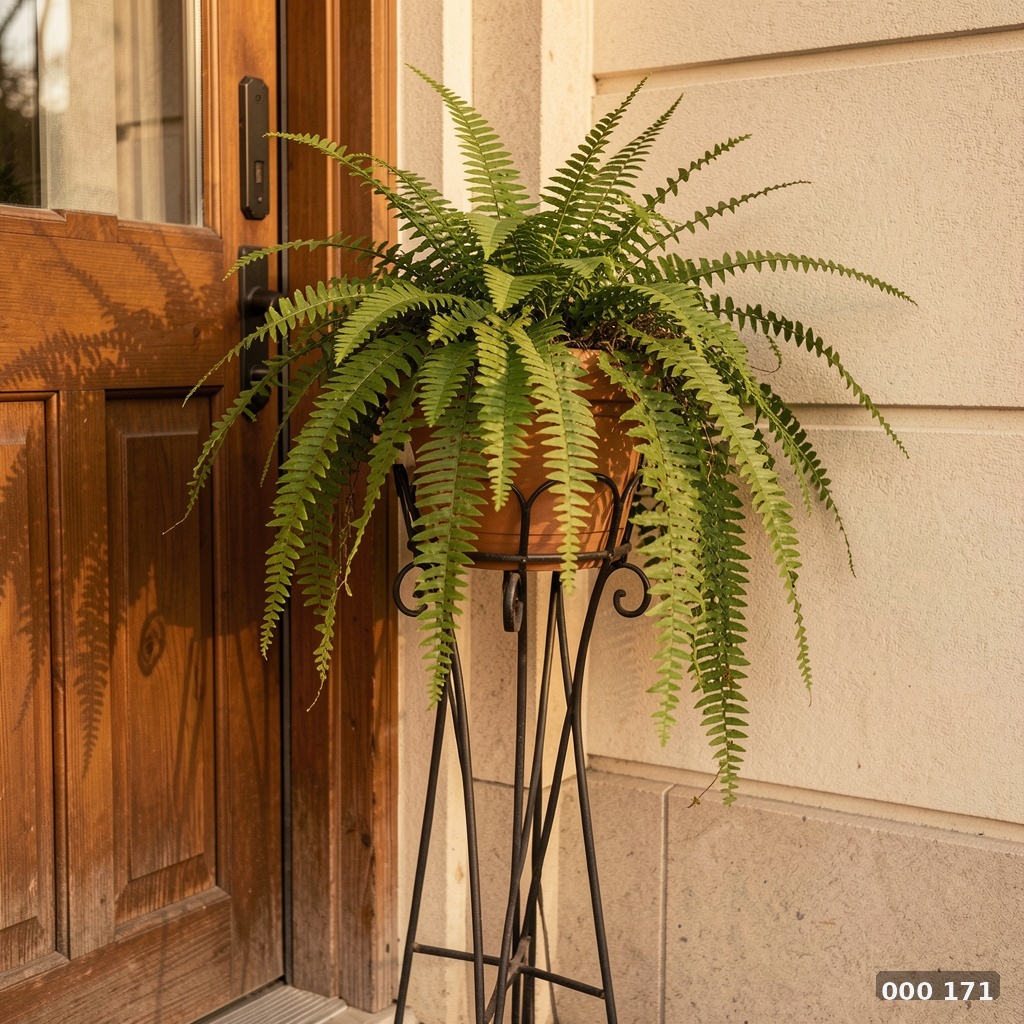
A cascading Boston fern on a tall wrought-iron plant stand at the doorway. The fern spills over the pot edge, softening the iron's strict lines. A single elevated plant creates a vertical garden without covering the wall — the porches answer to art.
Panorama
One plant chosen with care is enough. Here is how a single statement plant — in an urn, on the floor, or on a pedestal — transforms a porch without needing a single companion.
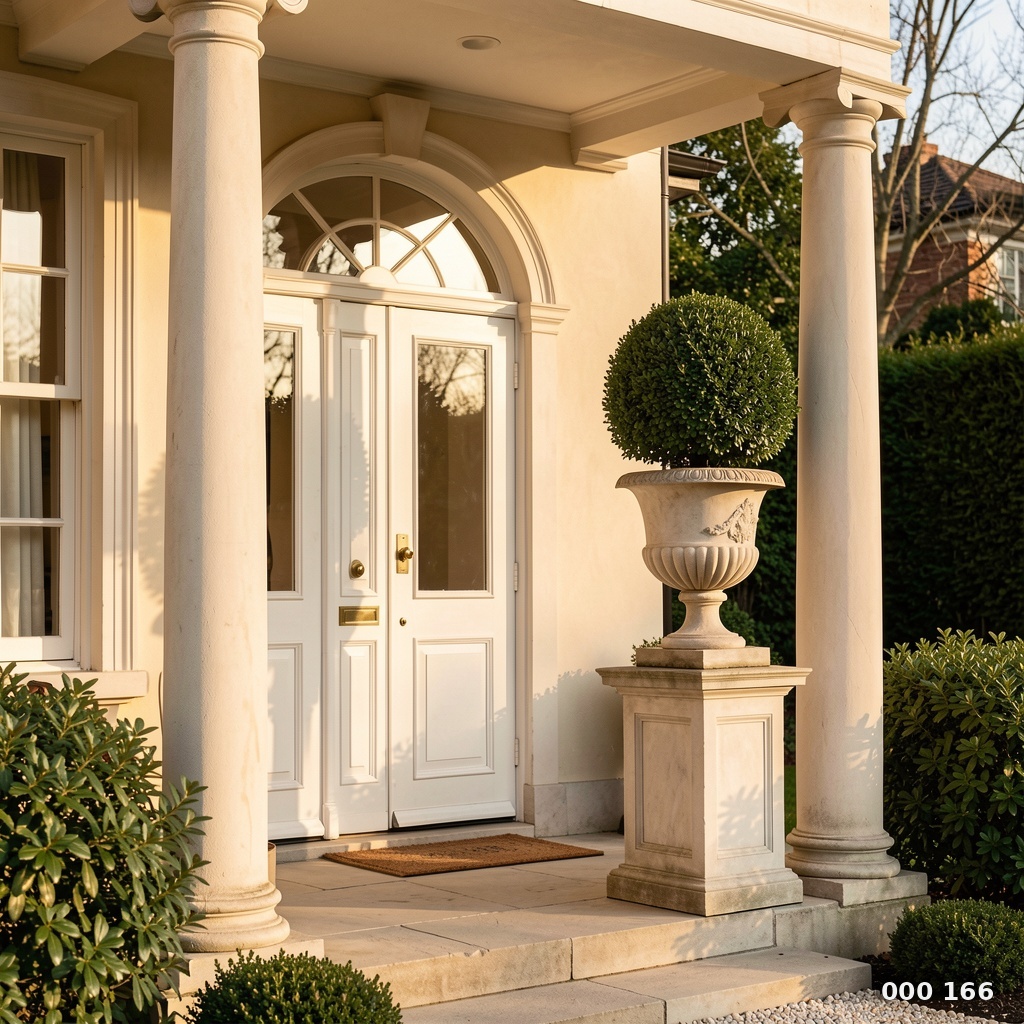
A sage urn with boxwood topiary on a pedestal beside a classical white door. The single plant mirrors the column proportions — round sphere, vertical trunk, rectangular pot. The entire porch becomes a lesson in geometric harmony.
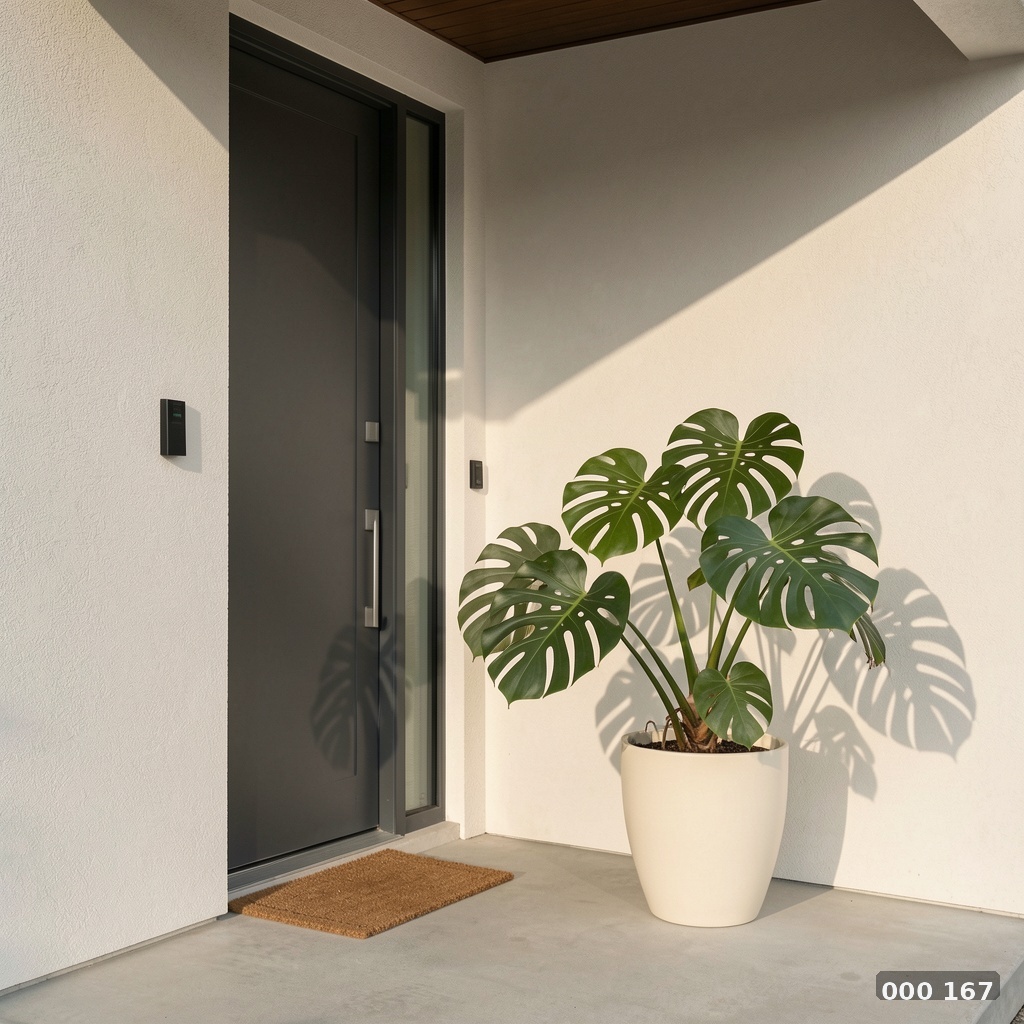
A single monstera in a cream floor pot next to a dark gray door. The split leaves cast shadows on the wall in afternoon light. Nothing else. The modern porch is a gallery for one living sculpture.
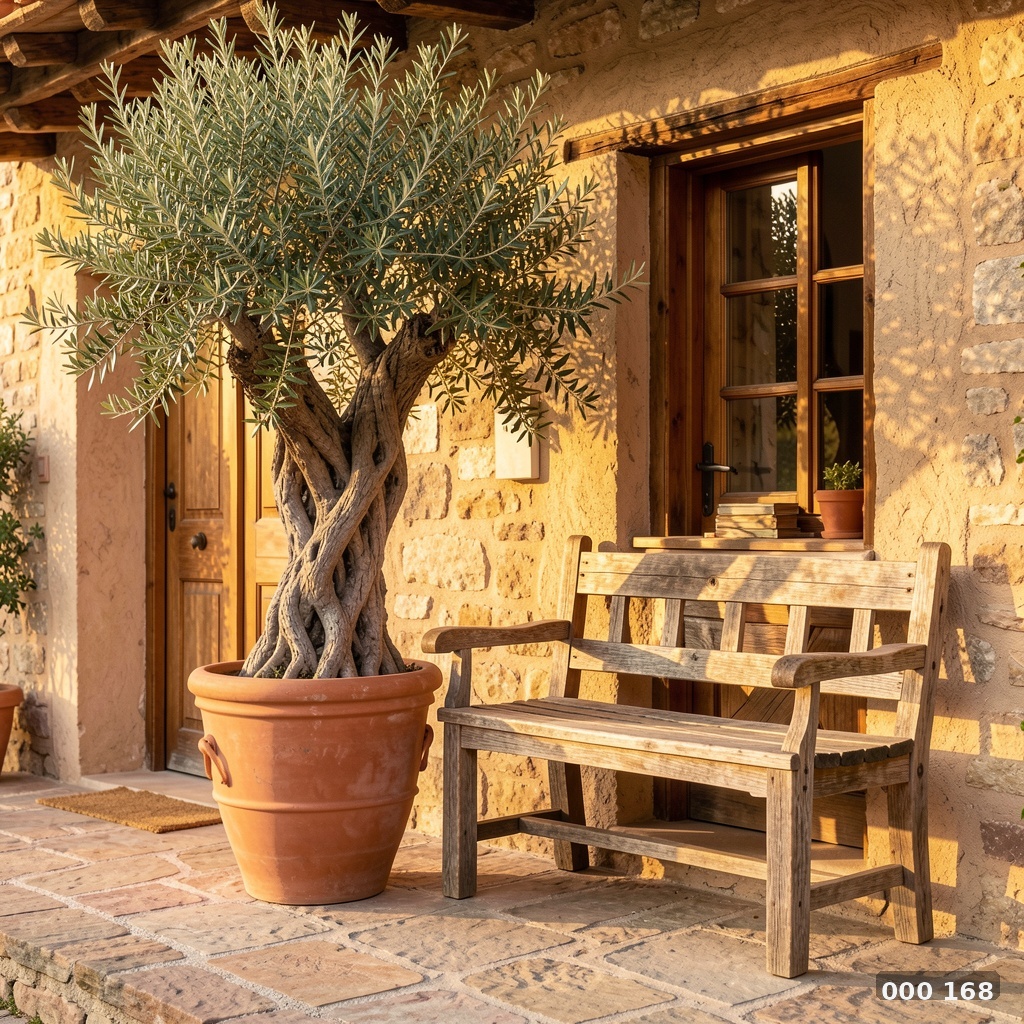
A twisted olive tree in a terracotta urn beside a reclaimed wood bench. The gnarled trunk against the warm wood creates a rustic Mediterranean vignette. One tree, one bench, one perfect afternoon.
Plant Care
A single statement plant needs less care than a mixed arrangement — here is all it asks for.
Watering
Water when top 2 inches of soil feel dry. Large pots retain moisture longer — check with your finger before pouring. Drooping leaves mean thirst. Yellow leaves near the base mean overwatering. Adjust for rain exposure on open porches.
Light
Match your plant to your porch exposure: topiary and olive thrive in full sun, monstera and snake plant prefer bright indirect light, ferns need shade. One plant is easy to move — rotate it seasonally if the light shifts.
Pruning
Topiaries need shaping every 4-6 weeks in growing season. Remove yellow or damaged leaves from all plants at the stem. Single-plant pruning is meditative — ten minutes every two weeks keeps the living sculpture in shape.
Seasonal
Move frost-sensitive plants indoors before first freeze. Repot in spring when roots show at drainage holes. Refresh top 2 inches of soil annually. A single plant is portable — bring it inside for winter and return it to the porch in spring.
FAQ
What is the best single statement plant for a front porch?
It depends on your porch light: topiary boxwood or bay laurel for full sun; fiddle-leaf fig or monstera for bright indirect; snake plant or ZZ for low light; fern for shade. The best plant is one that thrives in your specific conditions — a struggling plant never reads as a deliberate statement.
What size pot should I use for a single statement plant?
Go bigger than you think. A pot that is 14-20 inches wide for floor plants, 10-14 inches for pedestal plants. Single plants need room to grow and a large pot grounds the visual weight. Terracotta is classic; glazed ceramic reads as modern; matte black or white suits any style.
Is one plant really enough to make a porch look designed?
Absolutely — if it is scaled right. A small potted plant on a large porch looks accidental. A 4-foot fiddle-leaf fig in a 16-inch pot on a 5-foot porch looks curated. The ratio matters: the plant should fill roughly one-third of the vertical space beside the door.
Can I use faux plants for a single statement look?
Yes — high-quality faux trees (fiddle-leaf, olive, monstera) are nearly indistinguishable from real at a distance and need zero maintenance. Use faux for low-light porches or as winter backup. A single faux statement plant in a real ceramic pot reads as intentional design, not as fake decor.
How do I style the area around a single statement plant?
Less is more. Leave at least 12 inches of empty space on each side. Add one small bench or doormat at the base — but no competing pots, no garden gnomes, no clutter. The emptiness makes the plant look intentional rather than lonely.
Should I place the single plant centered or off-center?
Off-center for dynamic asymmetry, centered for formal symmetry. Beside the door (not in front of it) is the classic placement — the plant frames the entrance without blocking it. A centered urn works for wide, symmetrical porches.
What is the best pedestal height for a statement plant?
24-30 inches is ideal — it lifts the plant base to waist or chest height. The plant itself should then reach eye level (60-66 inches total). This makes the plant feel like a work of art on a gallery plinth, not just a pot on a stand.
How does a single statement plant compare to a mixed arrangement?
A single plant is higher impact per square foot, lower maintenance, and reads as more intentional. A mixed arrangement shows off variety; a single plant shows off confidence. If you can choose one perfect plant, you do not need twelve adequate ones.
Related
Download the Complete Design Checklist
Get a printable single statement plant checklist: variety guide, pot sizing chart, placement tips, and seasonal care calendar — ready to take to the nursery.