
This post contains affiliate links. As an Amazon Associate I earn from qualifying purchases.
Ornamental Grass — Wind, Texture, Year-Round Structure
Swaying plumes, soft movement, and architectural forms that make your porch feel alive with every breeze.
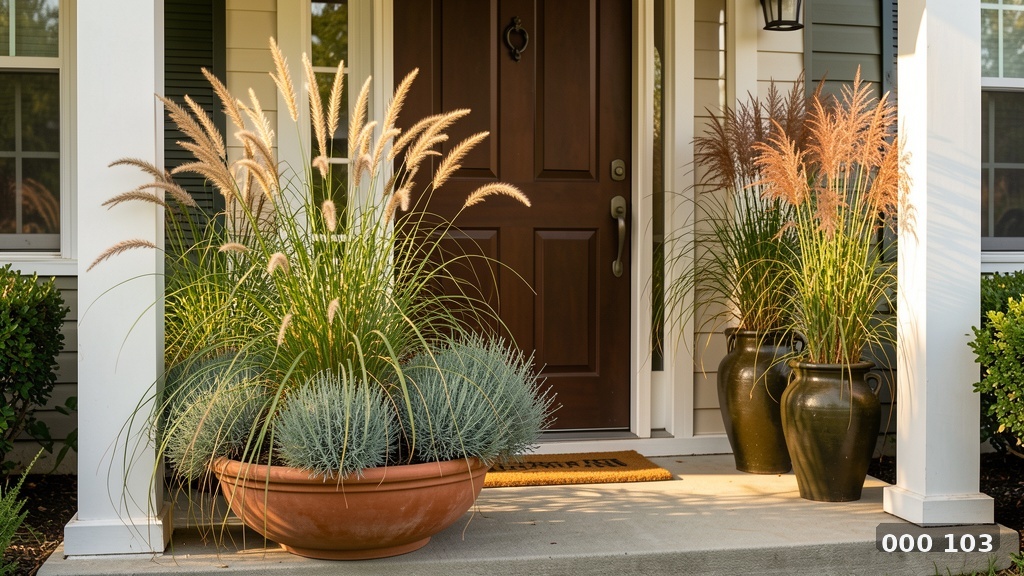
Design Philosophy
Ornamental grasses do what flowers cannot: they move. In a porch design landscape of static foliage, grasses add an animating force — each breeze sets them dancing, each golden-hour ray transforms them into glowing filaments. They are the quietest, most graceful performers on any porch.
Statement Grass Bowl
A single dramatic grass arrangement at the doorstep creates an immediate visual anchor — tall plumes rising above a low carpet of sedge or fescue.
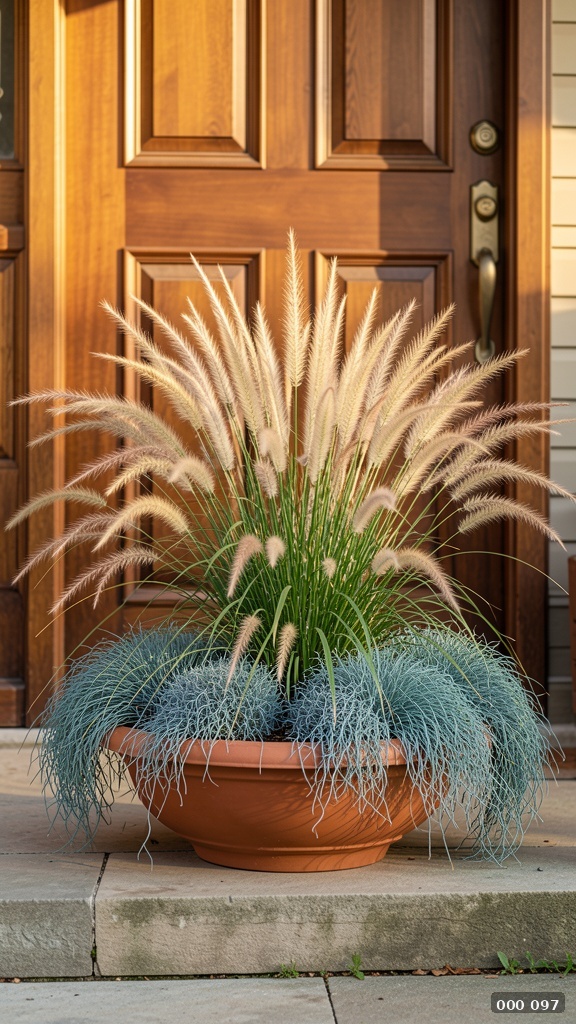
A wide terracotta bowl holds a central clump of Pennisetum 'Hameln' fountain grass — soft, arching blades that reach three feet and sway like wheat in the wind. Blue fescue mounds at the base, spilling gently over the rim. Each breeze rearranges the arrangement, giving it a living, breathing quality no static planter can match.
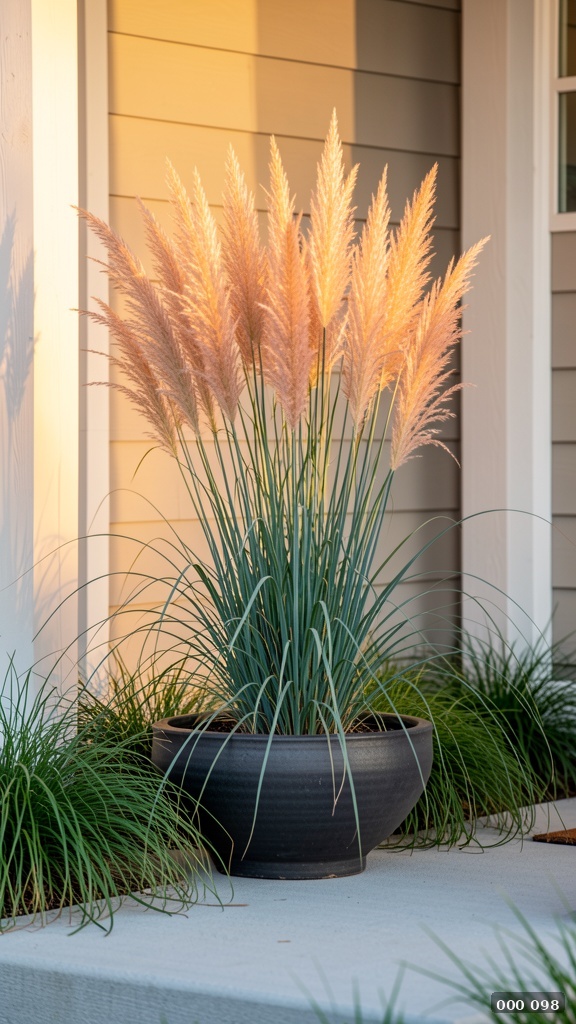
A deep charcoal ceramic bowl showcases Panicum 'Northwind' switchgrass — vertical blue-green blades rising straight up, topped with airy panicles that catch the low sun and glow golden-pink at dusk. Low sedge carpets the base in deep green. The vertical precision of the switchgrass reads as confident and sculptural against a pale porch wall.
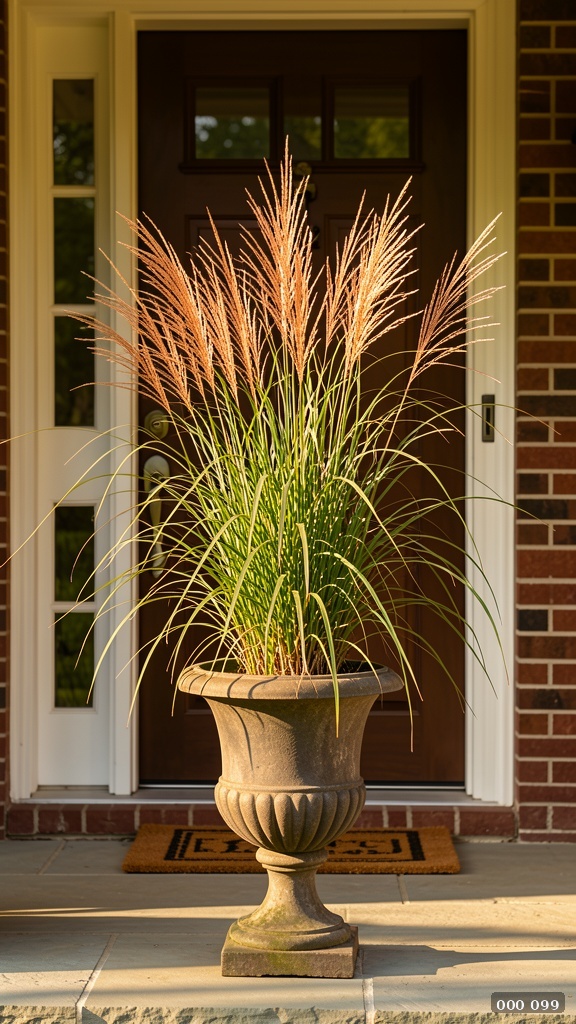
A tall urn planter holds a single specimen of Miscanthus sinensis 'Gracillimus' — maiden grass with fine-textured blades and copper-pink plumes that rise on slender stems. The upright vase-shape of maiden grass makes it the perfect thriller for a symmetrical doorstep arrangement. Two identical urns flanking the door: instant symmetry, all-season structure.
Step & Corner Clusters
Grouped grass pots on steps and corners create a layered meadow effect — each pot at a different height with grasses of varying textures and colors.
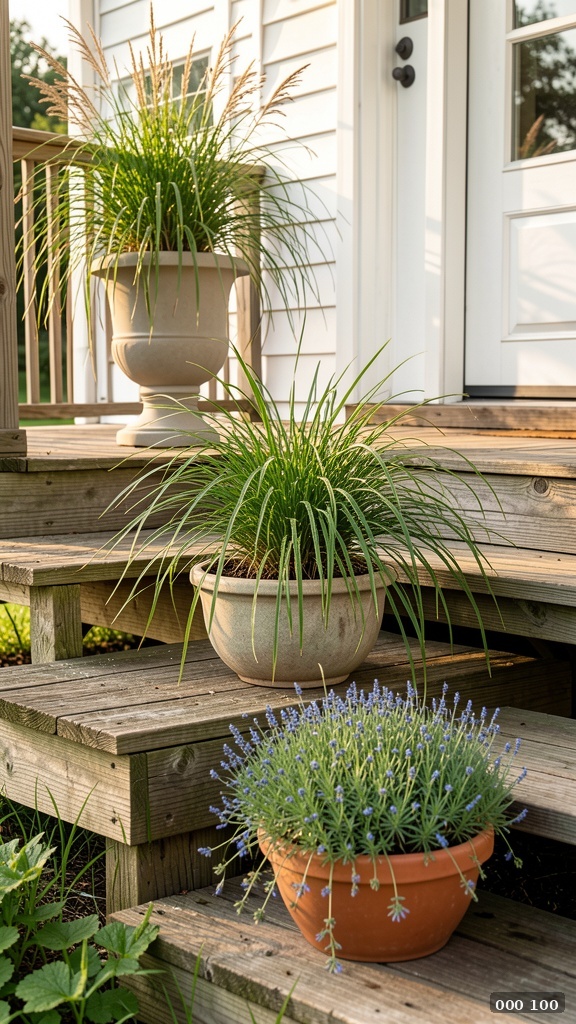
Three pots graduated across porch steps: a tall fiberglass urn with Miscanthus at the top step, a mid-height ceramic bowl with fountain grass on the middle step, a low terracotta dish with blue fescue on the bottom step. The cascading heights mirror a natural hillside meadow. Morning dew beads on the grass blades and catches the early sun.
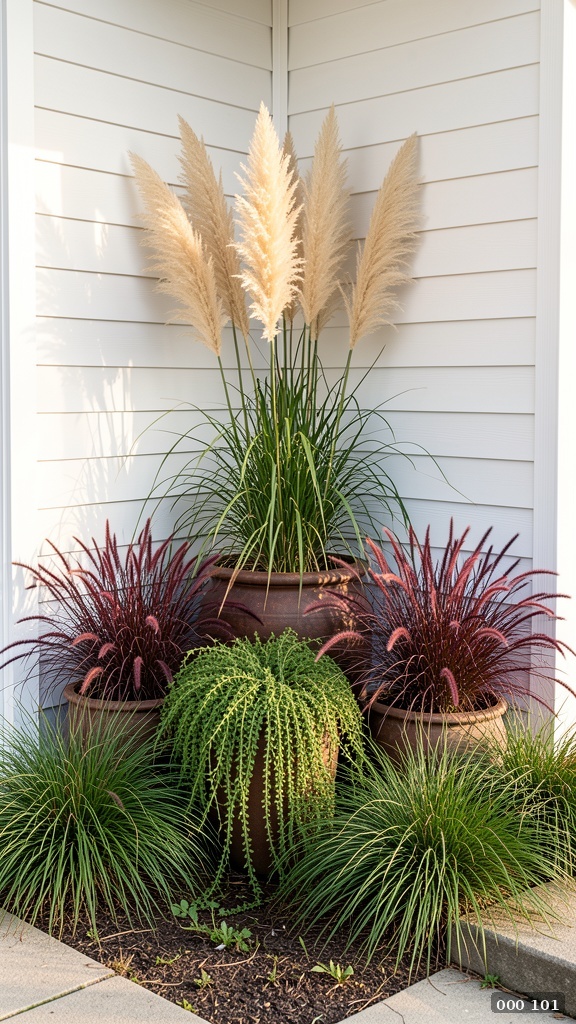
A corner cluster of five grass pots creates a soft privacy screen: tall pampas grass in a large planter in the corner, Japanese forest grass cascading in front, purple fountain grass adding warm burgundy tones, and two mounds of sedge framing the base. The layered textures read like a miniature prairie margin.
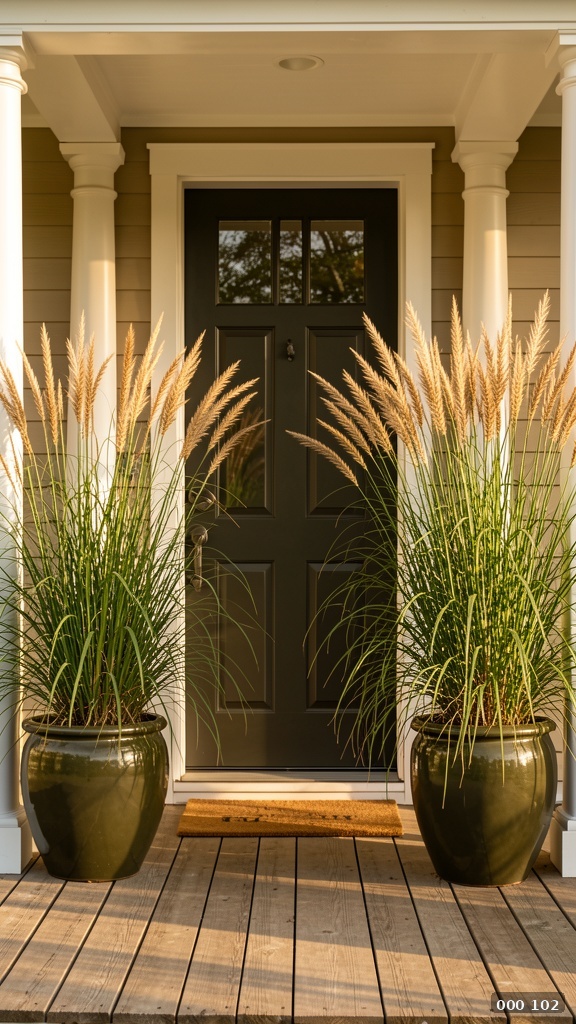
Matching dark olive ceramic pots flanking the door, each planted with Karl Foerster feather reed grass — the most versatile upright grass for containers. Its wheat-like seed heads rise to five feet in late spring and remain ornamental through winter snow. The vertical columns frame the doorway like natural pillars that whisper in the wind.
Vertical Accents
Narrow porches can still enjoy grasses — vertical wall planters, tall specimen pots, and climbing-friendly grasses create lush green walls.
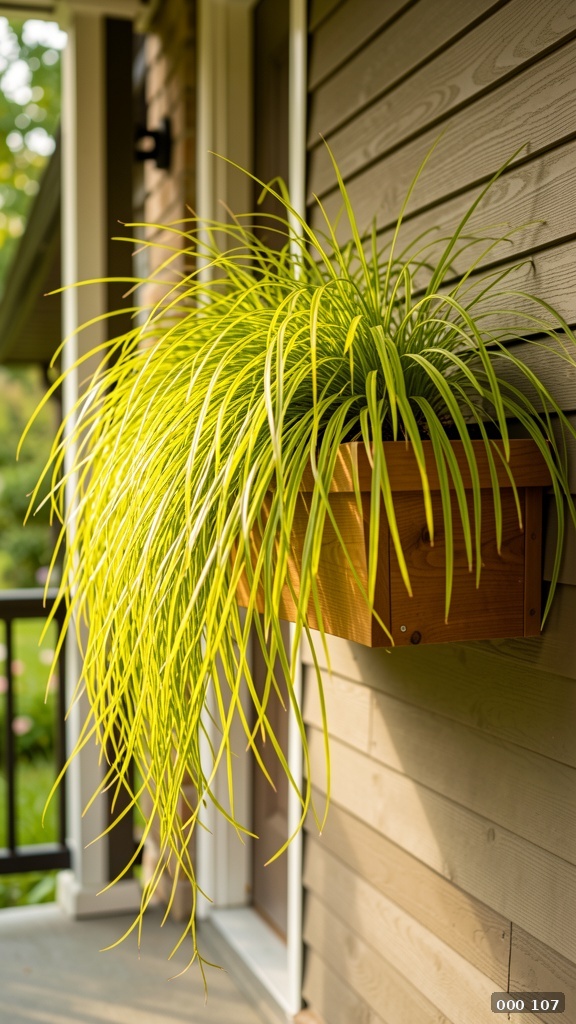
A wall-mounted cedar planter box filled with Japanese forest grass (Hakonechloa macra 'Aureola') — its cascading golden-green blades spill over the front edge in a soft waterfall. The bright chartreuse color lights up a shaded porch corner. At eye level, every breeze creates a slow-motion ripple across the grass surface.
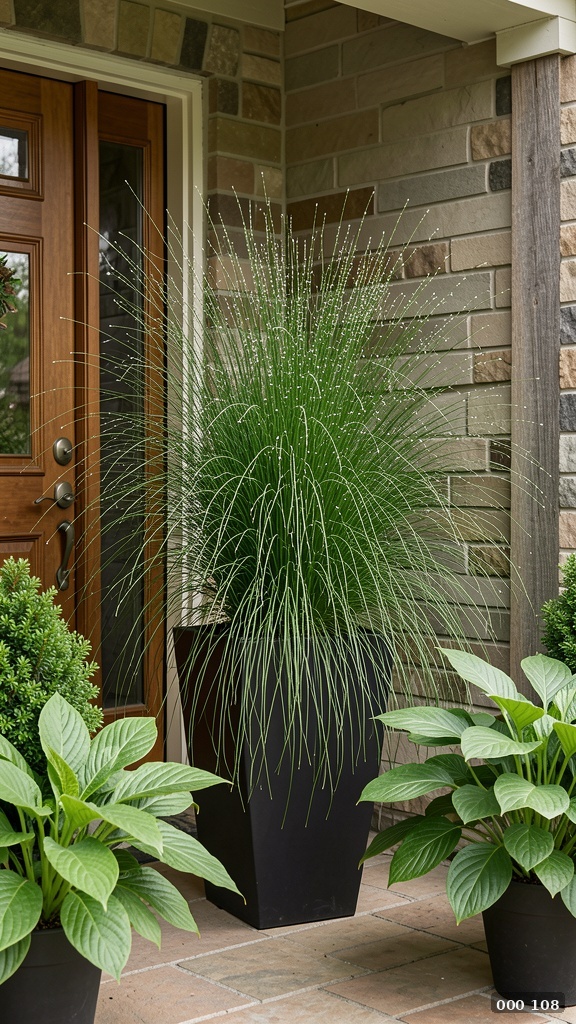
A tall, narrow planter holding fiber-optic grass (Isolepis cernua) — its fine, thread-like stems with tiny white tips at the top crowd together like a soft green fountain. Placed next to the front door, it creates a living, tactile welcome. The fine texture contrasts beautifully with broad-leafed evergreens in neighboring pots.
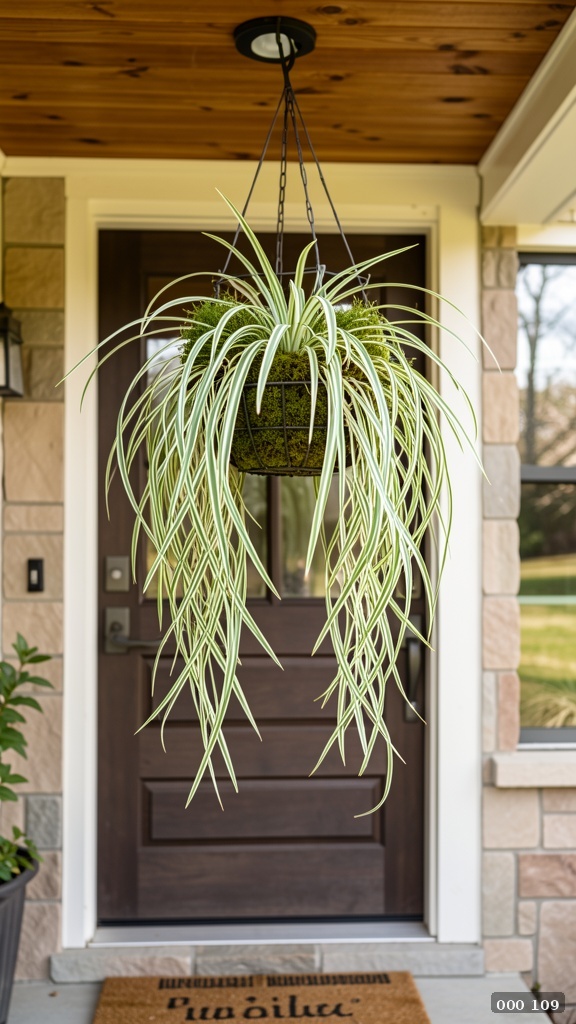
A hanging wire basket lined with sphagnum moss and planted with Carex 'Feather Falls' — a variegated sedge that trails white-and-green blades three feet down. The cascading shape mimics weeping plants but with the resilience of grass. Hang it above the doorstep as a living curtain that parts in the wind.
Panorama
When the statement bowl anchors the doorstep, clustered pots line the stairs, and vertical grasses frame the entry — your porch becomes a wind-swept landscape in miniature.
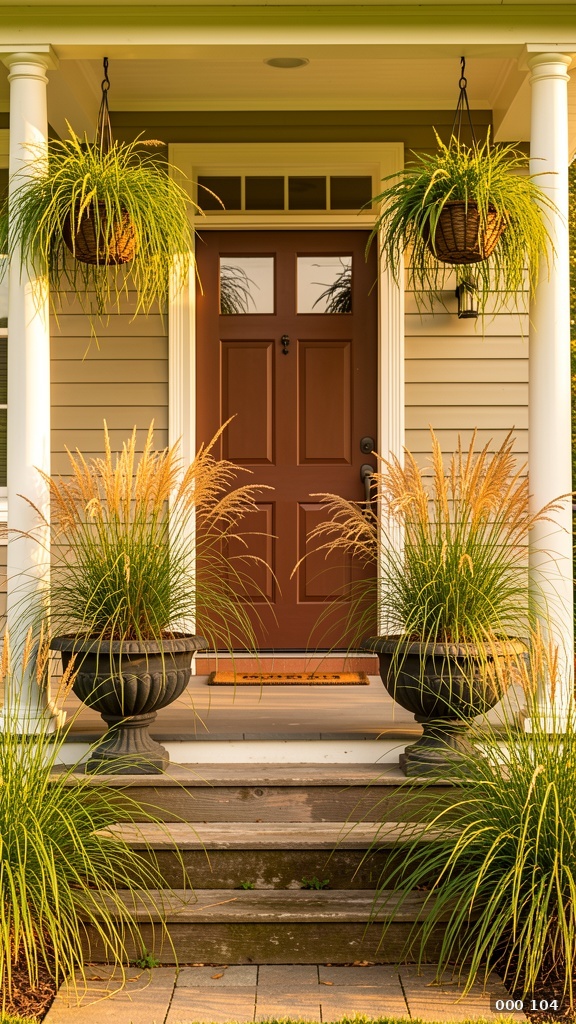
A miscanthus urn flanking the door, fountain grass bowls on both sides of the top step, sedge baskets hanging from the eaves. The grasses move in sequence as the wind passes — tall first, then mid, then low. The entire porch reads as a single, unified meadow fragment, textured and alive from every angle.
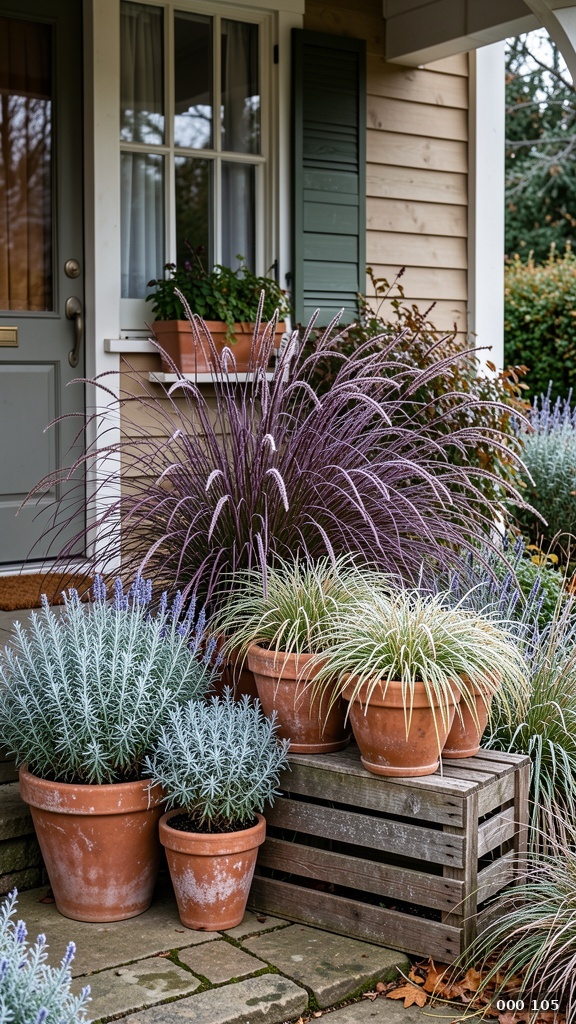
Cottage-style: a mix of purple fountain grass, blue fescue, and Japanese forest grass in weathered terracotta pots of varying sizes. A salvaged wooden crate holds three sedge pots at different heights. The chaotic, layered look reads as effortless cottage charm. Frost on the grass blades in autumn creates a crystalline display.
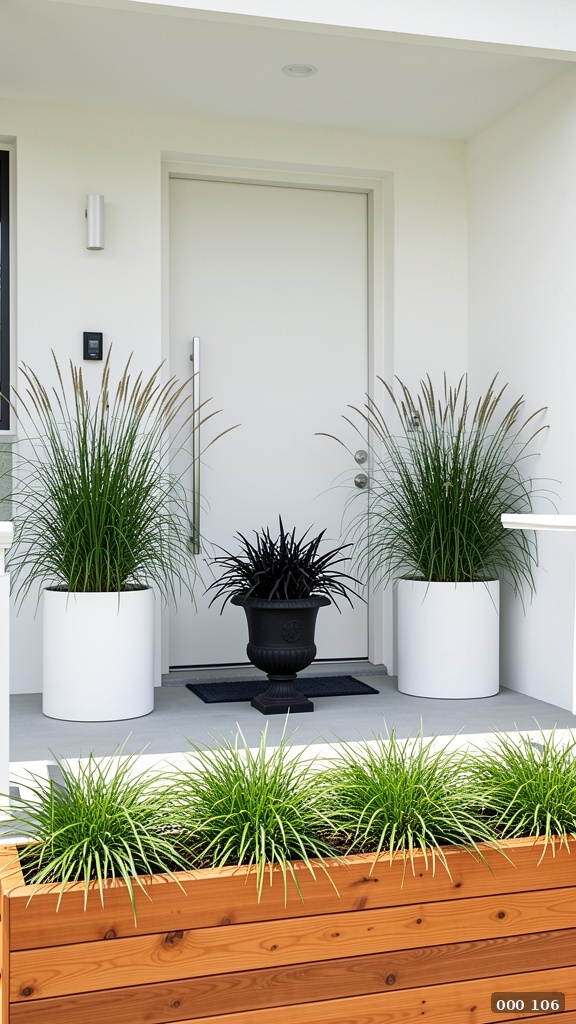
Modern minimal: two white cylindrical pots with Karl Foerster grass flanking the door, a single black urn with black mondo grass as a focal point, and a horizontal cedar planter with Hakone grass running along the porch railing. Clean lines, intentional negative space, grasses doing all the texture work. Proof that less is more when the plant itself is the feature.
Plant Care
Ornamental grasses are among the lowest-maintenance plants for containers — they thrive on neglect and reward you with year-round structure.
Watering
Grasses in containers need deep watering 2-3 times per week in summer. Let the soil dry between waterings — grasses prefer dry roots to wet ones. In winter, reduce to once every 1-2 weeks. Signs of thirst: leaf tips brown and curl inward.
Light
Most ornamental grasses need full sun (6+ hours) for best color and bloom. Fountain grass, switchgrass, and miscanthus are sun-lovers. For shaded porches, choose sedge (Carex), Japanese forest grass (Hakonechloa), or bottlebrush grass (Elymus).
Pruning
Cut warm-season grasses to 4-6 inches in early spring before new growth emerges. Leave the dried foliage through winter for visual interest and wildlife habitat. Cool-season sedges need only a light trim to remove spent blades.
Seasonal
Spring: cut back, divide if crowded, repot with fresh soil. Summer: peak growth, regular watering, fertilize once at midsummer. Fall: leave dried foliage for structure and winter interest. Winter: move to a protected area if pot material is frost-sensitive.
FAQ
What are the best ornamental grasses for front porch containers?
Fountain grass (Pennisetum) for soft texture, Karl Foerster feather reed grass for upright drama, blue fescue for low mounds, Japanese forest grass for cascading shade gardens, and purple fountain grass for warm burgundy accents. Choose 2-3 varieties for visual depth.
Do ornamental grasses stay green in winter?
Warm-season grasses (miscanthus, switchgrass, fountain grass) turn golden-tan in fall and stay upright through winter. Evergreen grasses (blue fescue, sedge) stay green in mild winters. Neither goes fully dormant in containers the way perennials do — they retain their structure.
How tall do ornamental grasses get in pots?
In containers, grasses reach 60-80% of their in-ground height. Fountain grass maxes at 2-3 feet, miscanthus at 4-5 feet, Karl Foerster at 4 feet, blue fescue at 12 inches. Taller grasses (miscanthus, pampas) need larger pots — at least 16 inches wide and deep.
Can I mix grasses with flowering plants?
Absolutely — grasses are the best companion plants in container design. Purple fountain grass pairs beautifully with orange zinnias or yellow rudbeckia. Blue fescue complements pink echeveria or white petunias. Grasses provide the texture backdrop that makes flowers pop.
Do ornamental grasses attract pests?
Grasses have very few pest problems. Spider mites can appear in hot, dry conditions — hose them off. Deer typically avoid ornamental grasses. The main issue is fungal disease in wet containers — ensure drainage holes and avoid over-watering.
What pot size do grasses need?
Small grasses (fescue, sedge): 10-12 inch pots. Medium (fountain grass, switchgrass): 14-16 inch pots. Large (miscanthus, pampas): 18-24 inch pots. Always use pots with drainage holes. Add 2 inches of gravel at the bottom for root health.
How long do ornamental grasses live in containers?
Grasses in containers typically need division every 2-3 years. When the center of the clump dies out or the pot becomes root-bound, divide in early spring: lift, split into 3-4 sections, replant with fresh soil. This rejuvenates the grass and gives you free plants.
Can I overwinter ornamental grass pots?
Colder than zone 6, move pots to a sheltered spot against the house or an unheated garage. Wrap large pots with burlap for insulation. In zones 8+, grasses can stay in place year-round. Cut back in spring, not fall — the dried foliage protects the crown.
Related
Download the Complete Design Checklist
Get a printable ornamental grass guide: best varieties for containers, pot size chart, seasonal care calendar, and a complete shopping list.