
This post contains affiliate links. As an Amazon Associate I earn from qualifying purchases.
Tropical Giant Leaves — Bold Foliage for Your Front Porch
Massive monstera, fan palms, and banana leaves turn your entry into a resort-style escape. Big leaves, bigger presence — your porch becomes the neighborhood destination.
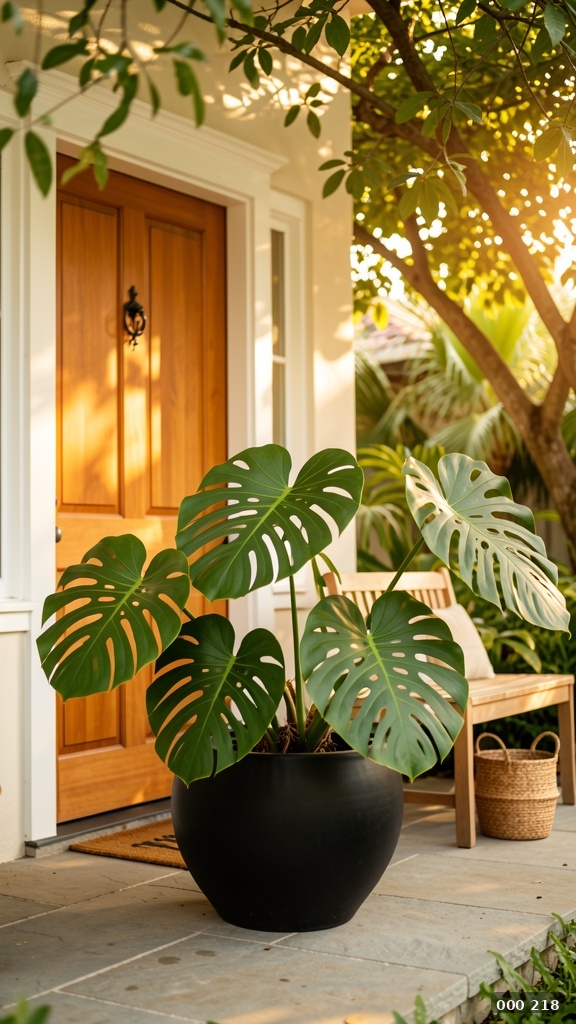
Why This Plant
Tropical leaves rewrite your porch's scale. A single monstera leaf spans two feet — it makes a narrow entry feel expansive just by existing. The emotional shift is immediate: your concrete step becomes a veranda, your screen door opens onto a retreat. No waiting for growth, no fussing with blooms. The leaves themselves are the statement.
Tropical Bowl
A wide bowl overflowing with monstera, fern, and palm creates an instant focal point at your doorstep — bold enough to stop visitors mid-stride.
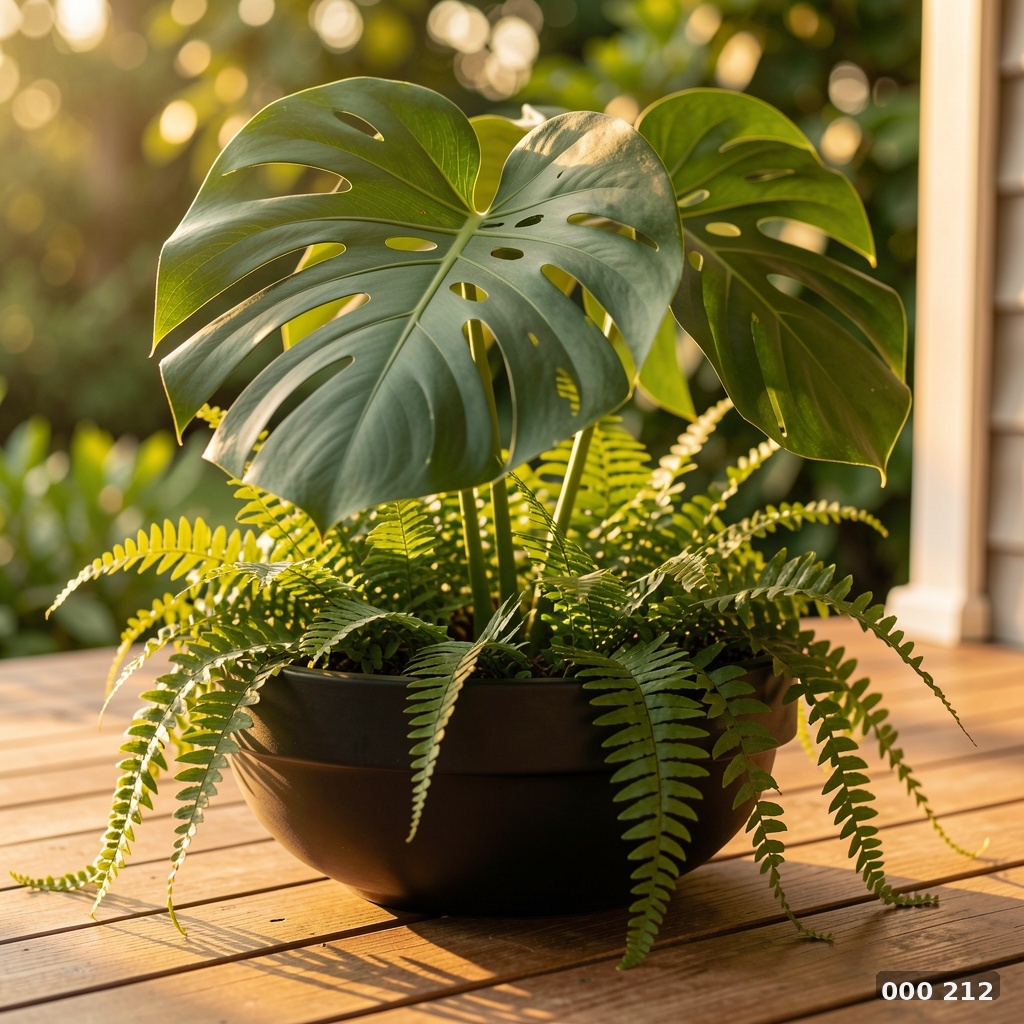
A matte black ceramic bowl centers a large monstera at the doorstep. Split fronds fan outward while Boston ferns soften the edges. The dark pot anchors the visual weight — the leaves float above it like green architecture.
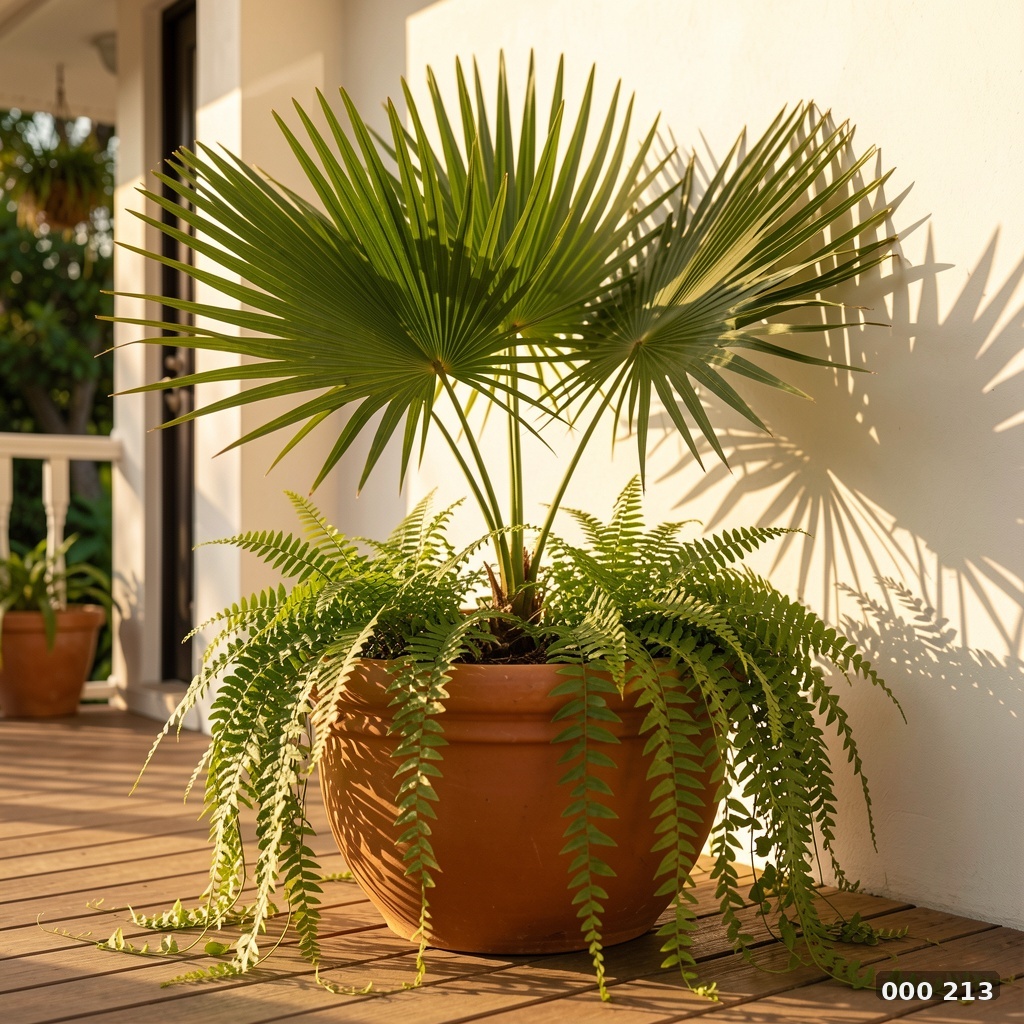
A wide terracotta bowl pairs a fan palm with cascading asparagus fern. The fan shape repeats the roofline's triangle, the fern spills to bridge container and ground. The combination feels architecturally intentional, not random.
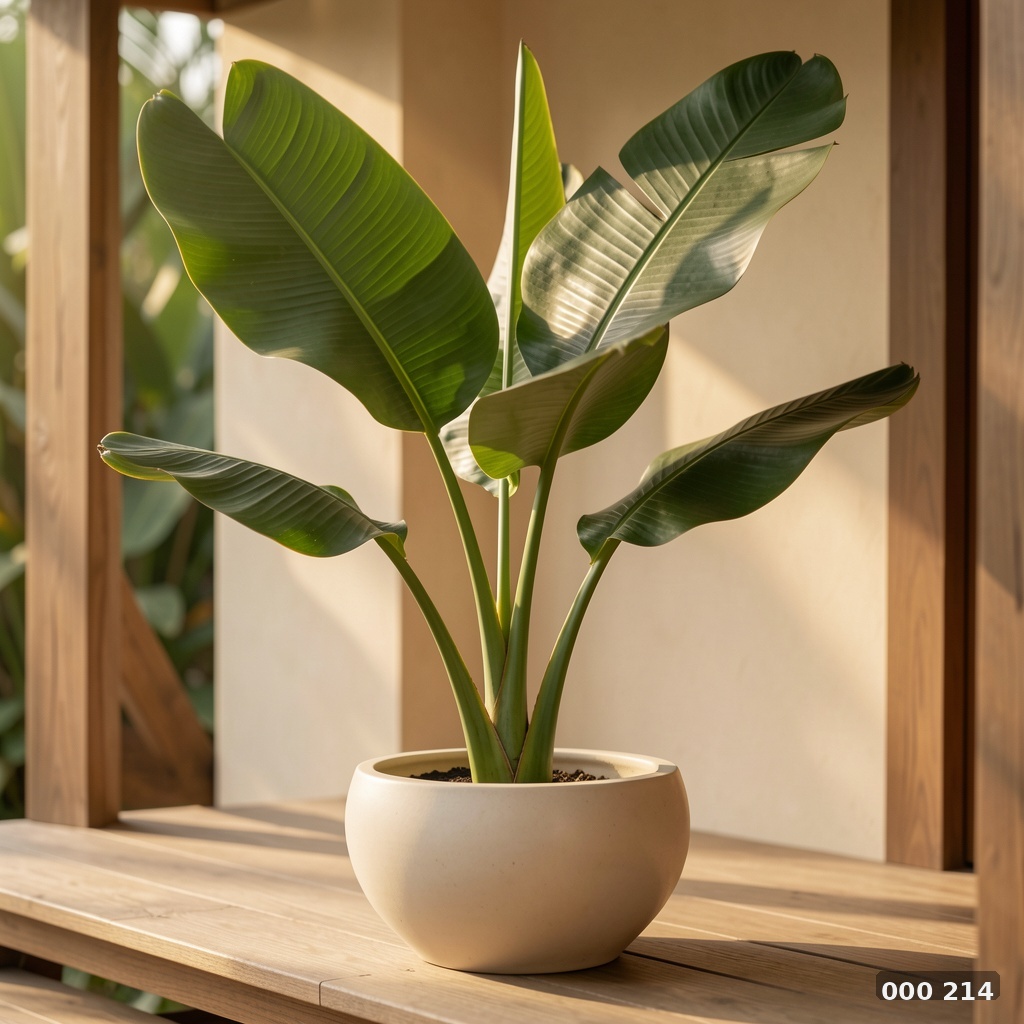
A single banana plant in a cream ceramic bowl makes the purest statement. Each unfurling leaf adds a new sculptural layer. No companions needed — the leaf itself is the entire composition, dramatic and clean.
Canopy Clusters
Grouped pots at varying heights create a layered tropical canopy — smaller plants in front, giants behind — that frames your doorway like a living proscenium.
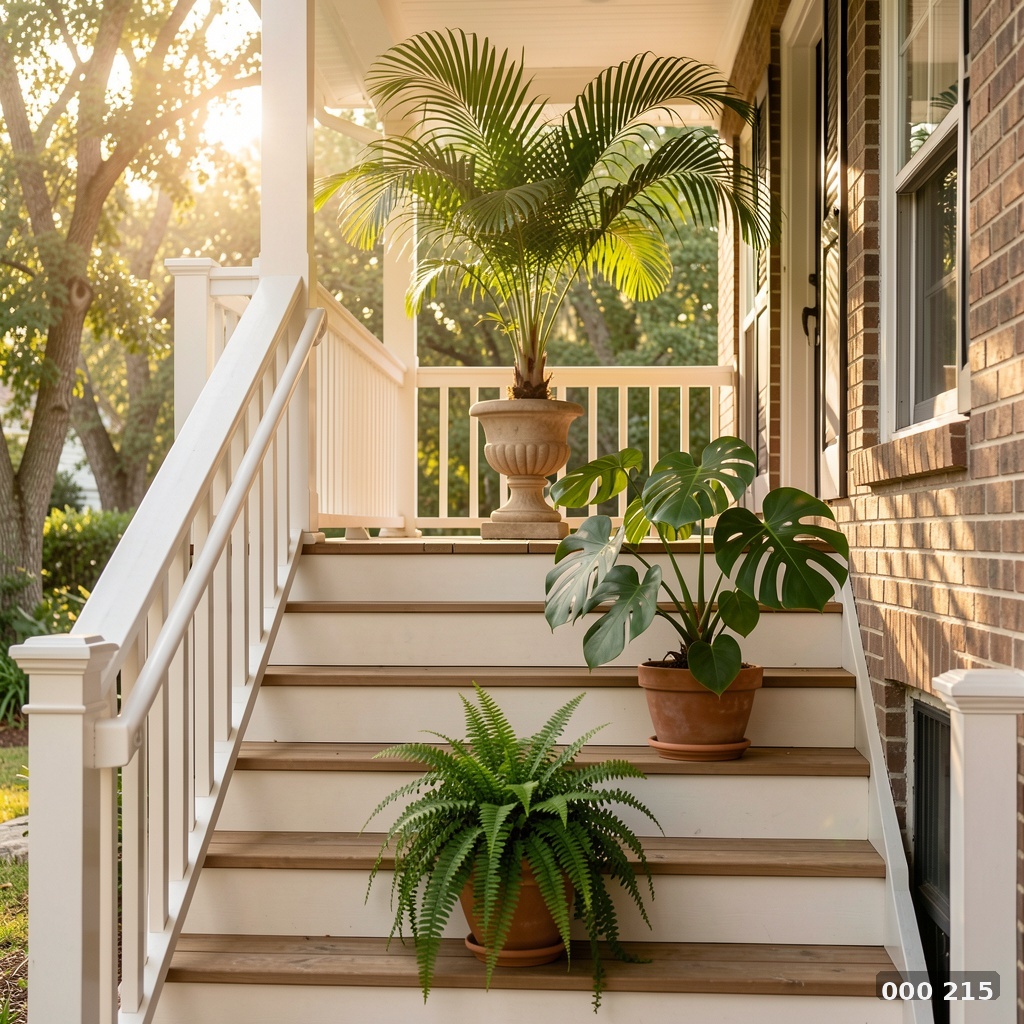
A tall palm on a pedestal anchors the group, flanked by a medium monstera and a low fern. The height step from 3ft to 5ft creates depth — the eye moves from ground to doorway naturally, pulled upward by the leaves.
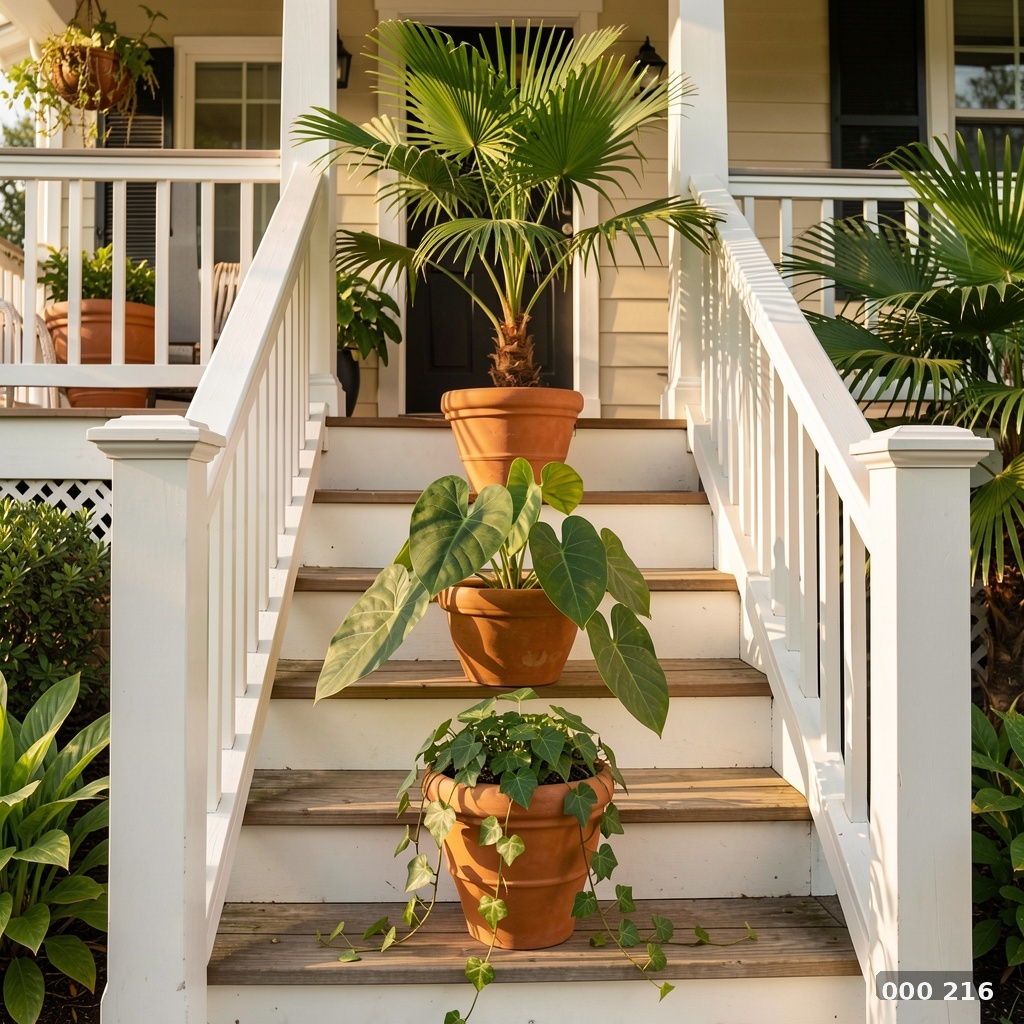
Three pots on graduated stands cascade down the staircase. A tall traveler's palm tops the sequence, split-leaf philodendron fills the middle, creeping fig spills over the bottom step. The downward flow mirrors the porch roof's pitch.
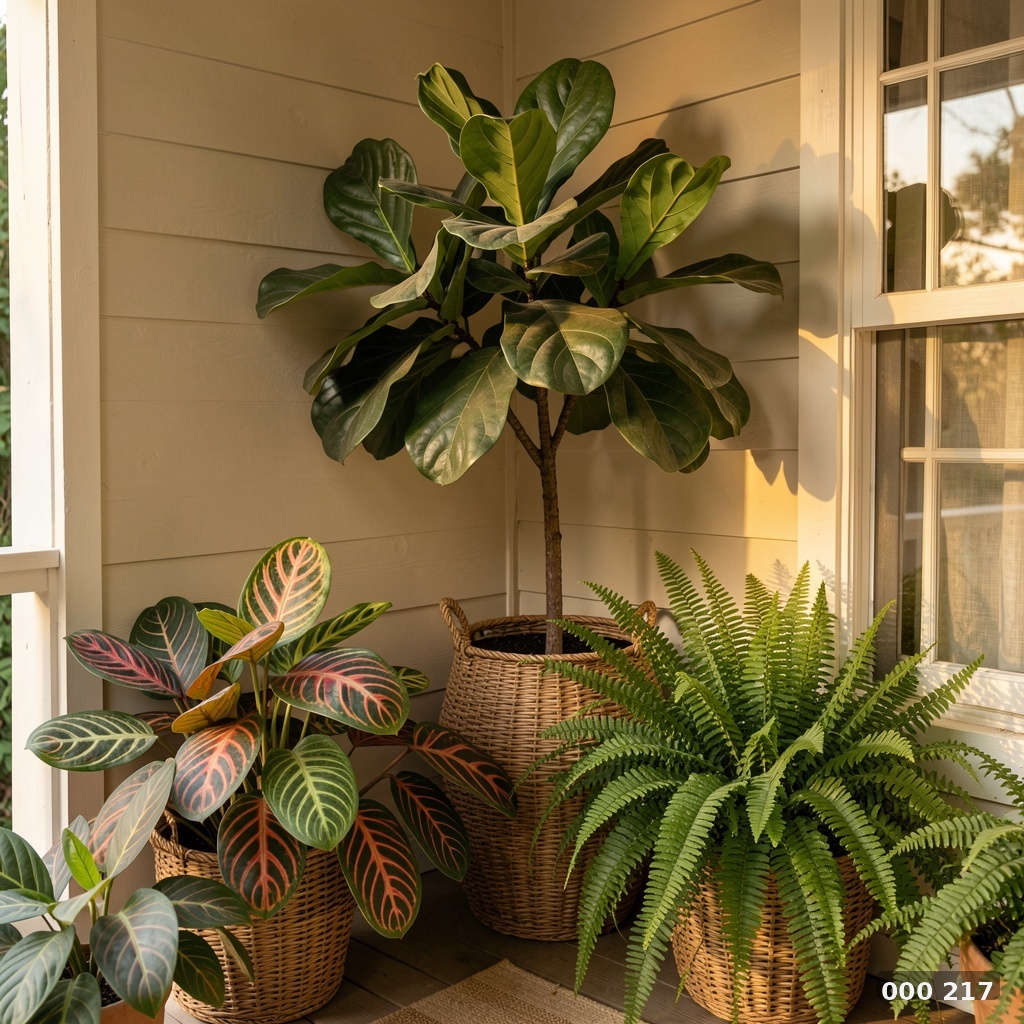
A corner arrangement uses a floor-standing fiddle-leaf fig as backdrop, with calathea and fern in front. The broad leaves at different heights create a layered wall of green that fills the corner without feeling crowded.
Vertical Jungle
Wall space becomes garden space. Mounted frames and hanging systems turn bare porch walls into living tropical tapestries that draw the eye upward.
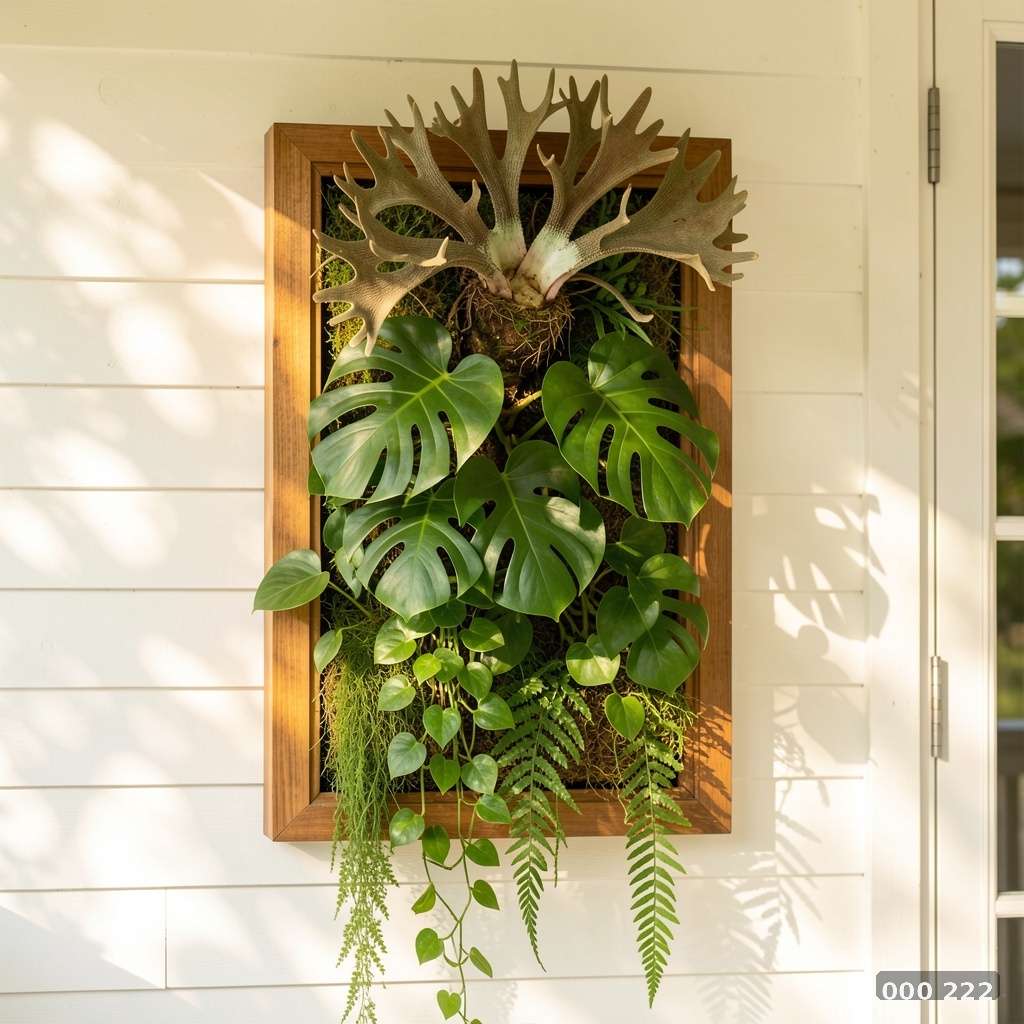
A large wooden wall frame holds staghorn fern, monstera, and pothos. The ferns anchor top and bottom, the monstera's split leaves create texture in the middle. Against a white porch wall, the frame reads as living art — no watering required beyond weekly misting.
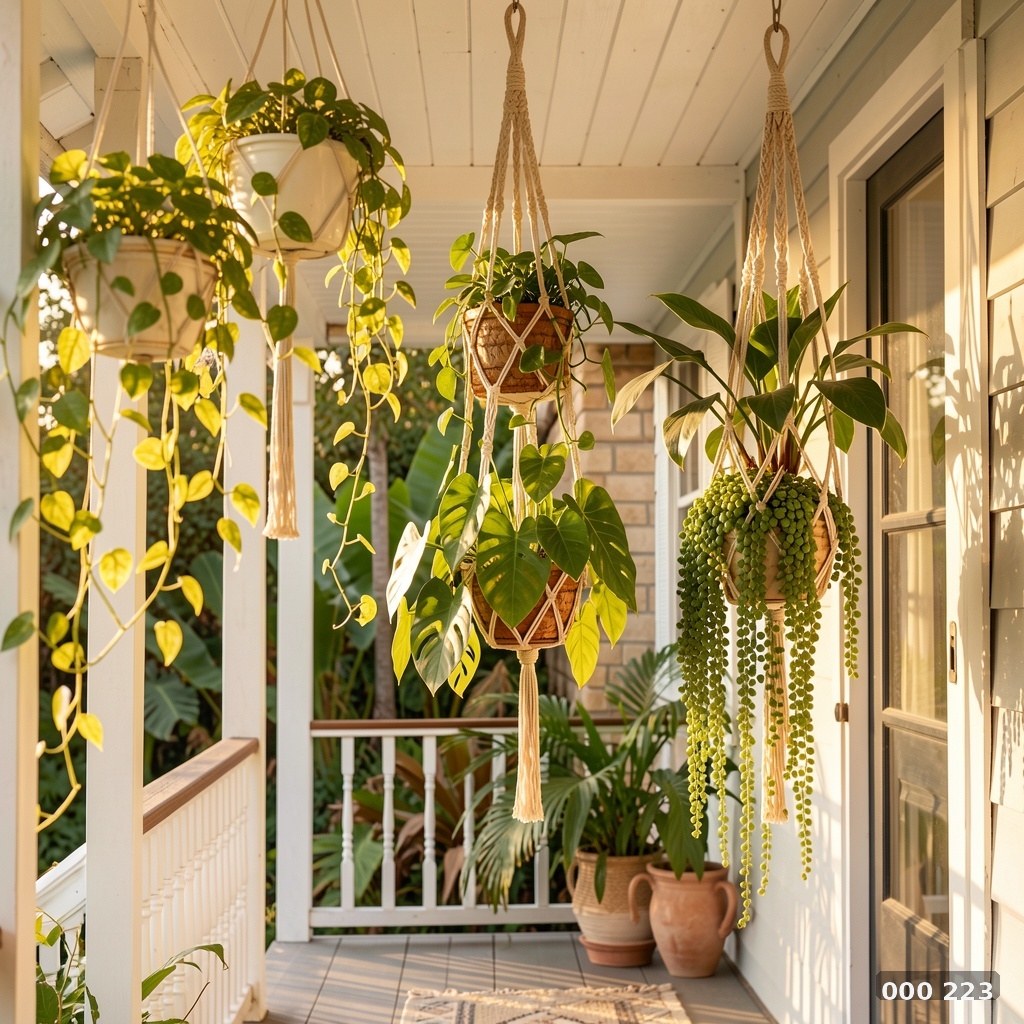
Three macramé hangers at different heights suspend a philodendron, a golden pothos, and a string of pearls. The cascading green softens the sharp lines of the porch frame and draws the eye upward to the ceiling line, making the porch feel taller.
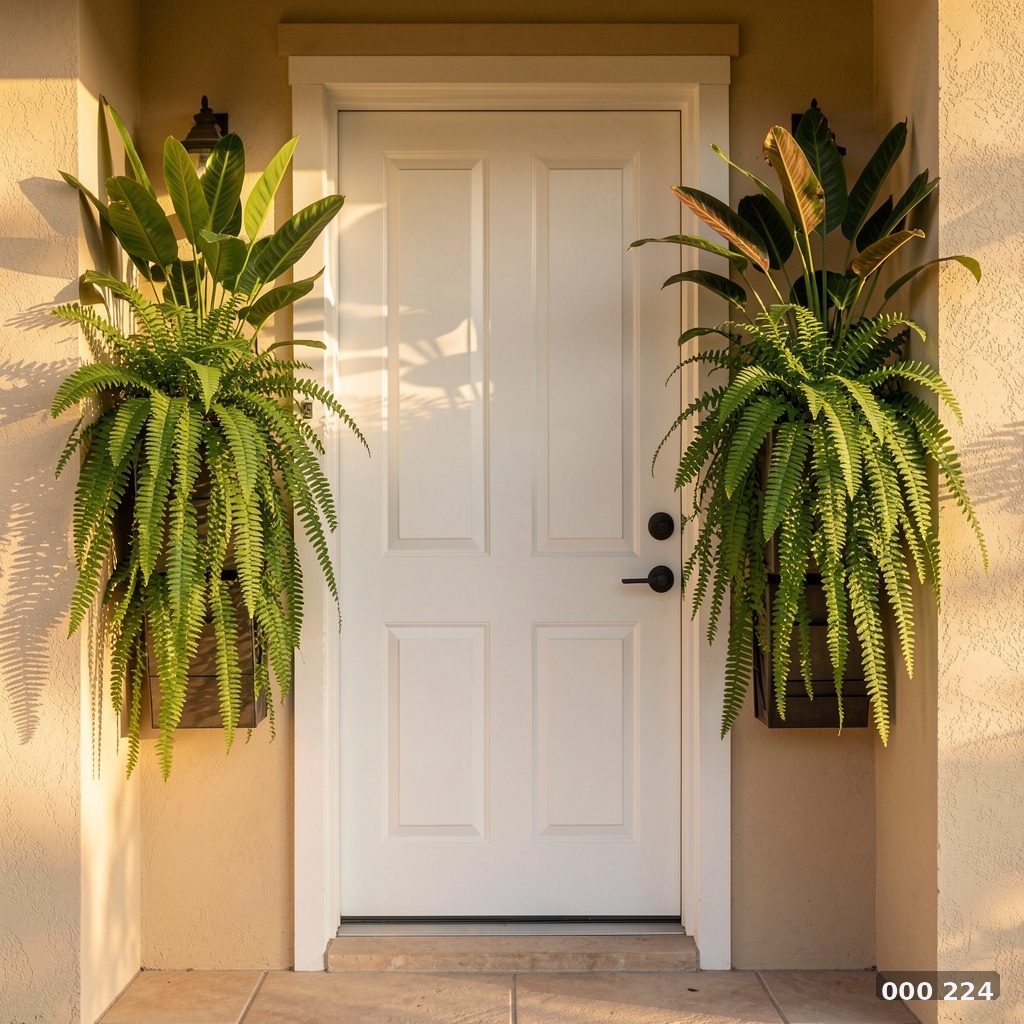
Two vertical wall pockets flank the door, each planted with cascading ferns and upright calathea. The symmetry frames the entrance and gives a tropical hotel entrance feel — warm, enveloping, intentional.
Panorama
When the bowl anchors the doorstep, clusters frame the staircase, and vertical art fills the walls — the porch transforms into a complete tropical entry. Here is that full effect.
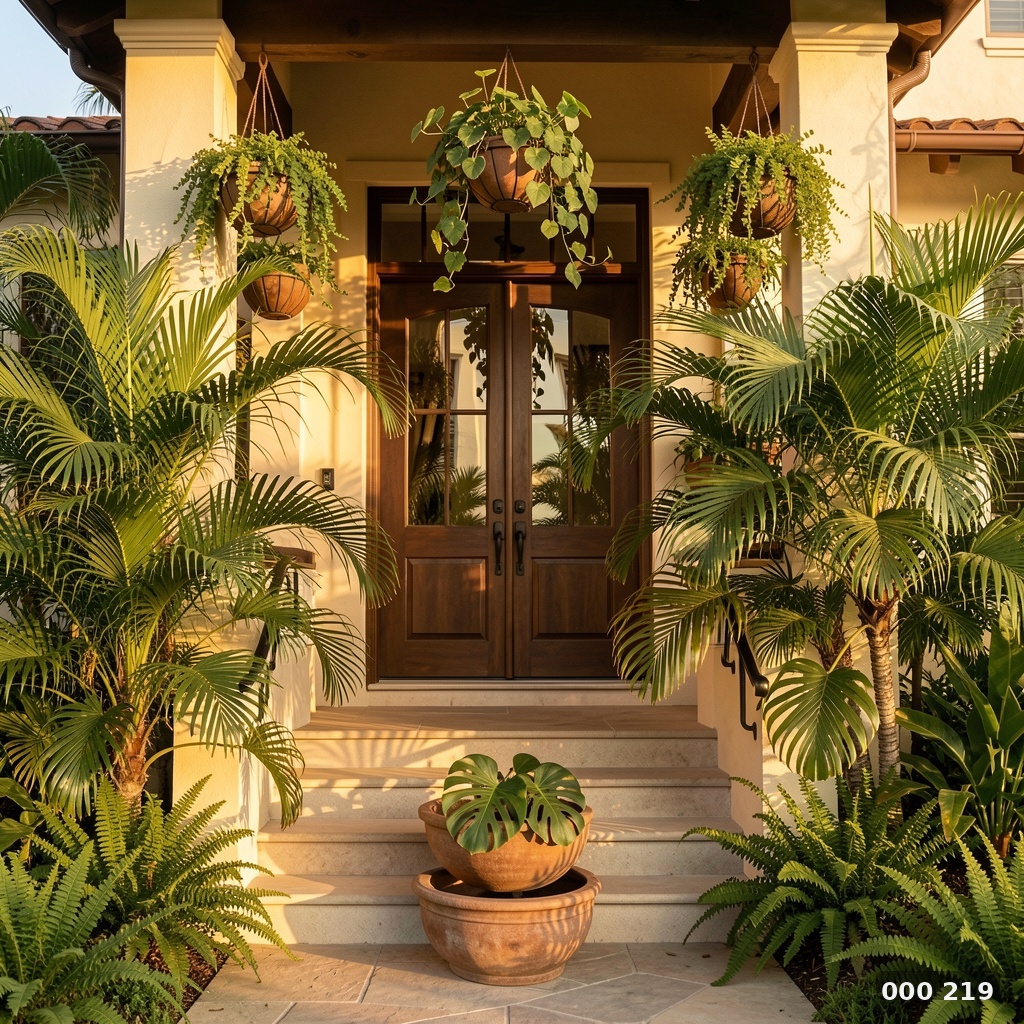
A monstera bowl at the doorstep, layered palm clusters on both sides, and hanging planters above — the full tropical entry. Every layer is visible from the street, drawing visitors into a lush corridor toward the door.
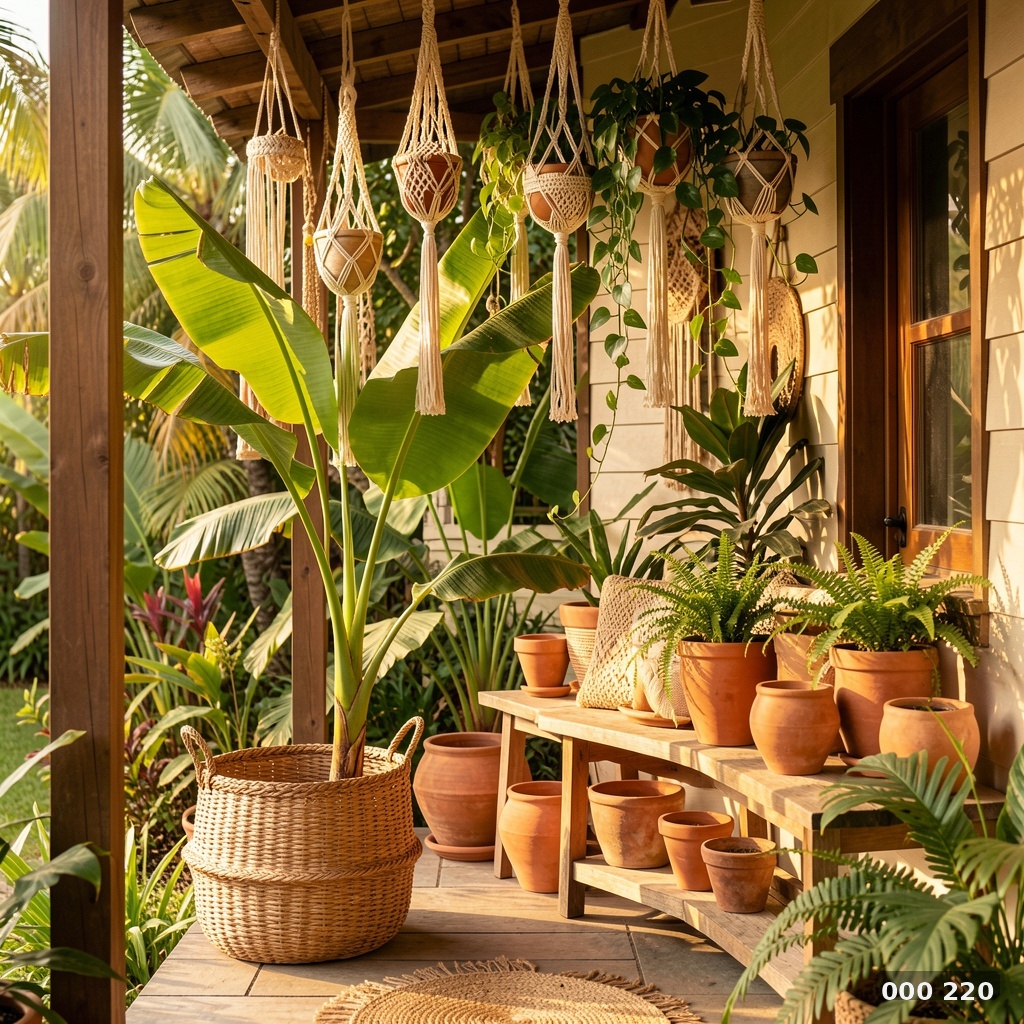
Bohemian tropical: a banana plant in woven basket, macramé hangers with cascading pothos, and terracotta pots on a wooden bench. The mix of natural textures — rattan, leaf, clay — creates warmth without clutter.
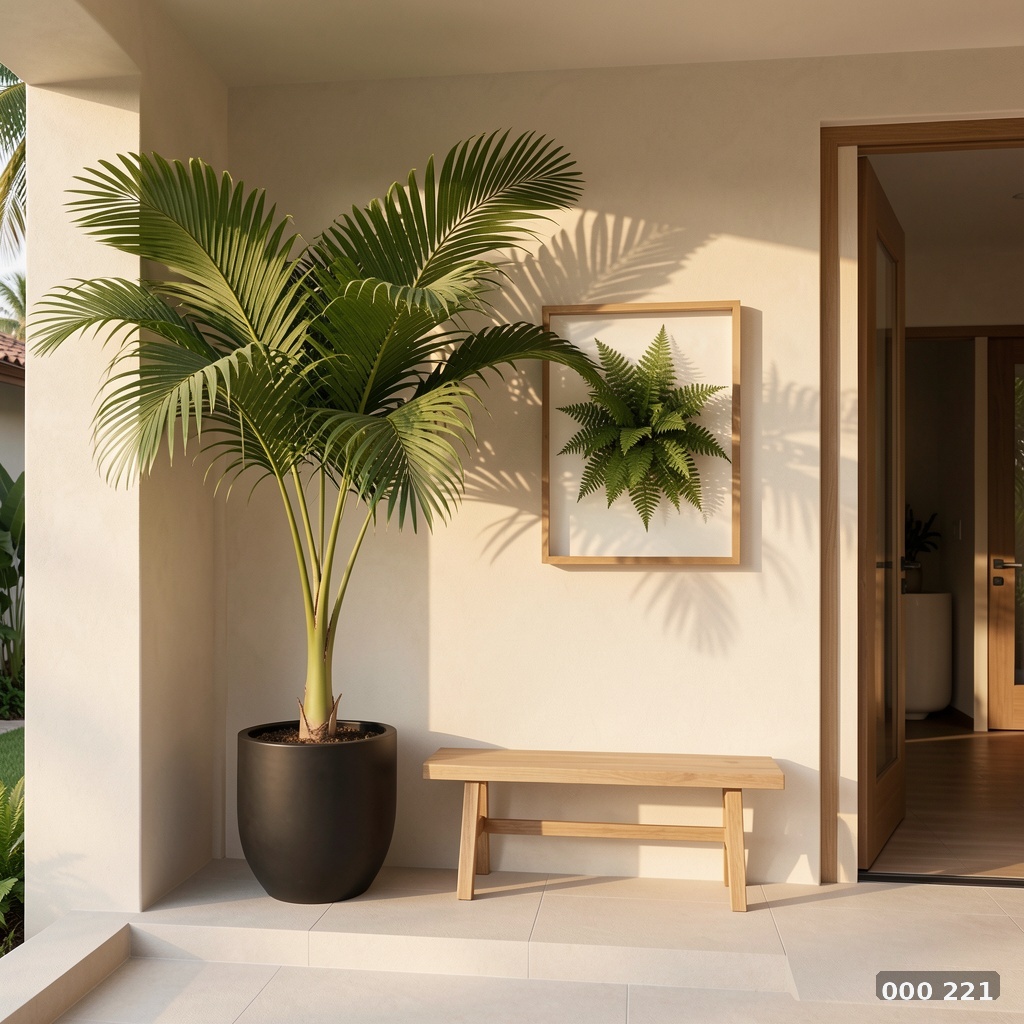
Minimalist tropical: one giant palm in a matte black pot, a single wall-mounted fern frame, a narrow bench. Every element earns its place. The modern porch needs only three things to feel like a resort lobby.
Plant Care
Tropical giants are surprisingly low-maintenance on a covered porch. Here is what they need to stay show-stopping through summer.
Watering
Water when top 2 inches feel dry — roughly every 3-4 days in summer. Covered porches reduce evaporation, so check before pouring. Drooping leaves mean thirst, yellow edges mean excess.
Light
Bright indirect light is the sweet spot. East or north-facing porches are ideal. Direct afternoon sun scorches monstera and palm leaves — a covered south porch filtered by an overhang works well.
Pruning
Remove yellow or damaged leaves at the stem base. Trim aerial roots on monstera for a clean look. Prune in spring for shape — tropicals grow fast, and one good cut keeps them architectural rather than wild.
Seasonal
Tropicals thrive June–September. Bring indoors before first frost (below 50°F damages leaves). Winter: slow watering, trim back, let them rest. Spring: repot, resume feeding, move back to porch after last frost.
FAQ
Do tropical plants need full sun on a porch?
No — most tropical giants prefer bright indirect light. Direct afternoon sun scorches monstera and palm leaves. A covered porch with morning sun or filtered light through an overhang is ideal. East-facing porches are the sweet spot.
How often should I water porch tropicals?
Check the top 2 inches of soil. If dry, water deeply until it drains out the bottom. In peak summer on a covered porch, that's roughly every 3-4 days. In cooler months or shaded porches, stretch to 5-7 days. Wilting leaves are your cue.
Will monstera survive winter on a covered porch?
Not in most climates. Tropicals cannot tolerate temperatures below 50°F. Bring them indoors before the first frost. Place near a bright window, reduce watering, and move back to the porch in spring after the last freeze passes.
What pot size is best for tropical leaves?
Go big — a pot at least 14-16 inches wide for monstera, 12-14 for palms. Tropical roots grow fast. Terra cotta is excellent for breathability, while glazed ceramic retains moisture longer (good for sunny porches). Always ensure drainage holes.
Do I need to mist tropical porch plants?
Yes — tropicals love humidity. Misting leaves every 2-3 days helps prevent brown edges and keeps foliage lush. On dry, hot days, a quick morning mist mimics their natural rainforest environment. A pebble tray underneath also adds ambient humidity.
Can I use faux tropical leaves for the same look?
Absolutely. High-quality faux monstera and palm leaves are nearly indistinguishable from real ones and need zero maintenance. Use real plants for close-up areas (the doorstep), faux for hard-to-reach spots (high hangers or dark corners). The mix keeps maintenance low and impact high.
How do I clean tropical leaves on a porch?
Dust and pollen settle on large leaves quickly. Wipe each leaf with a damp microfiber cloth every 2-3 weeks. This keeps pores open for photosynthesis and preserves the glossy, resort-quality look that makes tropicals special.
What companion plants pair well with tropical leaves?
Ferns (Boston, maidenhair, staghorn), calathea, pothos, and creeping fig. These plants share the same humidity and light needs. Ferns add texture at the base, pothos cascades from above — both complement the giant leaves without competing for attention.
Related
Download the Complete Design Checklist
Get a printable tropical plant checklist with recommended varieties, pot sizes, sun exposure guide, and a seasonal care calendar — ready to take to the nursery.