
This post contains affiliate links. As an Amazon Associate I earn from qualifying purchases.
Succulent — Desert-tone Arrangements for a Warm Welcome
Succulents are the most forgiving plants for a sunny front porch. This guide shows three ways to style them — from a statement bowl to living wall art.
Why Succulent
Succulents are ideal for sunny front porches because they thrive on neglect. Unlike annuals that need weekly watering, a well-designed succulent arrangement holds its beauty for months with minimal care. For south- and west-facing porches that get intense afternoon sun, succulents are not just an option — they are the best choice.
Succulent Bowl
A large succulent bowl at your doorstep creates an immediate visual anchor. Here are four distinct bowl arrangements to inspire your design.
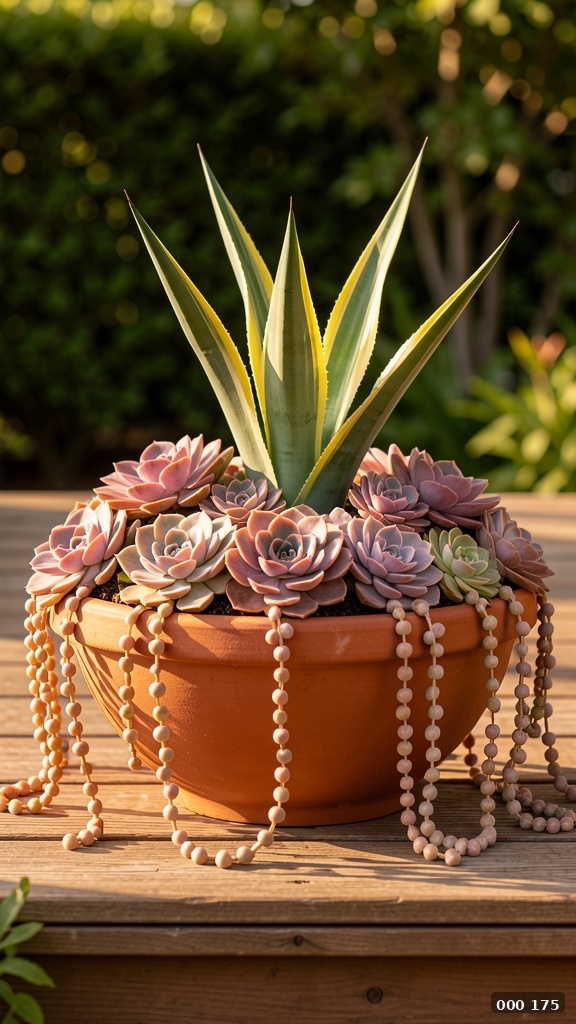
A classic terracotta bowl anchors the doorstep. A variegated agave rises from the center, surrounded by five echeveria rosettes in dusty pink. String of pearls cascades over the rim, softening the edge and adding gentle movement with every breeze.
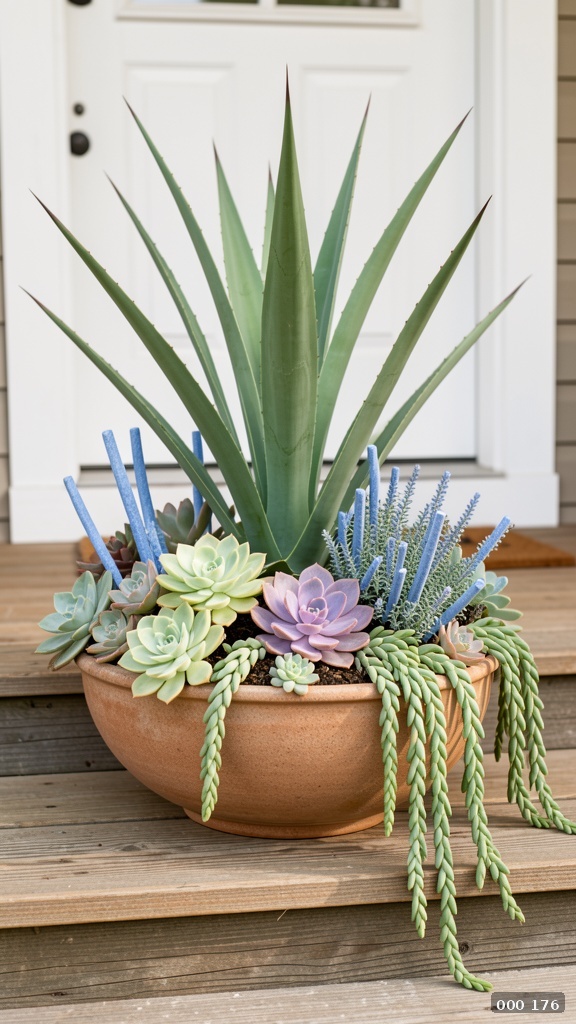
Blue chalk sticks provide cool-toned height in a wide oatmeal ceramic bowl. Echeveria in pale green and purple cluster at the base while golden sedum spills in a bright chartreuse sheet. The painterly color blocks read beautifully from every approaching angle.
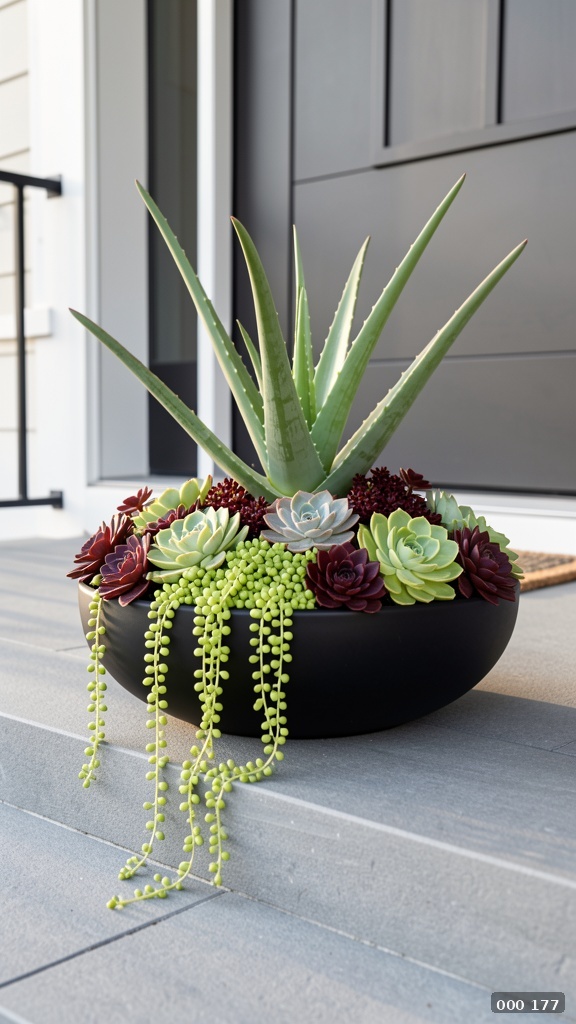
A single aloe in a matte black ceramic bowl creates a minimalist statement. Low sedum in lime and burgundy carpets the base without competing for attention. One well-chosen plant in the right container can be more impactful than a crowded composition.
Pot Clusters
Sometimes a collection of smaller pots arranged in a deliberate cluster creates more visual impact than a single large piece. Here are four grouping approaches for steps and landings.
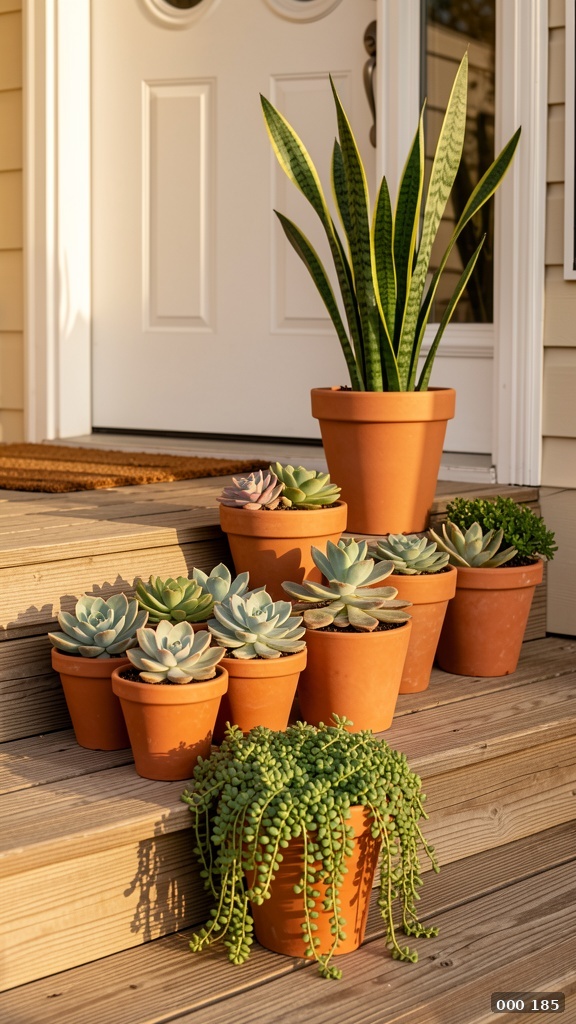
Three terracotta pots at different heights on porch steps create a cascading rhythm. A tall snake plant tops the staircase, clustered echeveria fills the middle, and trailing sedum bridges the bottom step to ground. The staggered heights guide the eye naturally upward.
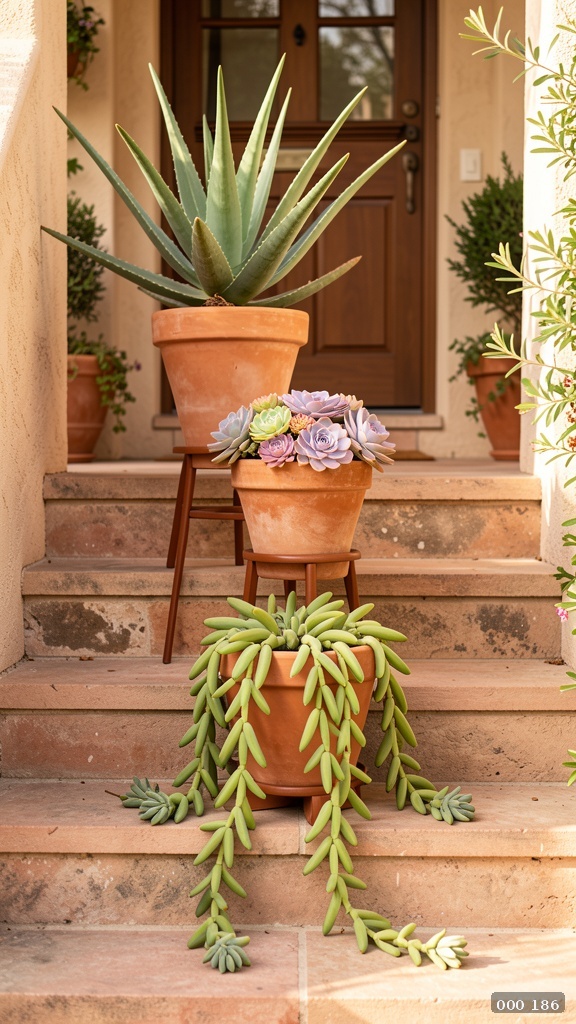
Matching pots on graduated stands step up the staircase with intention: aloe at the top for height, echeveria in the middle for color, string of bananas at the bottom for spill. The progression from tall to trailing creates clean, ordered visual flow.
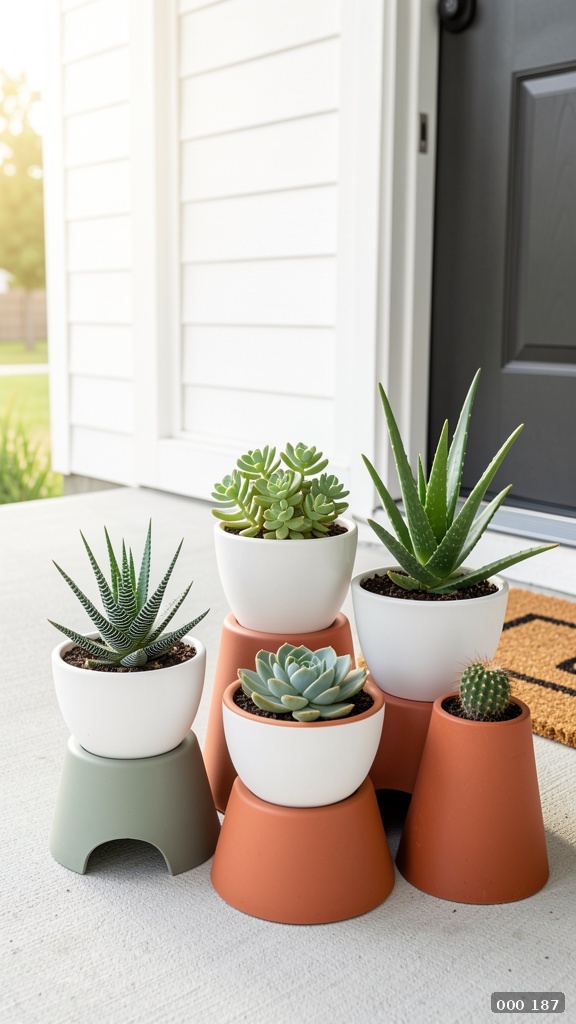
Five small ceramic pots in white, sage, and terracotta cluster on the landing. Each holds a different variety — haworthia, echeveria, sedum, aloe, barrel cactus. Overturned pots create height variation, giving the collection a curated, collected-over-time feel.
Wall Frames
When floor space is limited, a wall-mounted succulent frame transforms a blank porch wall into living art. Here are four vertical display ideas.
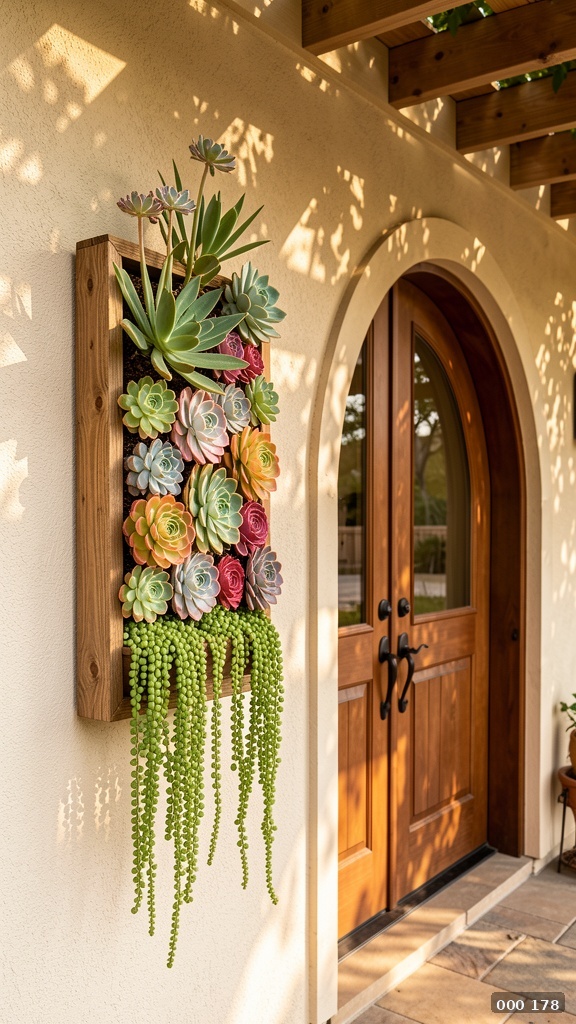
A rustic wooden frame on the porch wall holds a vertical garden: aeonium at the top for height, echeveria in the middle for texture, string of pearls cascading from the bottom. It adds warmth without taking floor space — ideal for narrow porches.
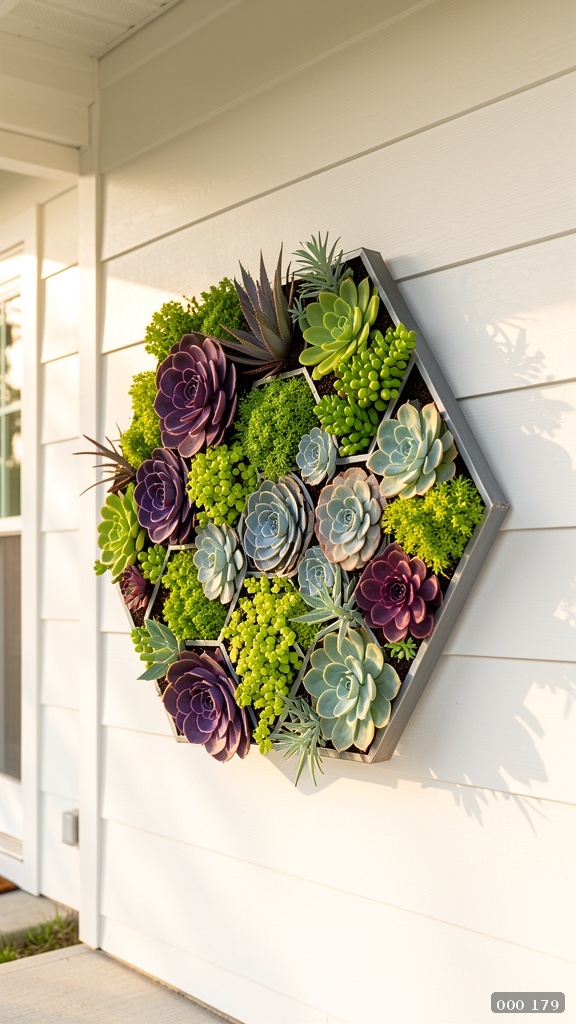
A hexagonal metal frame creates geometric living art on the porch wall. Purple aeonium, lime sedum, blue-gray senecio, and rosette echeveria form a patterned composition. The piece functions as outdoor sculpture that grows fuller with each passing month.
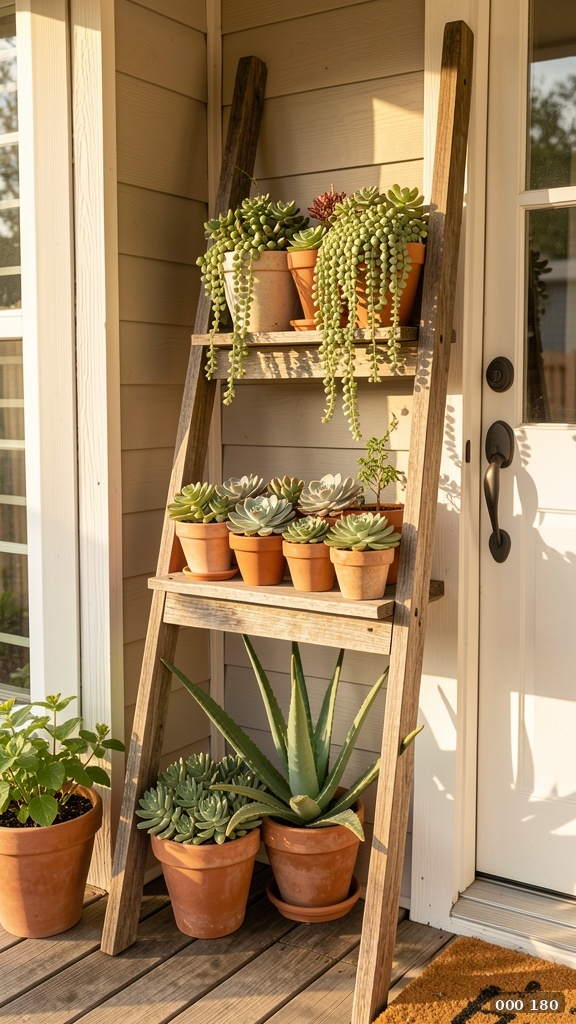
A wooden ladder shelf offers flexible vertical display without permanent installation. String of pearls cascades from the top, echeveria catches morning light in the middle, a substantial aloe grounds the bottom. Movable, restyleable, and easy to bring indoors for winter.
Panorama
The most impactful succulent front porch combines all three approaches — statement bowl, pot clusters, and wall art — into one cohesive, layered design. Here are three complete doorway scenes that show how every element works together.
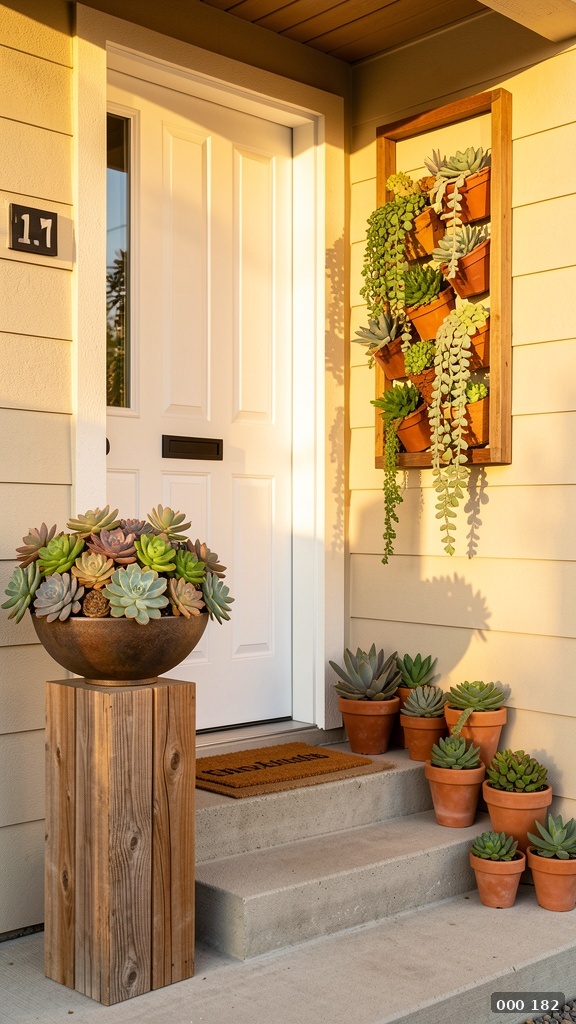
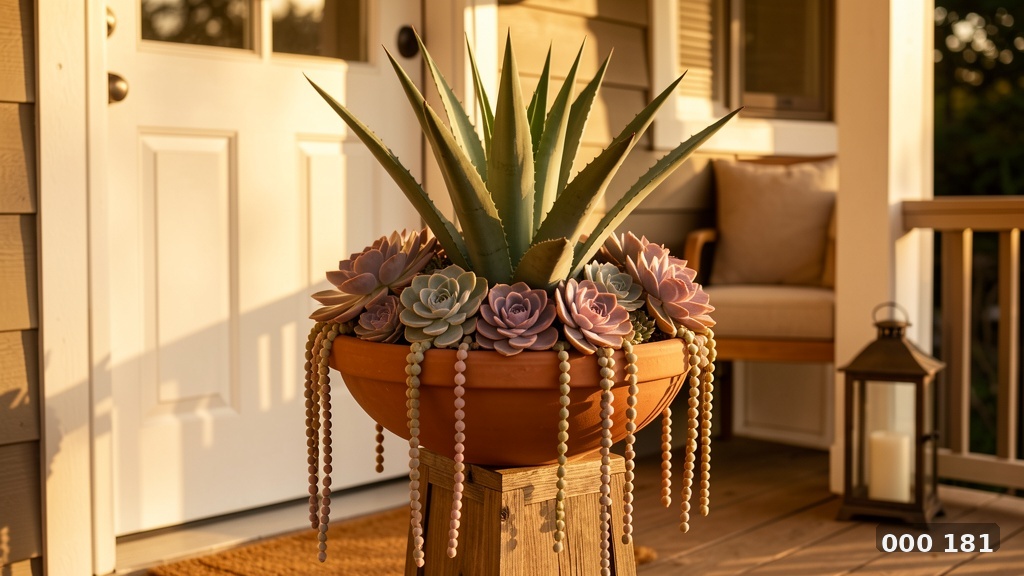
A fully layered entryway combines a statement bowl on a wooden pedestal, terracotta pot clusters cascading down the steps, and a wooden succulent wall frame beside the door. In golden hour light, the warm terracotta, dusty pinks, and sage greens glow, inviting visitors to pause before they knock.
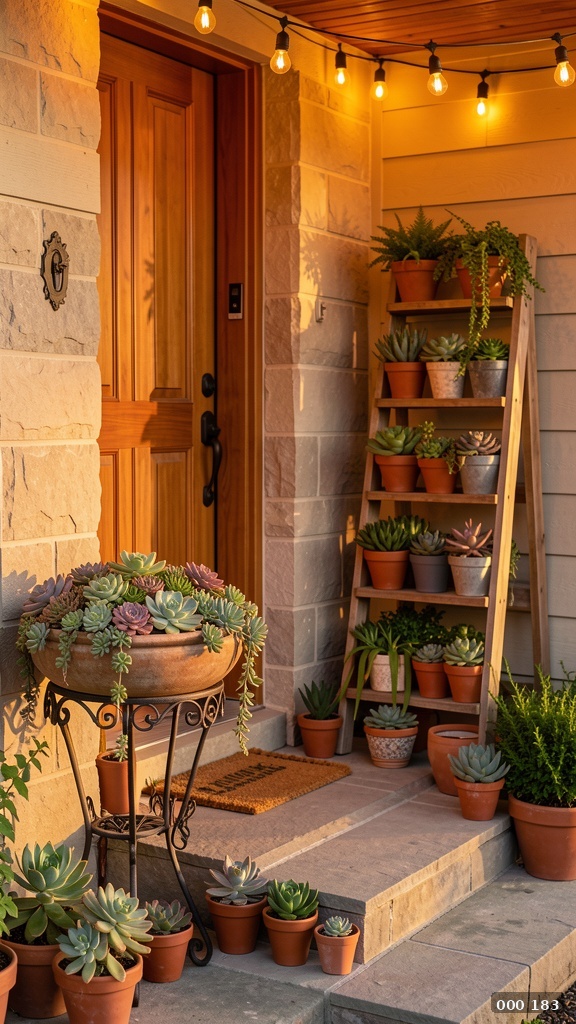
A bohemian entryway layers a statement bowl on an iron stand, a wooden ladder shelf of succulent pots against the wall, and terracotta pots lining the steps. String lights create a warm canopy overhead, transforming the porch into an inviting evening space that feels personal and collected over time.
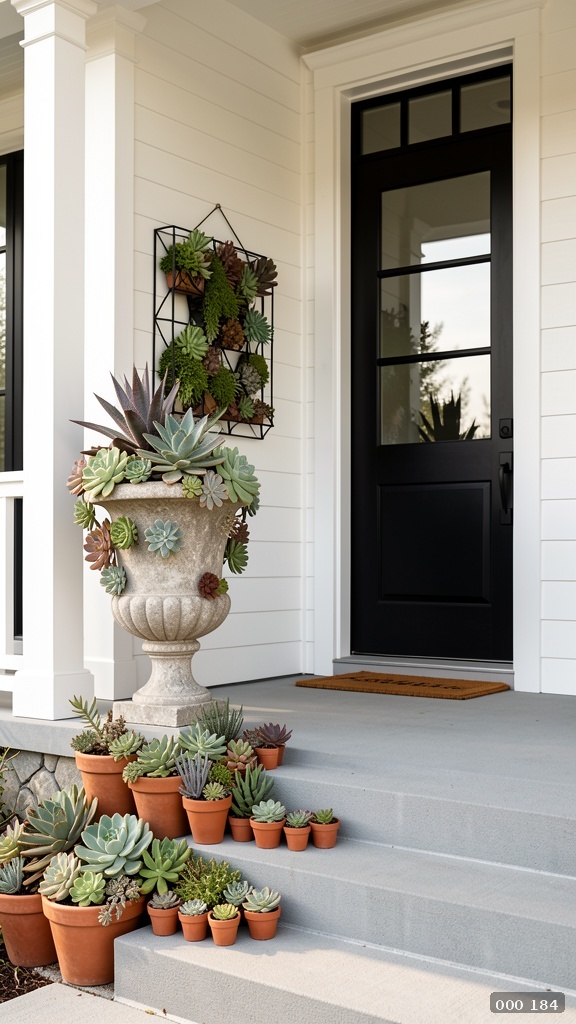
A modern farmhouse entrance features a tall stone urn with architectural succulents by the door, terracotta pots descending the steps in descending sizes, and a geometric succulent wall frame. White gravel top dressing and clean lines unify the display — sophisticated, restrained, and quietly stunning.
Plant Care
Succulents are famously low-maintenance. Follow these simple guidelines to keep your porch arrangement looking its best year-round.
Watering
Water deeply every 2-3 weeks during spring and summer, only when soil is completely dry. In winter, reduce to once a month. Overwatering is the #1 cause of succulent decline.
Light
Succulents need 6+ hours of direct sun daily. A south- or west-facing porch is ideal. In low light, echeveria will stretch and lose their rosette shape — move them to a sunnier spot.
Pruning
Remove dead lower leaves from agave and aloe. Trim leggy echeveria and replant the cuttings. Cut trailing stems back if they overgrow. Pruning takes about 5 minutes every few weeks.
Seasonal
If temperatures drop below 40°F, bring containers indoors to a bright south-facing window. Reduce watering during winter dormancy. In spring, repot any plants that have outgrown their containers.
FAQ
How often should I water succulents on my front porch?
Every 2-3 weeks during spring through fall, and as little as once a month in winter. Water only when the soil is completely dry. Overwatering kills more succulents than any other cause.
Can succulents survive on a covered porch with less sunlight?
Most need 6+ hours of direct sun. For shaded porches, choose shade-tolerant varieties: haworthia, gasteria, or snake plant. Echeveria and sedum will stretch in low light. For deep-shade porches, high-quality faux succulents are a practical alternative.
Do succulents need special soil?
Yes — regular potting soil holds too much moisture. Use a commercial cactus and succulent mix, or make your own with 70% potting soil and 30% perlite. The soil should feel gritty and drain quickly. Add gravel top dressing for a polished, professional look.
Will succulents survive winter on my front porch?
Only in USDA zones 9-11 where temperatures stay above 40°F. In colder climates, bring containers indoors to a sunny window before the first frost. Reduce watering to once a month during winter dormancy. Resume normal care in spring.
Why are my succulents stretching upward and looking leggy?
This is etiolation — the plant is stretching toward more light. Move it to a sunnier location. The stretched growth won't reverse, but new growth will be compact. Trim leggy rosettes and replant them closer to the light source.
Can I mix succulents with other plants in the same container?
Only with other drought-tolerant plants that share similar water needs — lavender, rosemary, or ornamental grasses. Avoid mixing succulents with moisture-loving plants like ferns, impatiens, or petunias, as their watering needs conflict.
How do I know if I'm overwatering my succulents?
Leaves become soft, mushy, or translucent. Lower leaves turn yellow or black. The stem feels soft near the soil line. If you see these signs, stop watering, remove the plant, trim rotten roots, and repot in fresh dry succulent soil.
What's the best container for succulents on a front porch?
A wide, shallow container (12-18 inches wide, 8-10 inches deep) with drainage holes. Terracotta and unglazed ceramic are best because they wick moisture away. A drainage hole is non-negotiable — without one, succulents are very difficult to keep alive.
Related
Download the Succulent Porch Design Checklist
Get a printable PDF with plant recommendations, container size guide, soil recipe, watering calendar, and a shopping checklist — ready to take to the garden center.