
This post contains affiliate links. As an Amazon Associate I earn from qualifying purchases.
Formal Symmetrical Urns — Classical Elegance at Your Entry
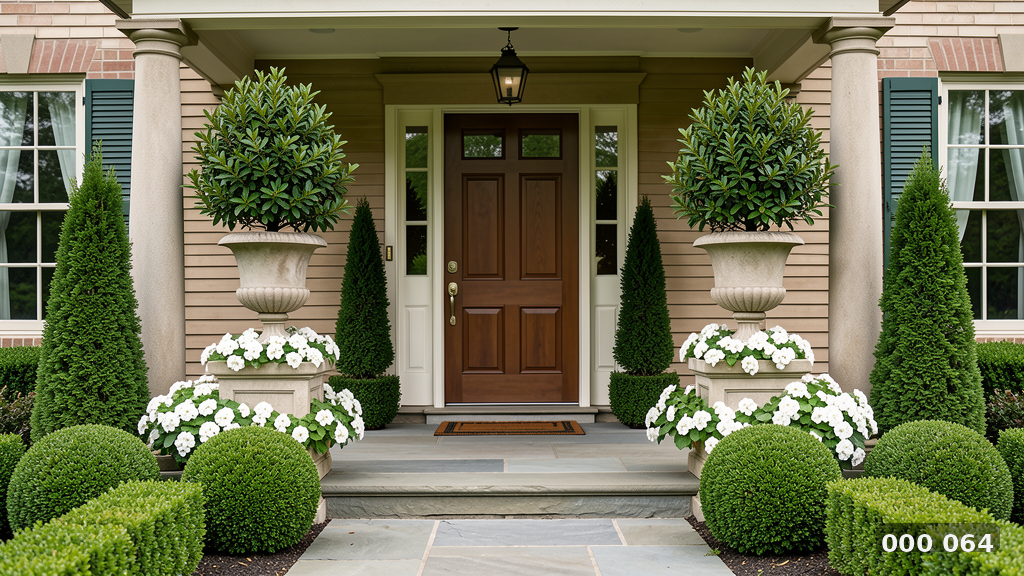
Matching urns, symmetrical topiaries, and clipped boxwood — a formal porch entry that whispers timeless elegance.
Design Philosophy
Symmetry is the oldest trick in garden design — matching urns on either side of the door signal order, welcome, and timeless taste. Boxwood spheres, columnar evergreens, and clipped topiaries create structure that reads as confident and intentional.
Formal Urn
Matching urns on either side of the door — each planted identically for perfect symmetry and classical proportion.
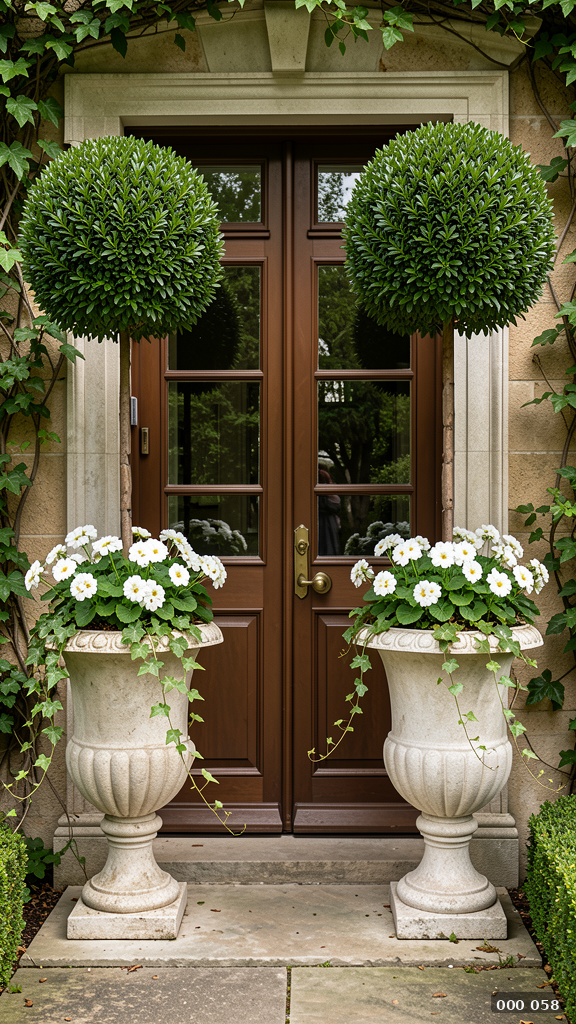
A pair of tall cast stone urns, each with a clipped bay laurel topiary standard — a straight trunk with a perfect sphere of leaves on top. Underplanted with white wax begonia and trailing ivy. The ultimate classical entrance.
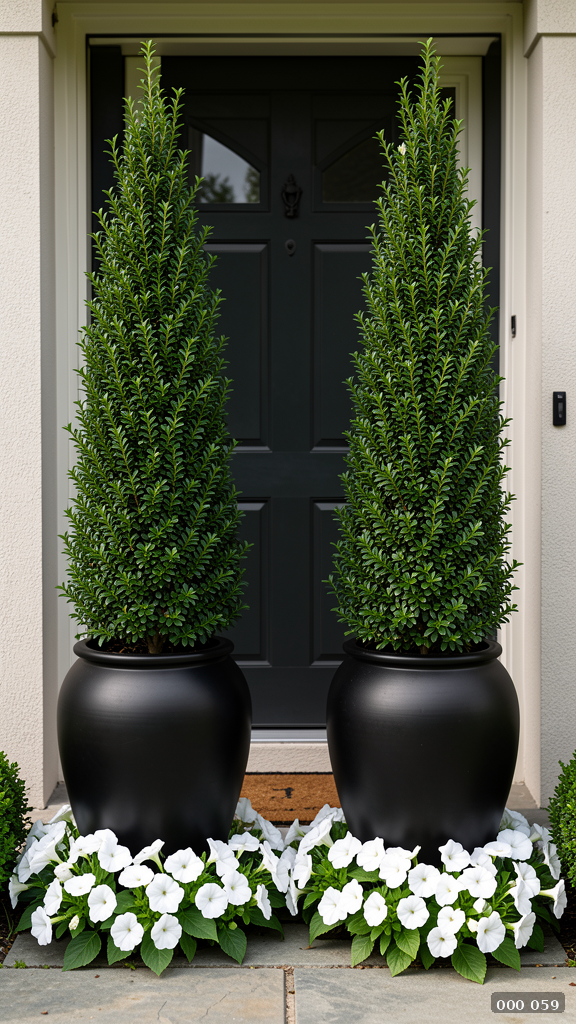
Matte black ceramic urns with columnar Japanese holly (Ilex crenata ‘Sky Pencil’) — narrow, upright, architecturally precise. White tulips in spring, impatiens in summer, ornamental kale in fall.
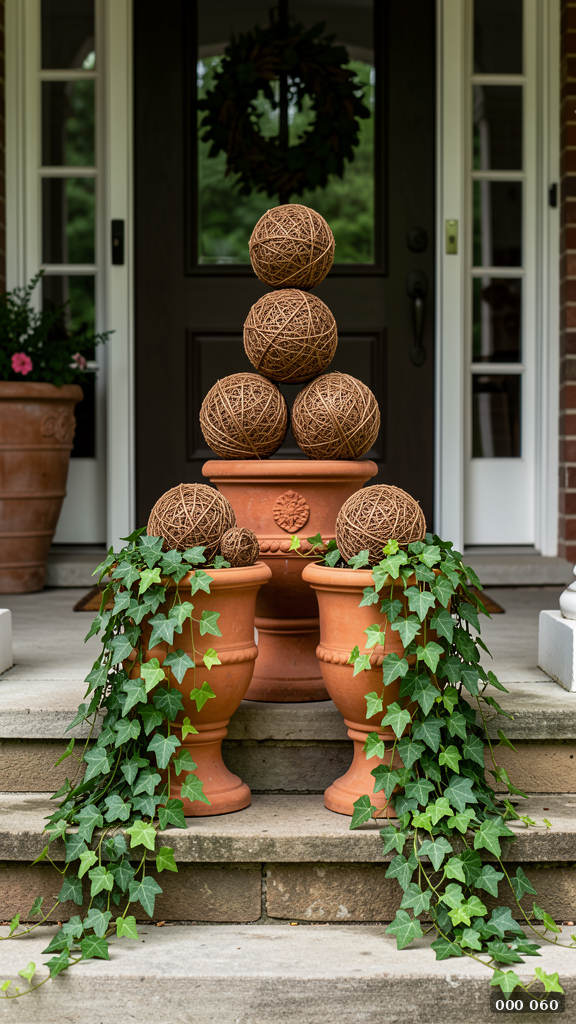
Classic terracotta urns with boxwood spheres on each side — three balls stacked pyramid-style. The geometric precision is pure formality. English ivy spills exactly one foot down each side. No variation.
Symmetrical Clusters
Paired pot arrangements on steps and beside the door — each pair identical, creating repeated symmetry for formality.
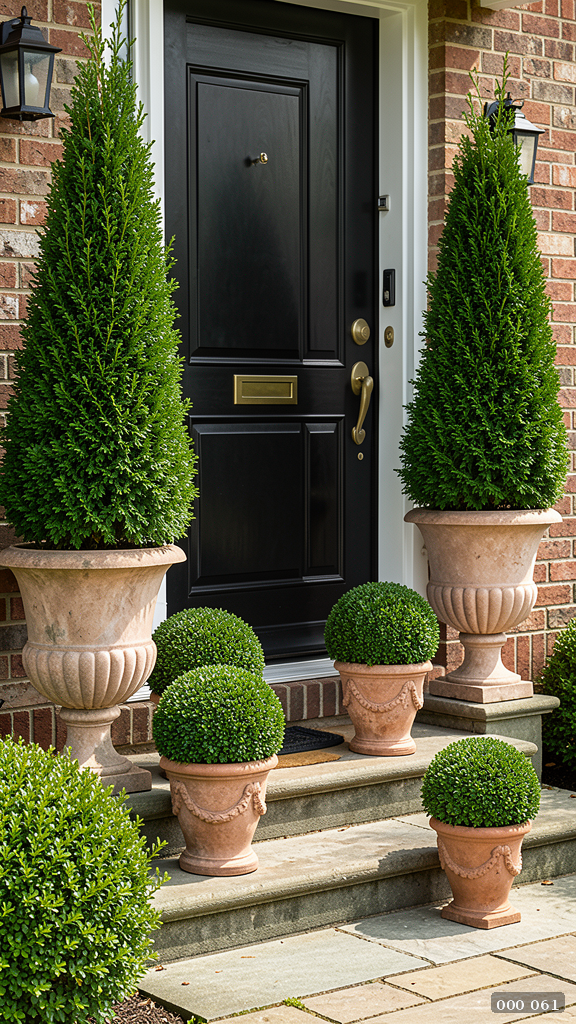
Four identical pots in two pairs: tall columnar yew in large urns flanking the door, smaller boxwood topiary spheres on the steps. The repeated pairs create rhythm that leads the eye to the entrance.
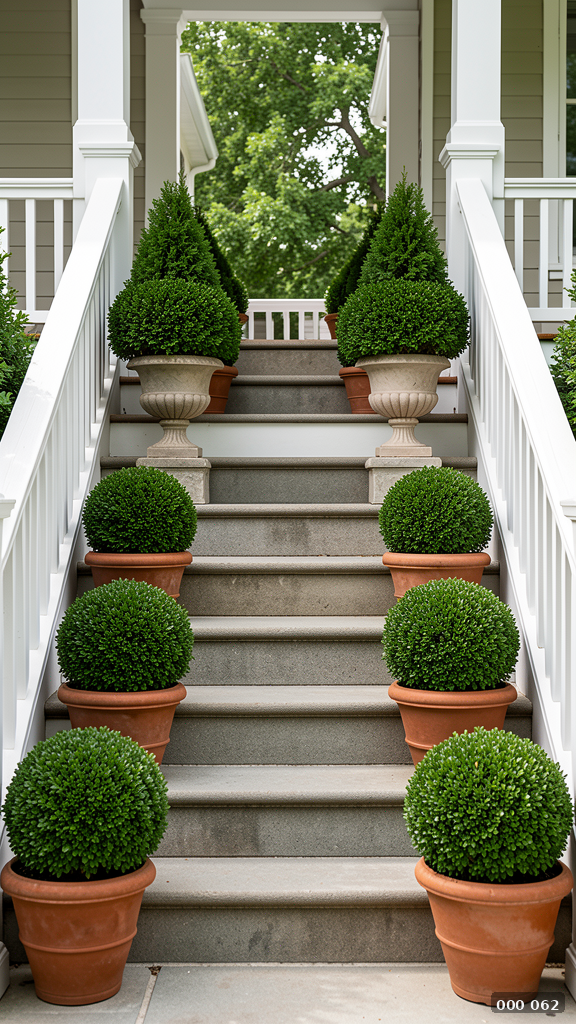
Stair symmetry: matching pots on each step. Bottom: boxwood spheres. Middle: dwarf conifers. Top: urns with clipped evergreens. The vertical repetition amplifies the formal effect.
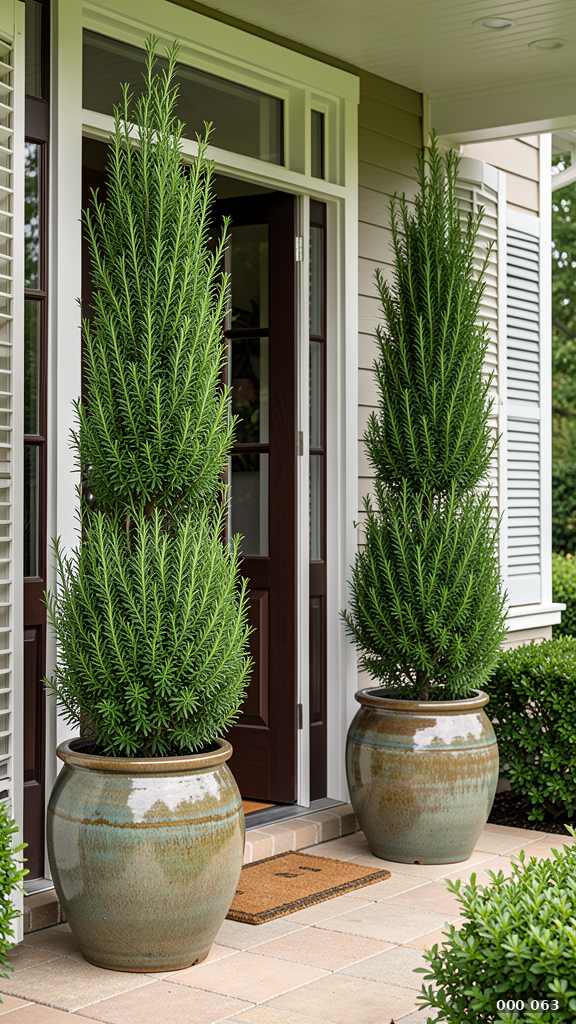
Doorway pairs: tall rosemary standards (trained topiary) in matching glazed ceramic pots. Rosemary’s fine texture softens formality. The aromatic foliage releases scent when brushed.
Formal Vertical
Vertical formal elements — espaliered trees, columnar evergreens, and trained vines — add height to symmetrical entries.
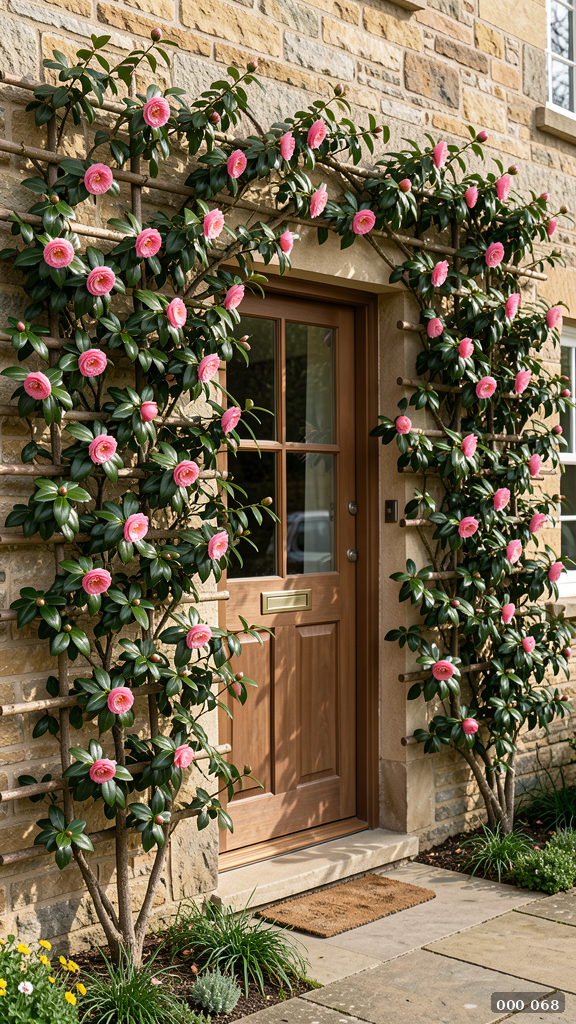
A pair of espaliered camellias trained flat against the wall on either side of the door. The horizontal framework creates living architecture. Glossy evergreen leaves year-round, pink blooms in winter.
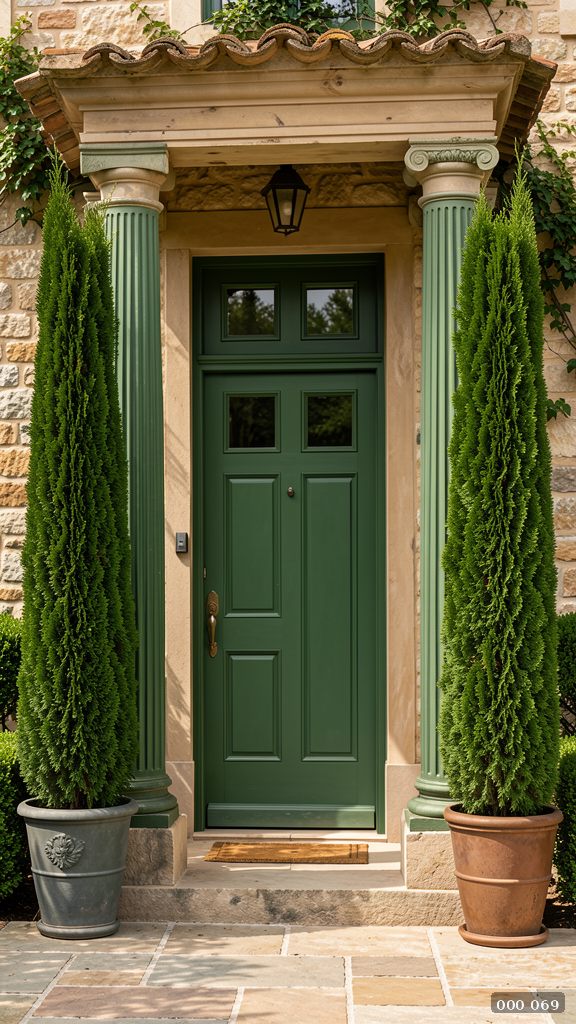
Columnar Italian cypress in tall narrow planters flanking the door — the quintessential Mediterranean formal accent. The green columns frame the entrance like classical pillars.
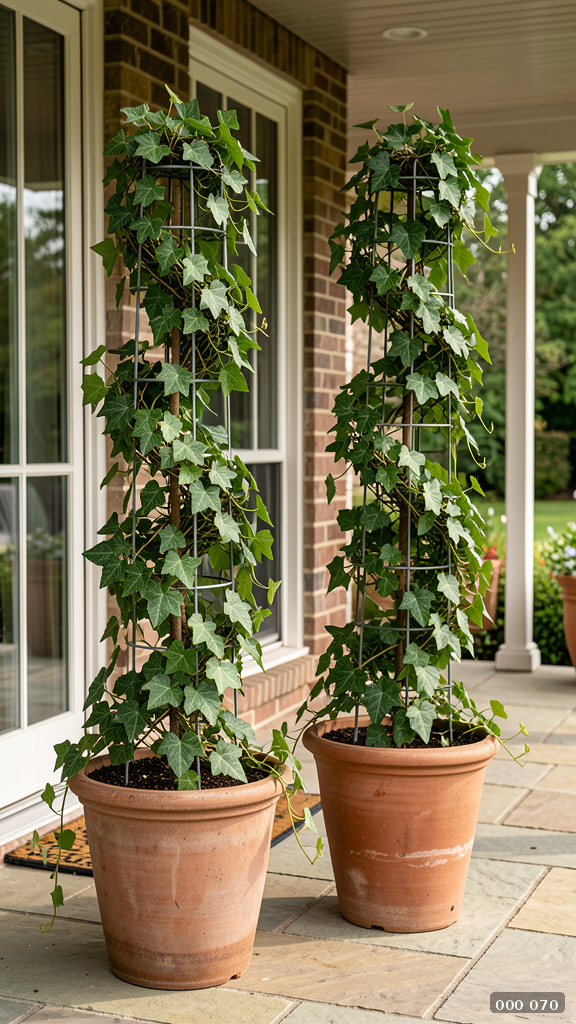
A pair of ivy topiary standards — ivy trained onto a wire frame to create a spiral shape in tall ceramic pots. Precision training creates the formal look with a normally casual plant.
Panorama
When urns flank the door, topiaries frame the entry, and every pot has its perfect twin — your porch achieves classical harmony.
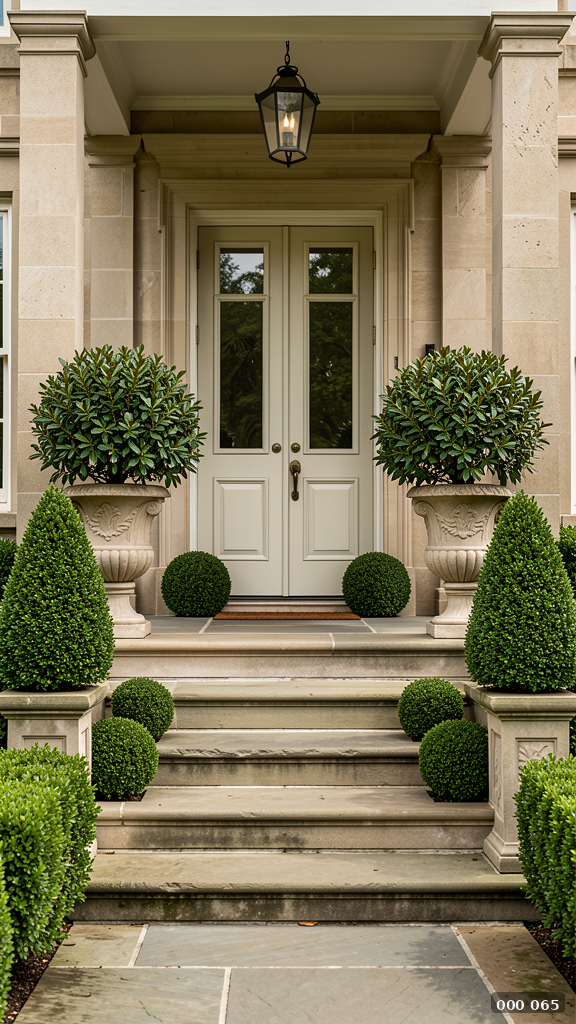
Stone urns with bay laurel topiaries at the door, columnar yew pots on the steps, boxwood spheres on the lower landing. Repeated symmetry creates a gradual reveal as you approach. Timeless elegance.
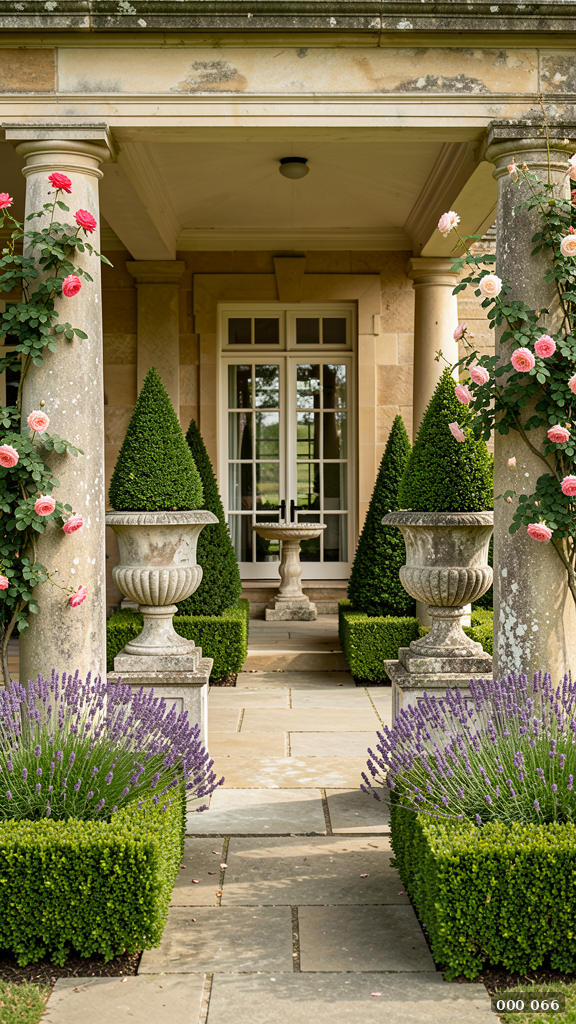
English manor: weathered stone urns with boxwood pyramids, lavender hedge pots, climbing roses on obelisks. Formal bones with softened edges. The symmetry provides structure; roses provide soul.
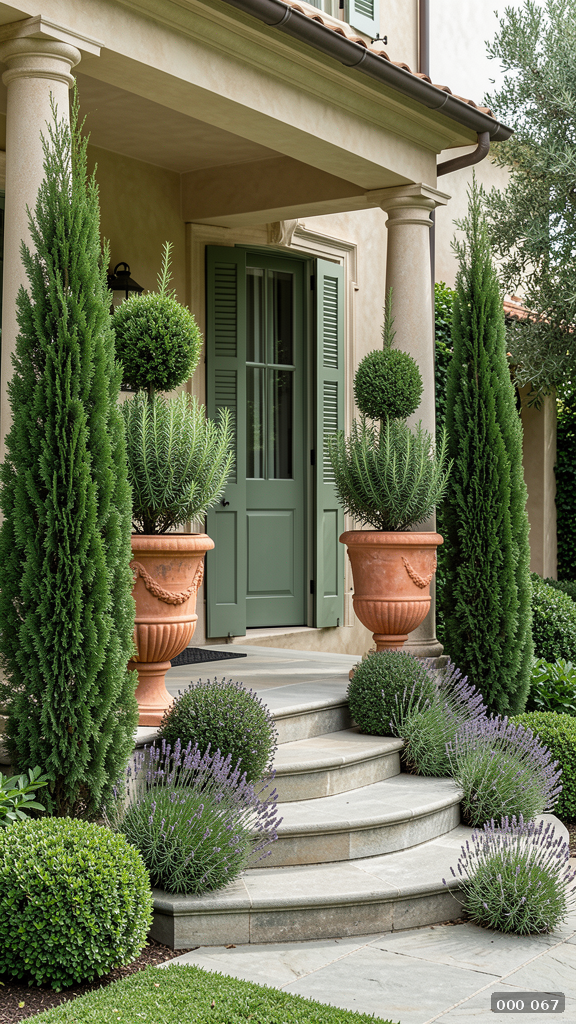
Mediterranean: terracotta urns with clipped rosemary standards, columnar cypress in pairs, lavender spheres on steps. The silver-green palette is cool and refined. Topiary myrtle adds contrast.
Plant Care
Keep your porch arrangement looking its best with these simple maintenance tips.
Watering
Topiaries in containers need consistent moisture — check daily. Boxwood and yew are drought-tolerant once established but bay laurel needs regular water.
Light
Most formal evergreens need full sun to part shade. Boxwood tolerates shade. Bay laurel and rosemary need full sun. Yew and camellia thrive in part shade.
Pruning
Clip topiaries twice per year — early spring and early fall. Use hand shears for clean cuts. Bay laurel can be pruned anytime. Remove dead or crossing branches immediately.
Seasonal
Spring: prune and fertilize. Summer: water and monitor for pests. Fall: stop fertilizing. Winter: protect terracotta pots from freeze; wrap vulnerable topiaries in burlap.
FAQ
Best plants for formal urns?
Boxwood spheres, bay laurel topiaries, columnar yew, dwarf Alberta spruce, rosemary standards, and Japanese holly. Evergreens provide year-round structure formality demands.
How to create a topiary standard?
Start with a young plant with a single straight stem. Remove lower branches. Stake the main stem. When it reaches desired height, pinch the top to encourage branching into a ball.
Do formal gardens need more maintenance?
Yes — formal design requires precision. Topiaries need clipping twice yearly. Urns need regular cleaning. The payoff is year-round architectural presence.
Can formal work on a small porch?
Yes — scale down: mini boxwood spheres in small matching urns. A single pair of topiaries is enough for a small entry. Symmetry creates impact regardless of scale.
What container materials suit formal style?
Stone, cast iron, lead, and high-fired ceramic in neutral colors (black, charcoal, stone gray, terracotta). The pot should feel permanent and substantial.
Should I use real or faux topiaries?
Real for permanent plantings. Faux works for rentals. Good faux boxwood is indistinguishable at a distance, but up close real is always better.
How to winterize formal urns?
Move terracotta to protected area or wrap with burlap. Evergreens in containers need root protection — surround pots with bubble wrap. Water sparingly.
What flowering plants fit formal style?
White flowers maintain formality: white impatiens, white wax begonia, white tulips, white hydrangea. One color, repeated on both sides, keeps symmetry intact.
Related
Download the Complete Design Checklist
Get a printable PDF with plant recommendations, container sizes, and a full maintenance calendar — ready for the garden center.