This post contains affiliate links. As an Amazon Associate I earn from qualifying purchases.
Pollinator Native Garden — Bring Your Porch to Life
Native flowers that attract bees, butterflies, and hummingbirds to your doorstep — your porch becomes the most lively spot on the block.
Why a Pollinator Porch Garden
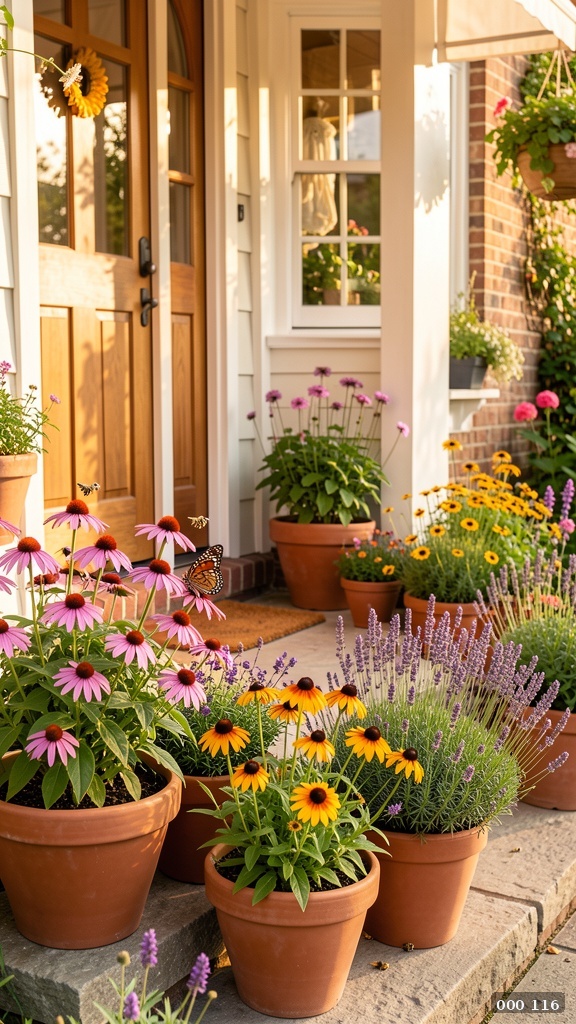
A pollinator garden on your front porch does what no mass-produced decor can: it brings life. Bees humming over lavender, butterflies resting on milkweed, hummingbirds darting between salvia blooms — your porch becomes a living ecosystem visible from your window. Movement, color, and the quiet satisfaction of supporting local wildlife.
Pollinator Bowl
A wide bowl filled with native blooms becomes a buffet for pollinators — purple coneflower, black-eyed Susan, and lavender in one concentrated landing zone.
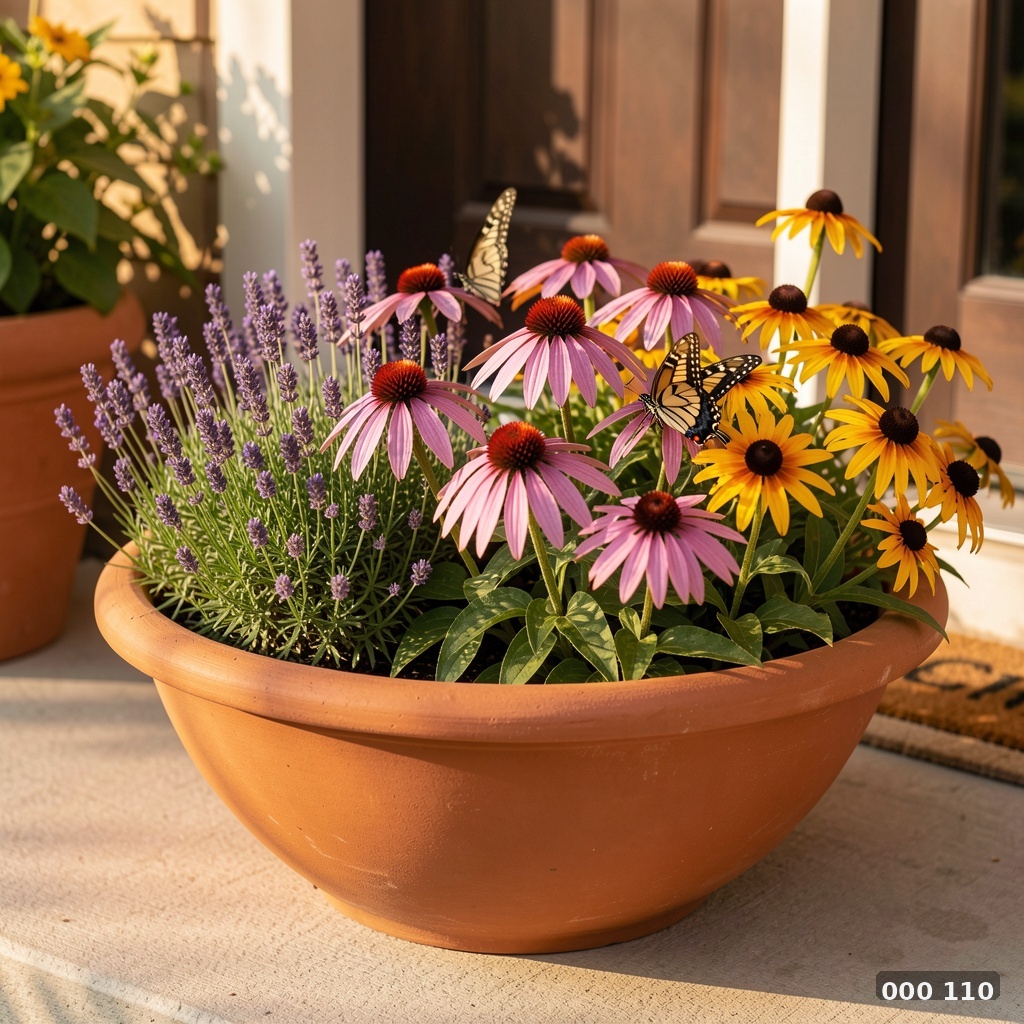
A wide terracotta bowl clusters purple coneflower, lavender, and black-eyed Susan on the doorstep. The purple and yellow contrast draws butterflies from across the yard. Each flower head provides a landing platform — bees, swallowtails, and finches all stop by daily.
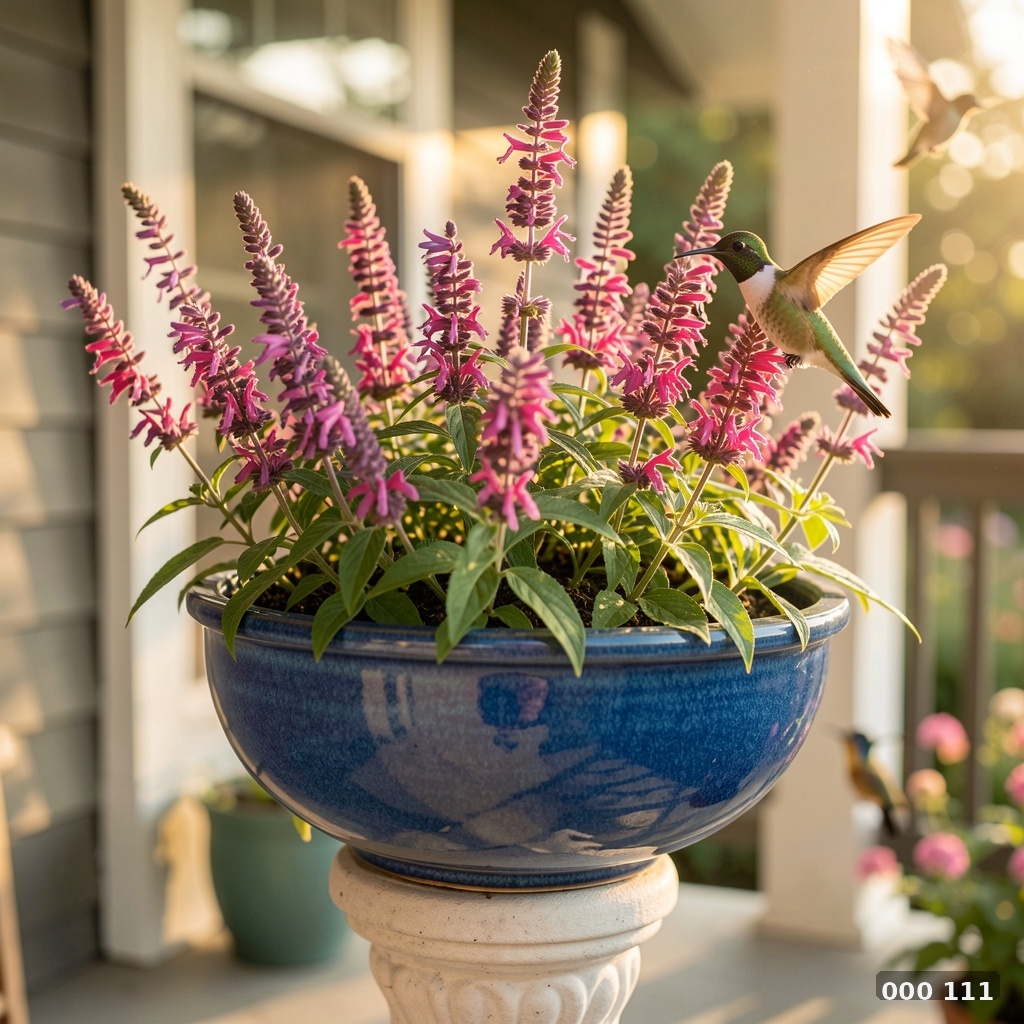
Salvia and bee balm in a blue ceramic bowl create a vertical pollinator tower. Hummingbirds love the tubular blooms; bees work the salvia spikes from bottom to top. The bowl sits on a pedestal, bringing the blooms closer to eye level for porch-side viewing.
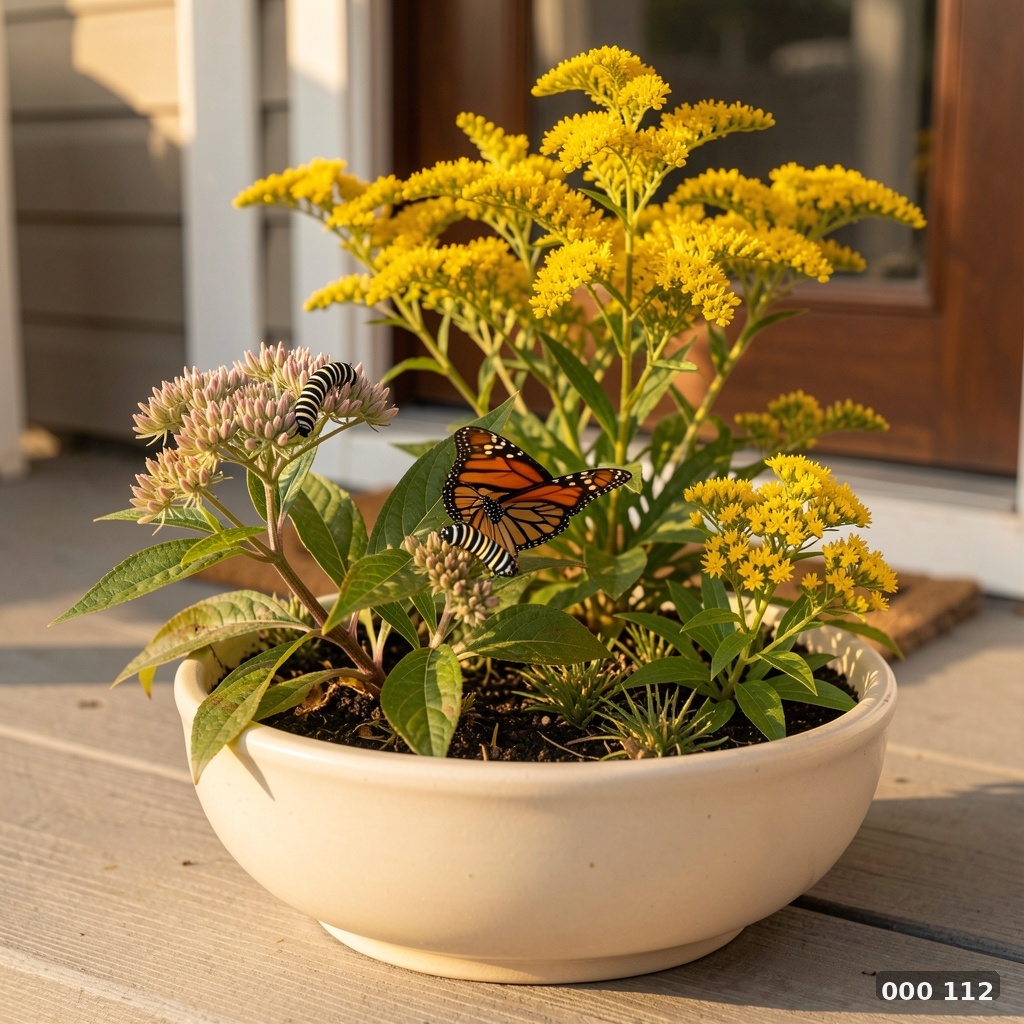
A dedicated milkweed and goldenrod bowl in a cream pot. Monarch caterpillars feed on the milkweed leaves; goldenrod attracts late-season pollinators. Watch every stage of the butterfly life cycle from your rocking chair.
Native Clusters
Grouped pots of native perennials create a layered pollinator corridor — low groundcovers in front, tall bloomers behind, continuous flowers from spring through fall.
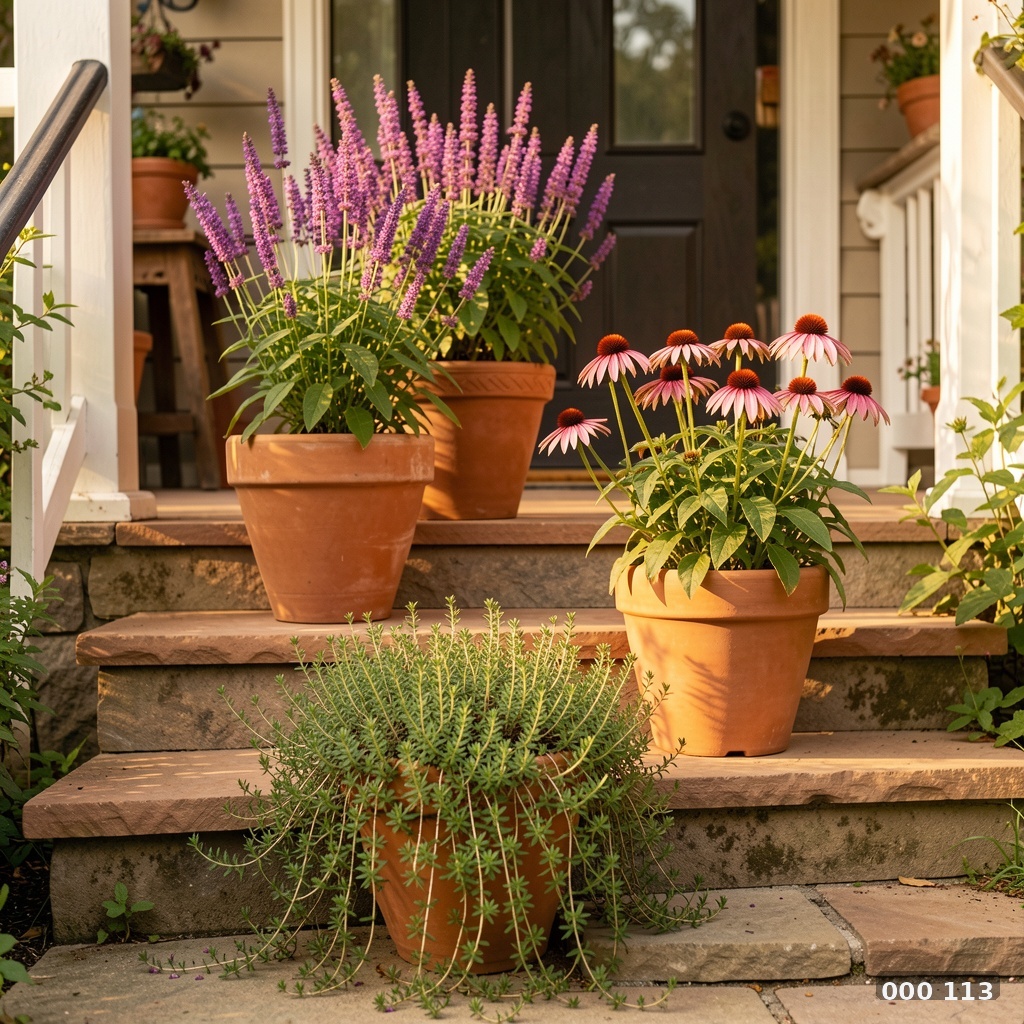
Three terra cotta pots on porch steps: tall purple salvia in back, medium Echinacea in the middle, trailing creeping thyme in front. The vertical step creates a natural amphitheater of blooms. Each step layer gets different pollinator traffic throughout the day.
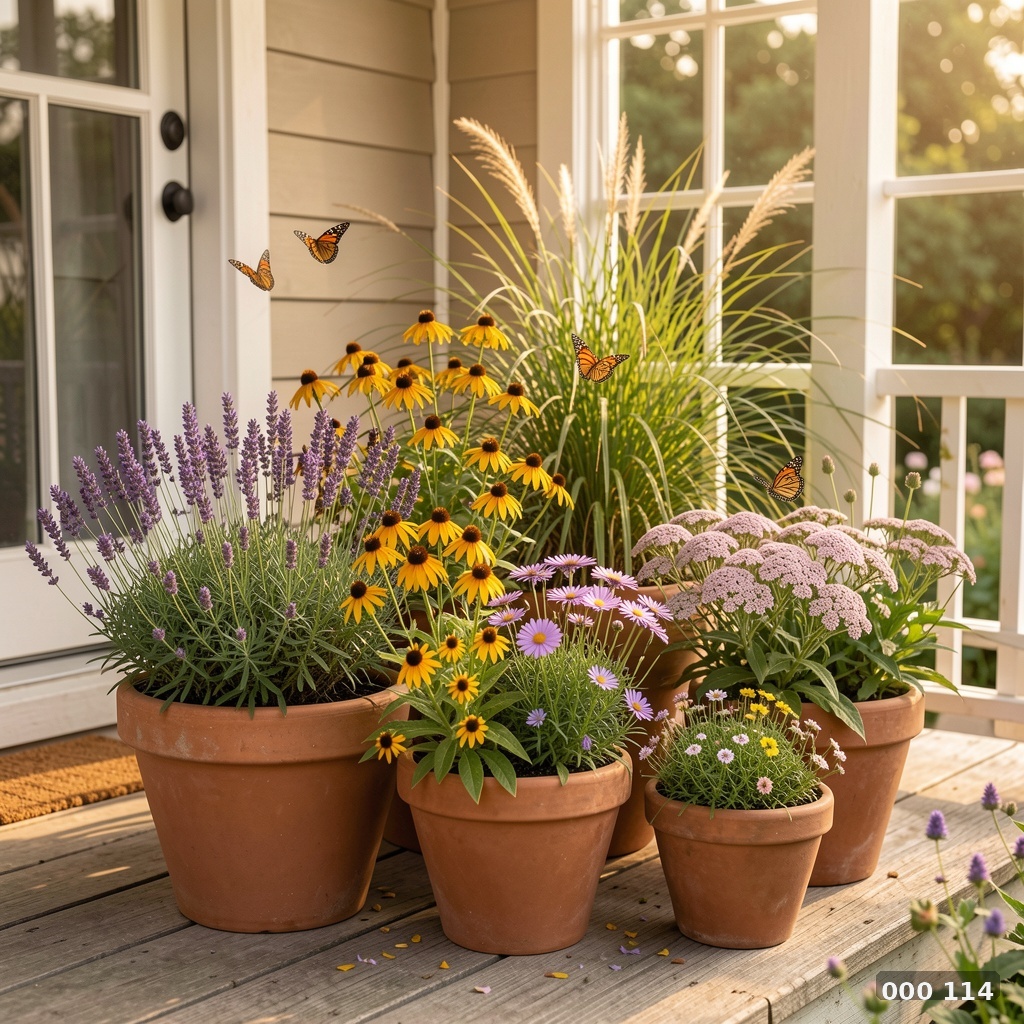
A corner cluster of five pots: lavender, butterfly weed, aster, yarrow, and ornamental grass. The mix of heights and textures reads as a miniature wildflower meadow compressed into a porch corner. Butterflies navigate between blooms without leaving the doorway.
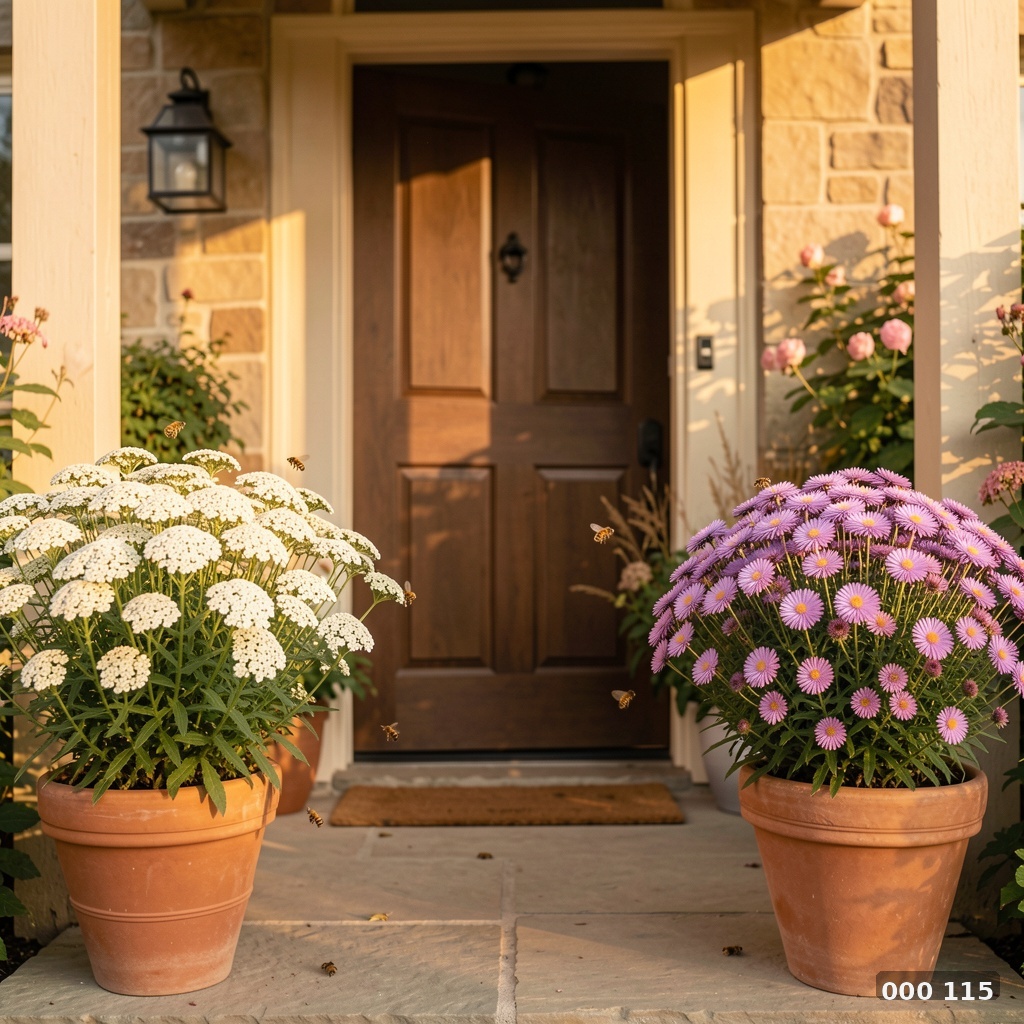
Matching pairs of pots flank the door: white yarrow on the left, purple aster on the right. The symmetry frames the entrance while blooms create a welcoming corridor. Bees travel from pot to pot across the doorway threshold.
Vertical Pollinator
Vertical pollinator gardens and hanging baskets bring bee-friendly blooms to smaller porches — hanging fuschia, trailing nasturtium, and wall-mounted herbs.
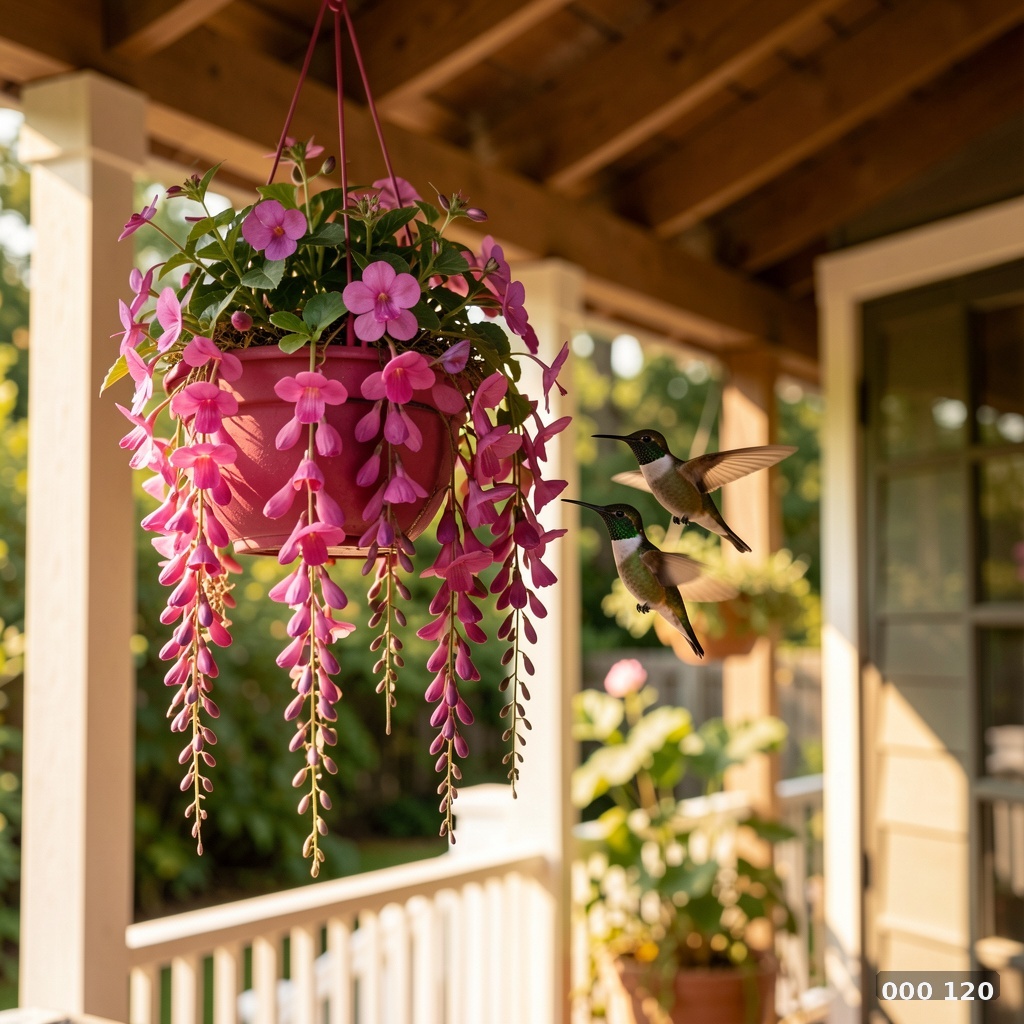
A hanging fuschia basket dripping with pendulous pink and purple blooms attracts hummingbirds like a magnet. Close enough to watch the hummers hover at eye level. Fuchsia thrives in shade, making it perfect for covered porches.
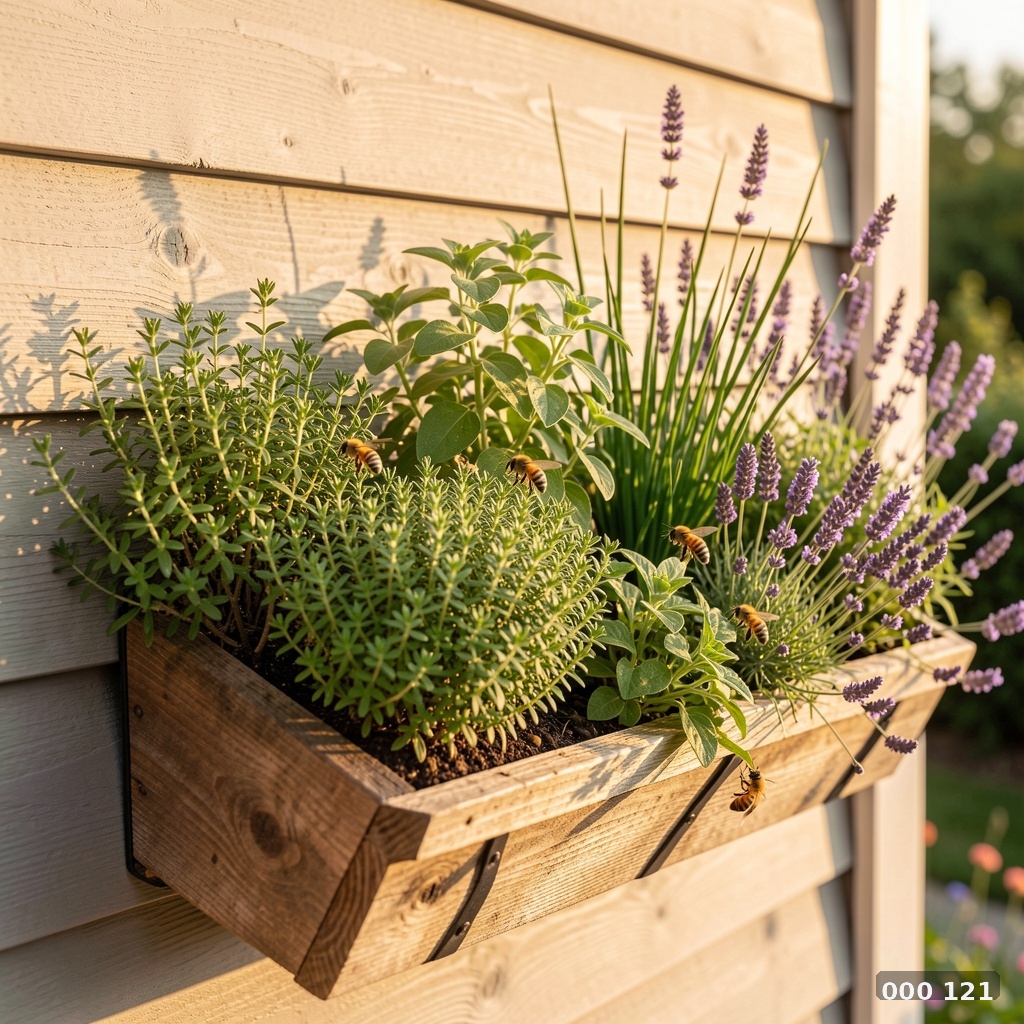
A wall-mounted planter filled with flowering herbs: thyme, oregano, chives, and lavender. When the herbs bloom, they attract native bees in droves. Snip herbs for dinner while watching the pollinators work.
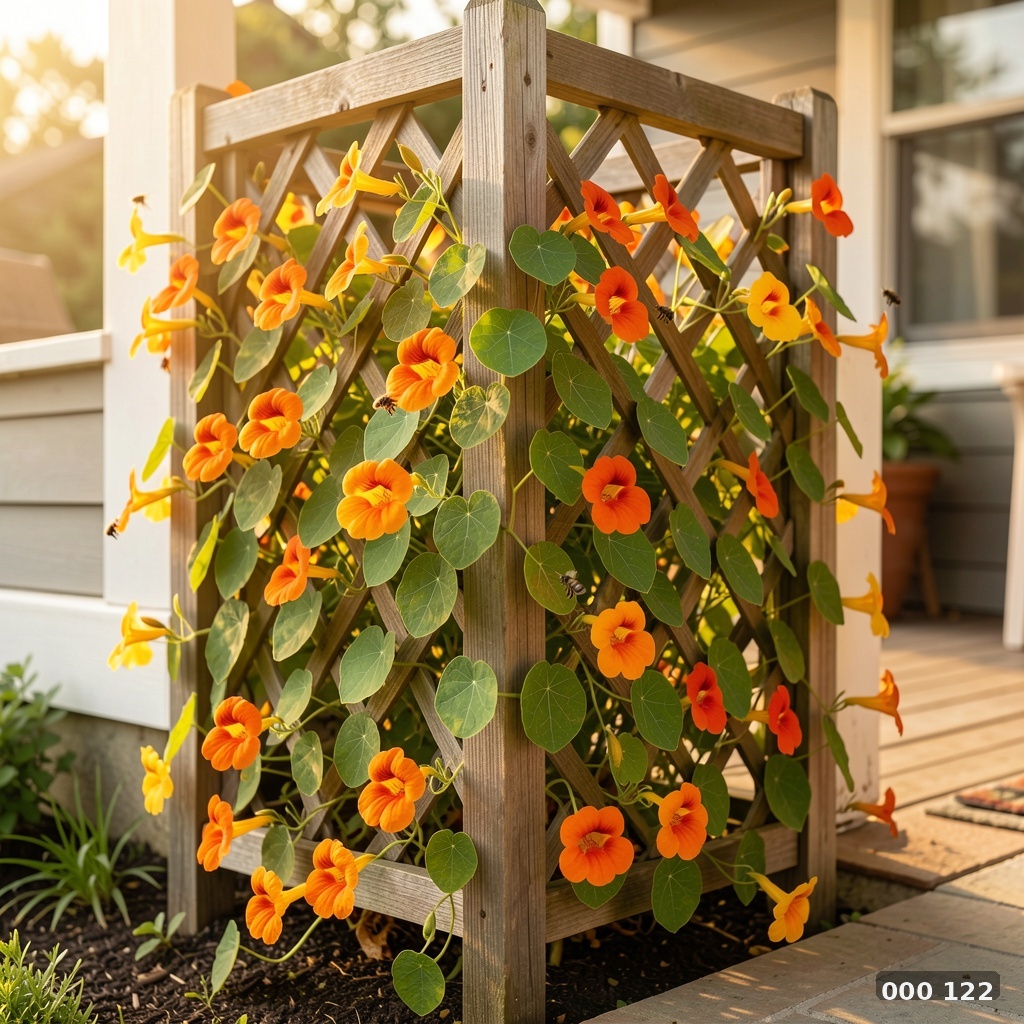
A small wooden trellis covered with climbing nasturtium in orange and yellow. The bright trumpet-shaped blooms attract bees all summer. Vertical growth saves floor space while creating a living privacy screen.
Panorama
When the bowl anchors the doorstep, clusters line the stairs, and hanging blooms fill the air — your porch becomes a sanctuary for both you and the pollinators.
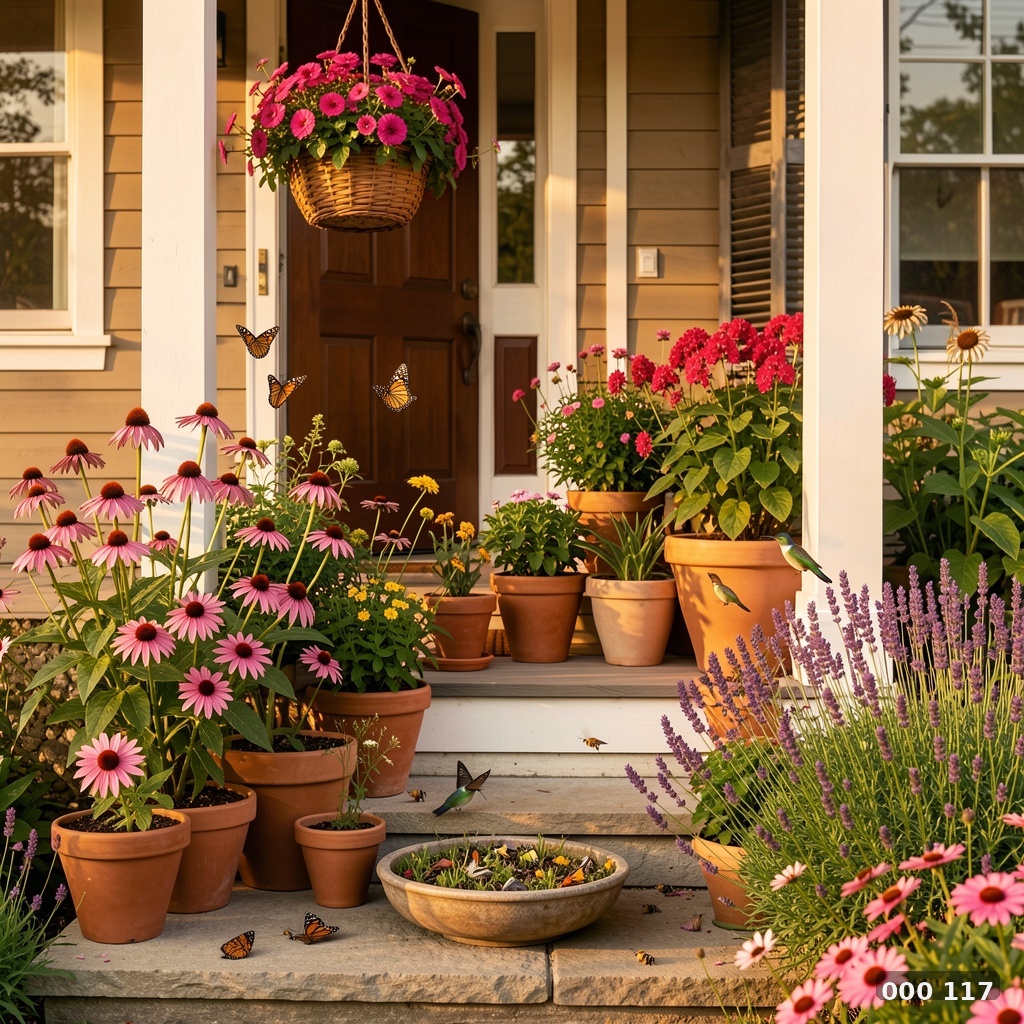
A pollinator bowl at the doorstep, clustered pots on the stairs, a fuschia basket above. Butterflies on the coneflower, bees on the lavender, a hummingbird checking the fuschia. Your front door becomes a front-row seat to nature.
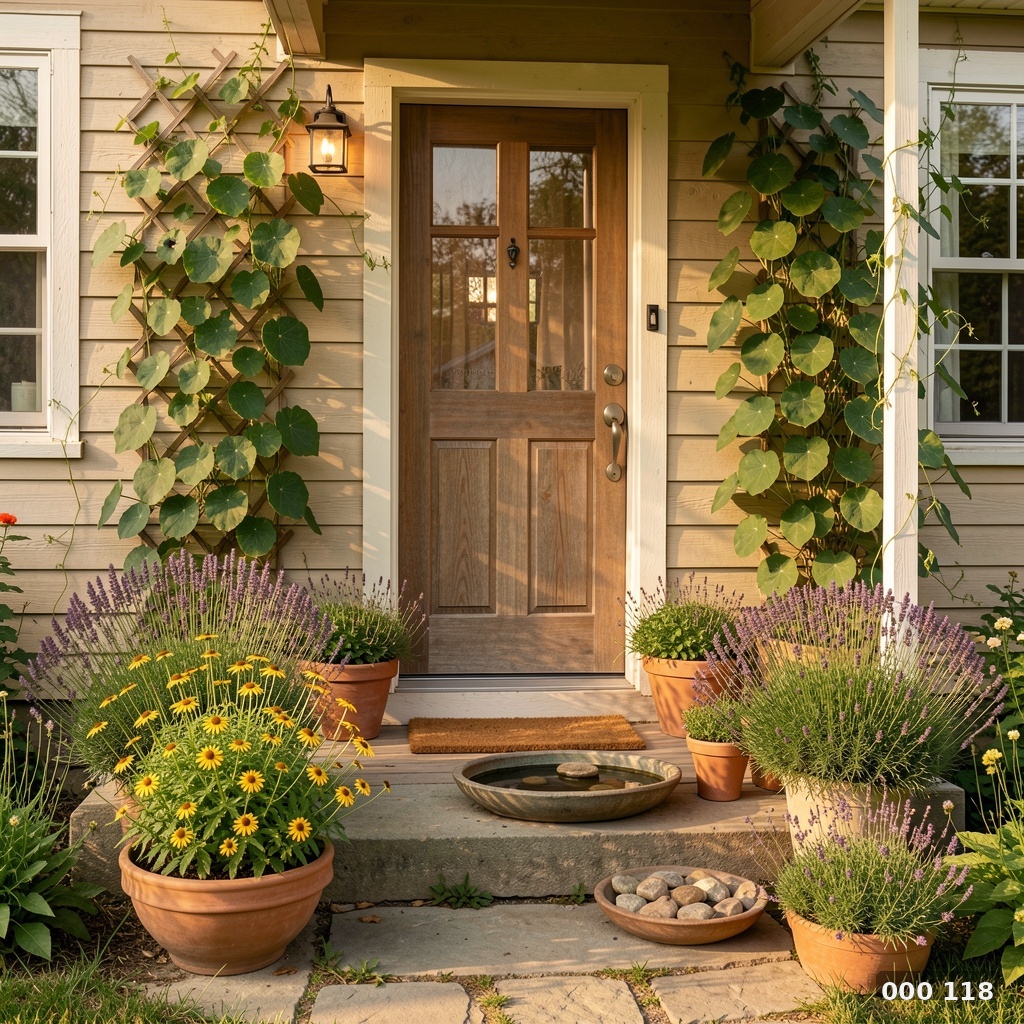
Cottage-style: a milkweed bowl, lavender pots flanking the door, a climbing nasturtium trellis on the wall. The wild, natural look reads as cottage charm. A water dish with stones sits on the step for thirsty butterflies.
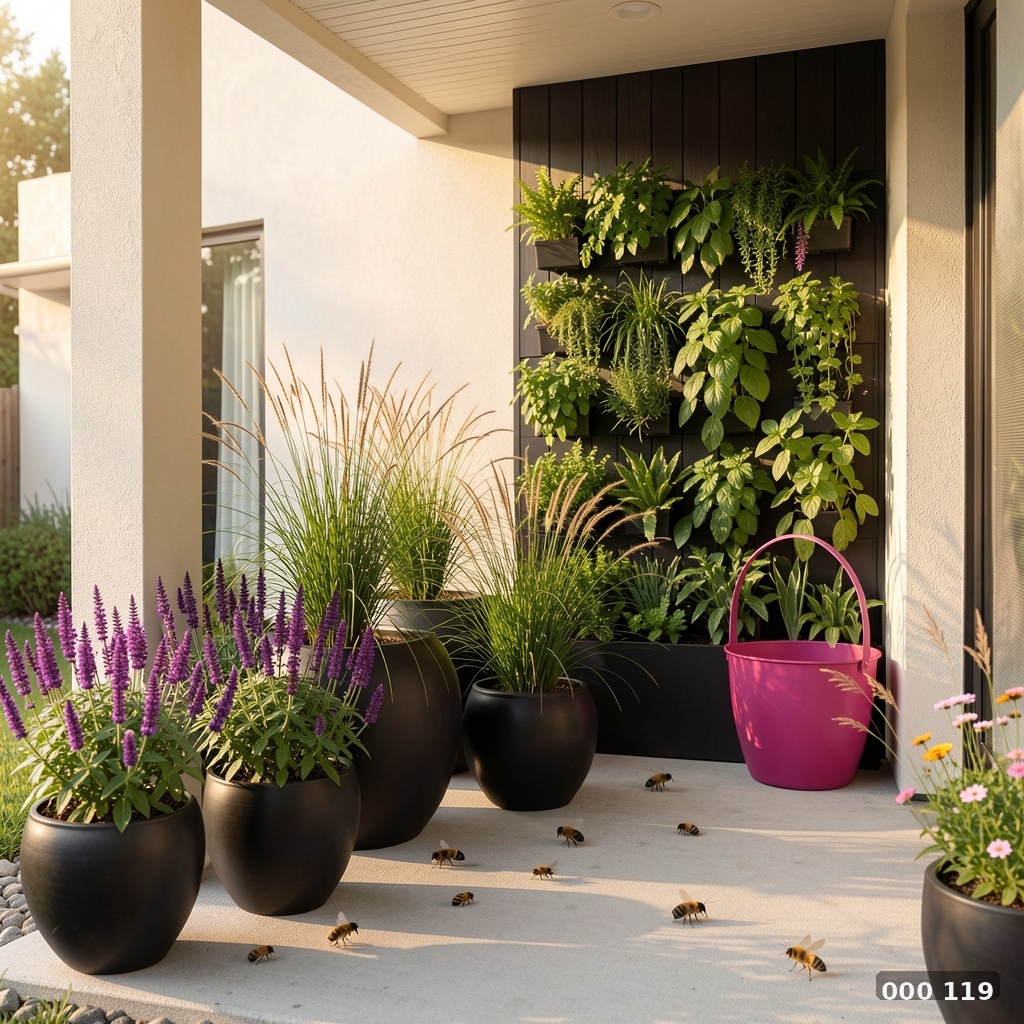
Modern: black ceramic pots with salvia and grasses, a vertical herb wall, a single fuschia basket. Clean lines, intentional choices, same pollinator activity as a wildflower meadow. Proof native gardens suit modern design too.
Plant Care
Native plants are naturally low-maintenance — they evolved for your climate. Here is what they need from you.
Watering
Natives need less water than exotic plants once established. Water deeply but less frequently — once every 3-5 days in summer for pots. Wilting leaves mean the soil has dried out. Avoid overhead watering to protect flowers pollinators are working.
Light
Most native pollinator plants need full sun (6+ hours). South and west-facing porches are ideal. For shade porches, choose fuschia, columbine, and ferns — they attract hummingbirds without direct sun.
Pruning
Deadhead spent blooms for continuous flowering — but leave some seed heads in fall for birds. Cut back perennials to 4 inches in late winter. Native plants want less intervention, not more.
Seasonal
Spring: plant after last frost. Summer peak: flowers June-August. Fall: leave seed heads for birds, add asters for late-season nectar. Winter: move tender perennials to protected areas. Most natives return from roots in spring.
FAQ
What are the best native plants for a porch pollinator garden?
Purple coneflower (Echinacea), black-eyed Susan, butterfly weed, lavender, salvia, bee balm, goldenrod, and aster. Choose three that bloom in succession: coneflower for early summer, bee balm for midsummer, aster for fall.
Will bees be a problem near my front door?
Native bees are solitary and non-aggressive — they focus on flowers, not people. Place pollinator pots 3-4 feet from the door to keep the traffic zone clear. A well-placed garden has bees in the flowers, not in your face.
How do I attract butterflies to my porch?
Purple coneflower and butterfly bush provide nectar for adults. Milkweed is essential for monarch caterpillars. Plant in sunny spots — butterflies feed in warmth. Add a shallow dish with pebbles for puddling.
Can I grow a pollinator garden on a shady porch?
Yes — choose fuschia, columbine, coral bells, and ferns. Hummingbirds are the primary visitors to shade pollinator gardens. Avoid over-watering — shade pots stay moist longer.
Should I avoid pesticides on pollinator plants?
Absolutely — pesticides do not discriminate. Use neem oil for pest control if needed. Let aphids be (ladybugs eat them). A healthy pollinator garden has natural balance.
What pot sizes work for native pollinator plants?
Wide and shallow — many native flowers have deep taproots. Use pots 12-16 inches wide and at least 12 inches deep. Terracotta is ideal for drainage. Group 3-5 pots together for a wildflower meadow effect.
How do I keep blooms all season?
Plant a succession: spring bulbs → early summer coneflower → midsummer bee balm → late summer goldenrod. Deadhead spent blooms. Continuous bloom succession keeps pollinators visiting April through October.
Do pollinator gardens need special soil?
Native plants prefer lean, well-draining soil. Add sand or perlite for drainage. Avoid heavy compost. Many natives produce more blooms when not over-fed. Simple cactus/succulent mix works well.
Related
Download the Complete Design Checklist
Get a printable pollinator garden checklist: native plant guide, bloom succession calendar, container chart — ready for the native nursery.