
This post contains affiliate links. As an Amazon Associate I earn from qualifying purchases.
Scented Herb Corner — Aromatic Freshness at Your Doorstep
Lavender, rosemary, mint, and lemon balm — a fragrant herb corner that perfumes the air and seasons your cooking, right outside your door.
Design Philosophy
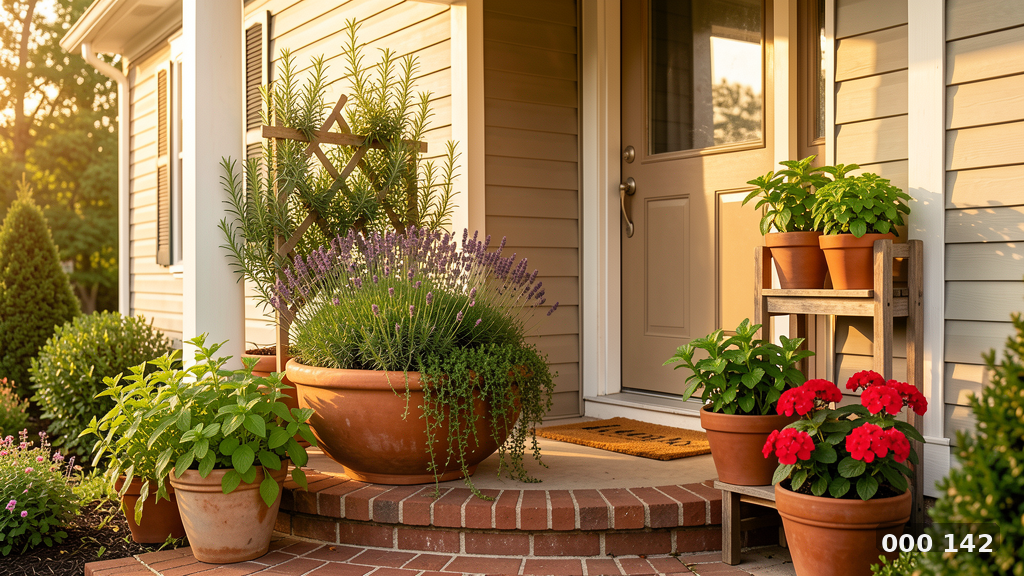
A scented herb corner does what no flower can: it engages every sense. Brush past lavender and the scent follows you inside. Snip rosemary for roast chicken without leaving the porch. Mint in your tea came from three feet away.
Herb Corner Bowl
A bowl of aromatic herbs at the doorstep — lavender, rosemary, and thyme in a single fragrant cluster that perfumes every entry and exit.
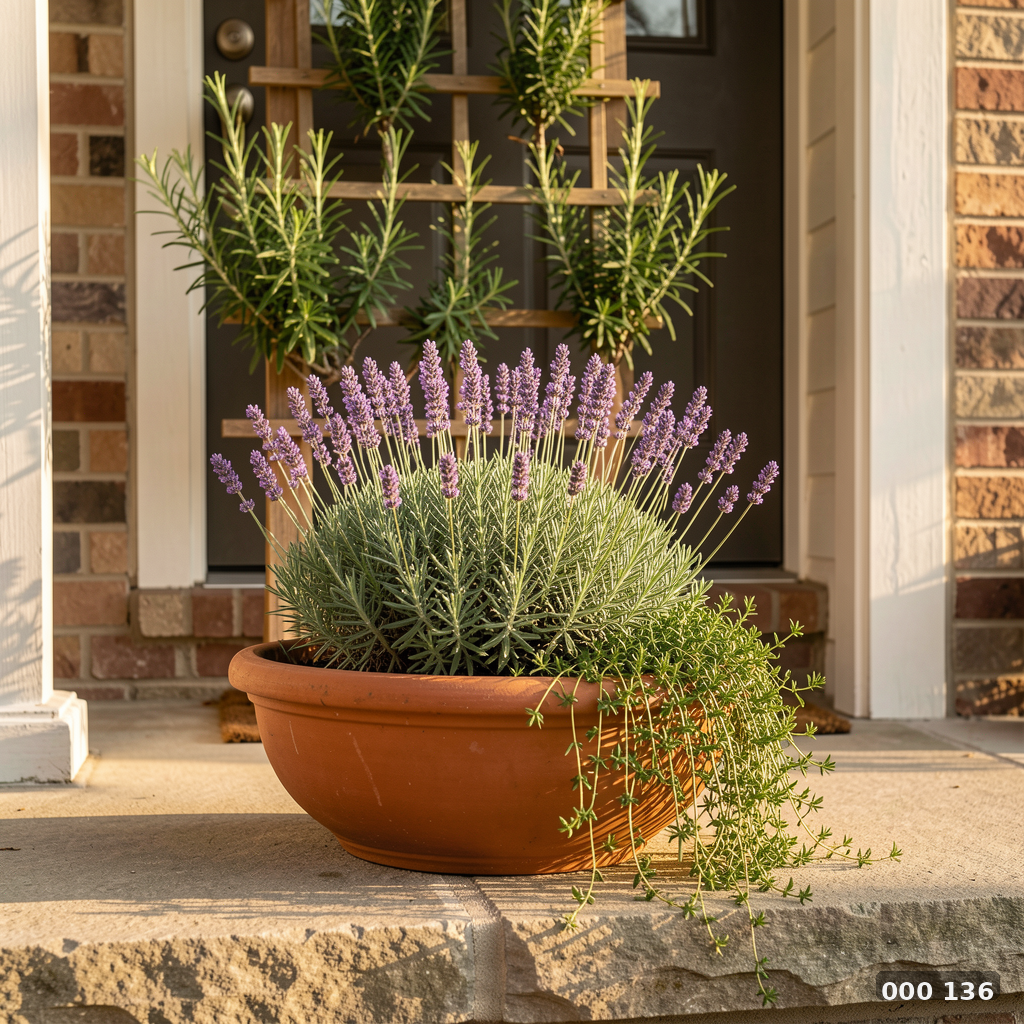
A wide terracotta bowl with lavender as the centerpiece, rosemary trained on a small trellis behind, and trailing thyme spilling over the rim. Brush the lavender as you pass — the scent follows you inside. Three herbs, three textures, one aromatic powerhouse.
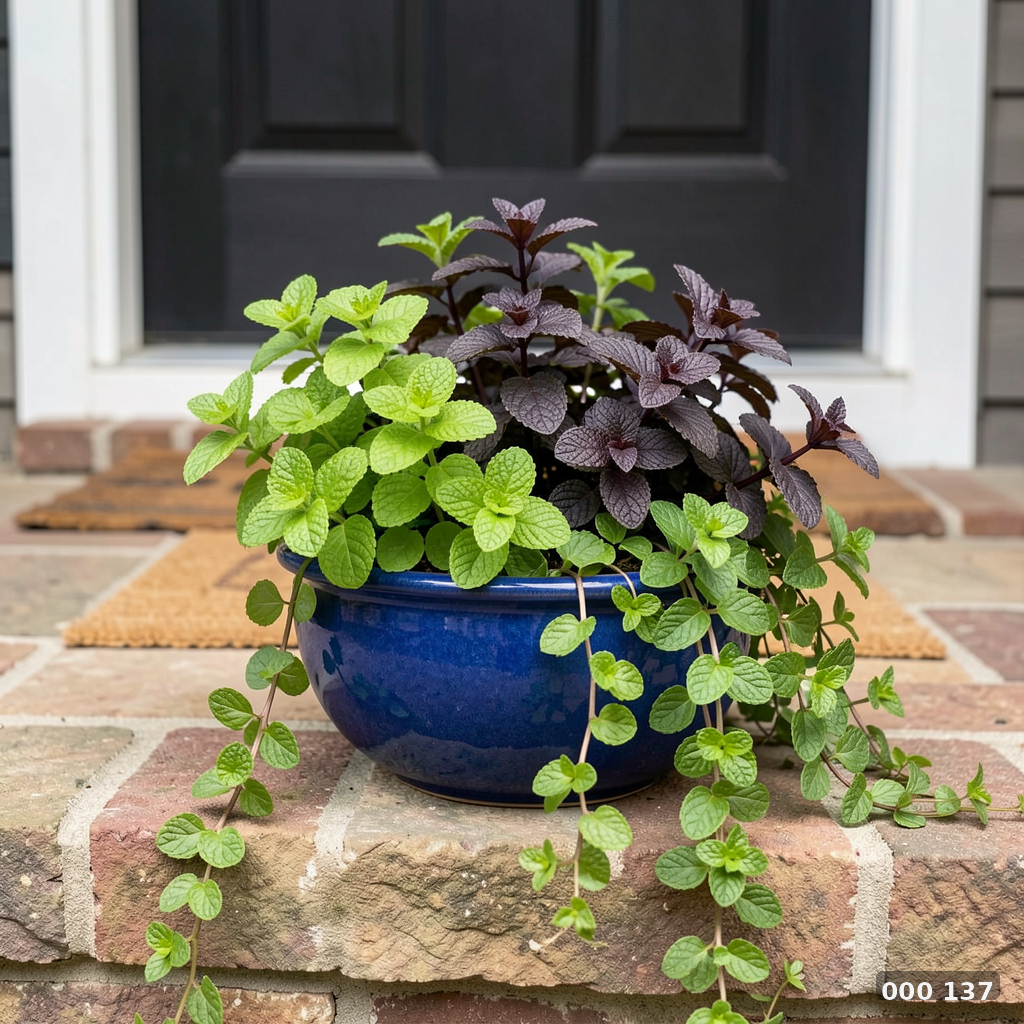
A blue ceramic bowl filled with lemon balm (bright green, rounded leaves), chocolate mint (dark stems, intense scent), and apple mint trailing over the edge. Snip leaves for tea or lemonade. The citrus-mint fragrance fills the entire entry.
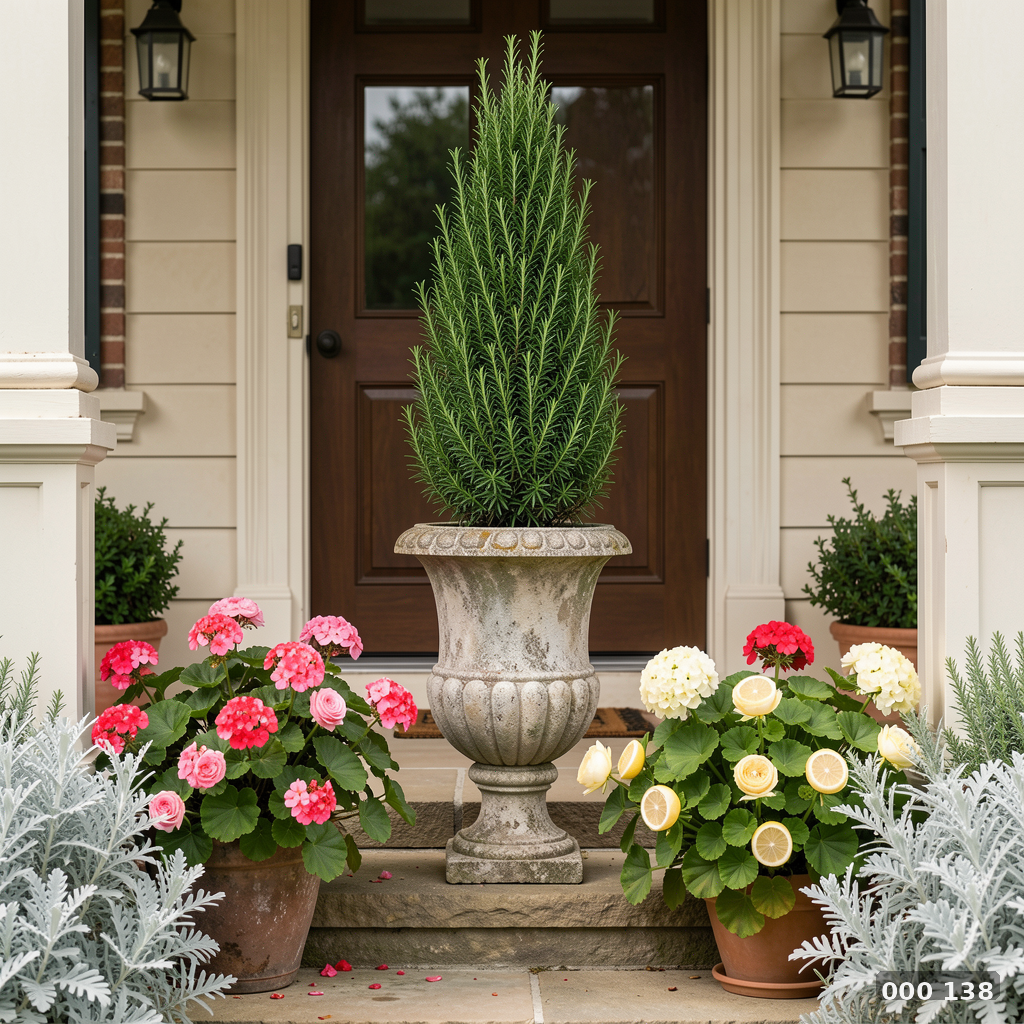
A weathered stone urn with a tall rosemary topiary standard surrounded by scented geraniums in rose and lemon varieties. Silver dusty miller rings the base. Architectural, aromatic, and surprisingly formal for an herb garden.
Fragrant Clusters
Grouped herb pots on steps and corners — each pot a different scent, together creating a layered aromatic experience.
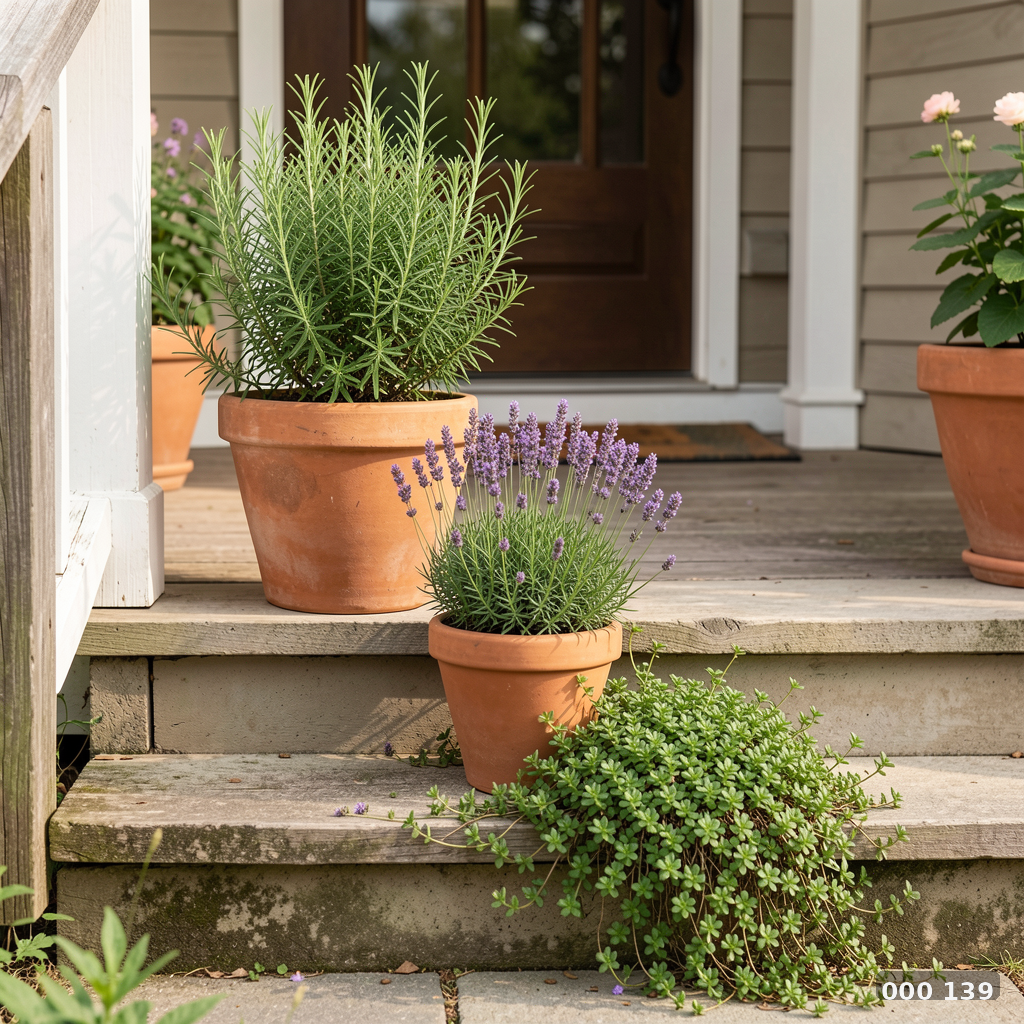
Three graduated terracotta pots on porch steps: tall rosemary standard on the top step, medium lavender in the middle, low creeping thyme trailing over the bottom step. Each step releases a different scent as you brush past. A vertical aromatic garden.
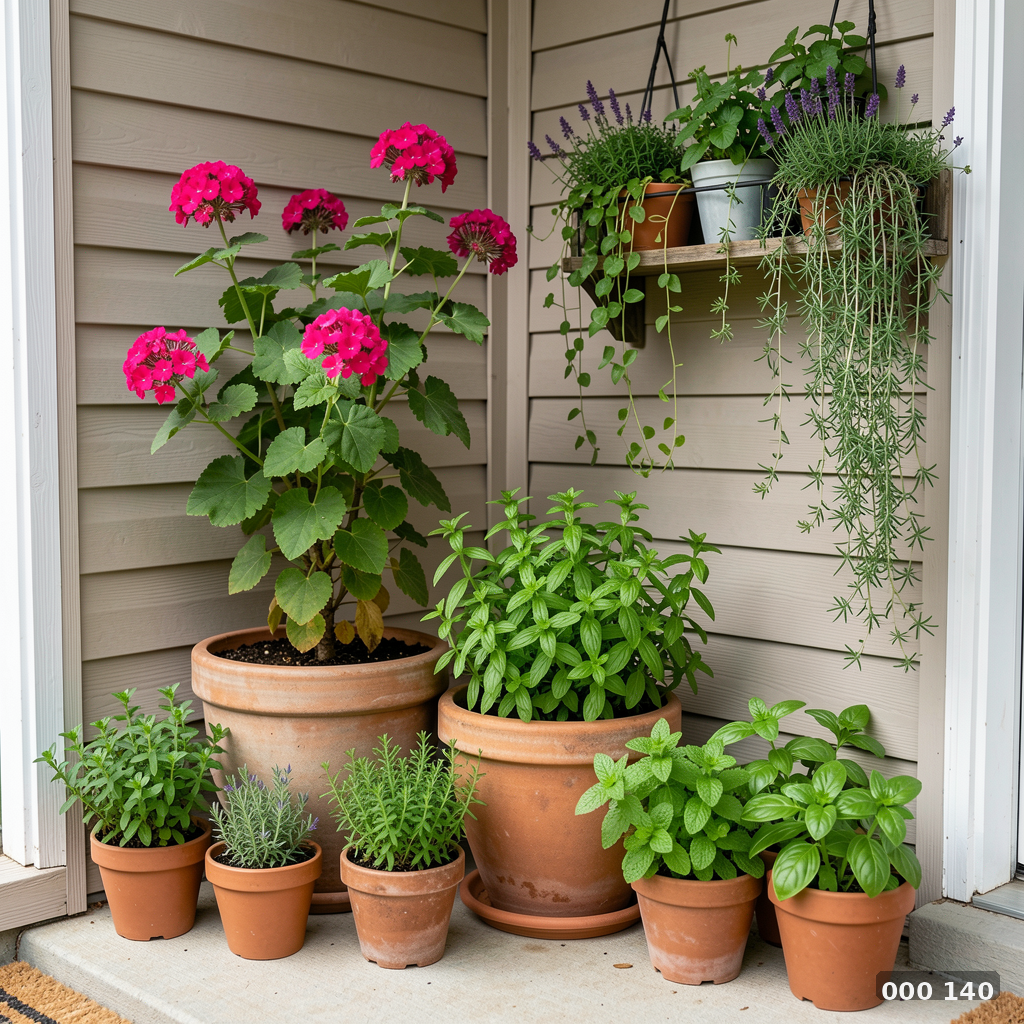
A corner cluster of herb pots: tall scented geranium in a ceramic pot, lemon balm in the middle, mint and basil in small pots at the base. A wooden corner shelf holds cascading marjoram. Purple basil adds color contrast to the green foliage.
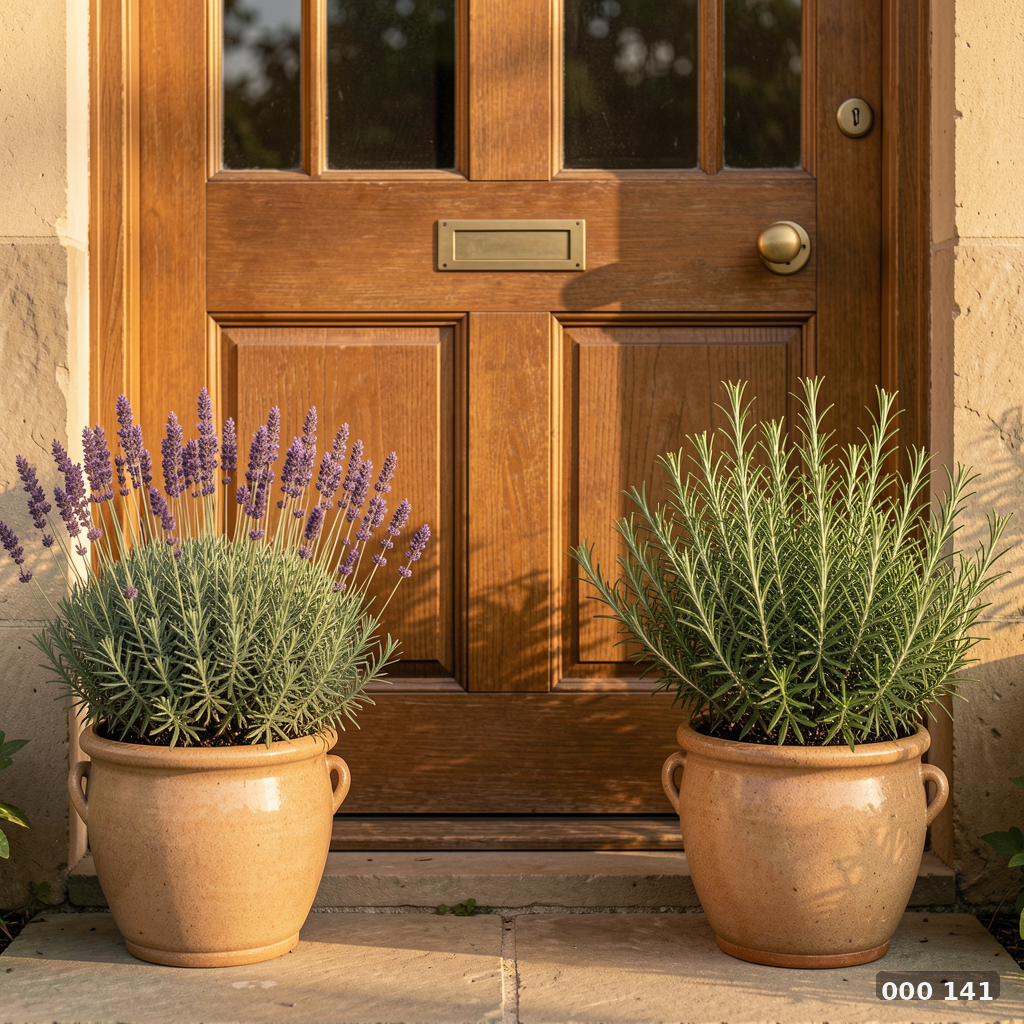
Matching ceramic herb pots flanking the door: lavender on one side with its purple spikes, rosemary on the other with its needle-like leaves. The symmetry is softened by the informal growth. Gray-green foliage frames the entrance with scent.
Scented Vertical
Vertical herb gardens — wall planters, hanging baskets, and tiered shelves — bring aromatic herbs to eye level within easy reach.
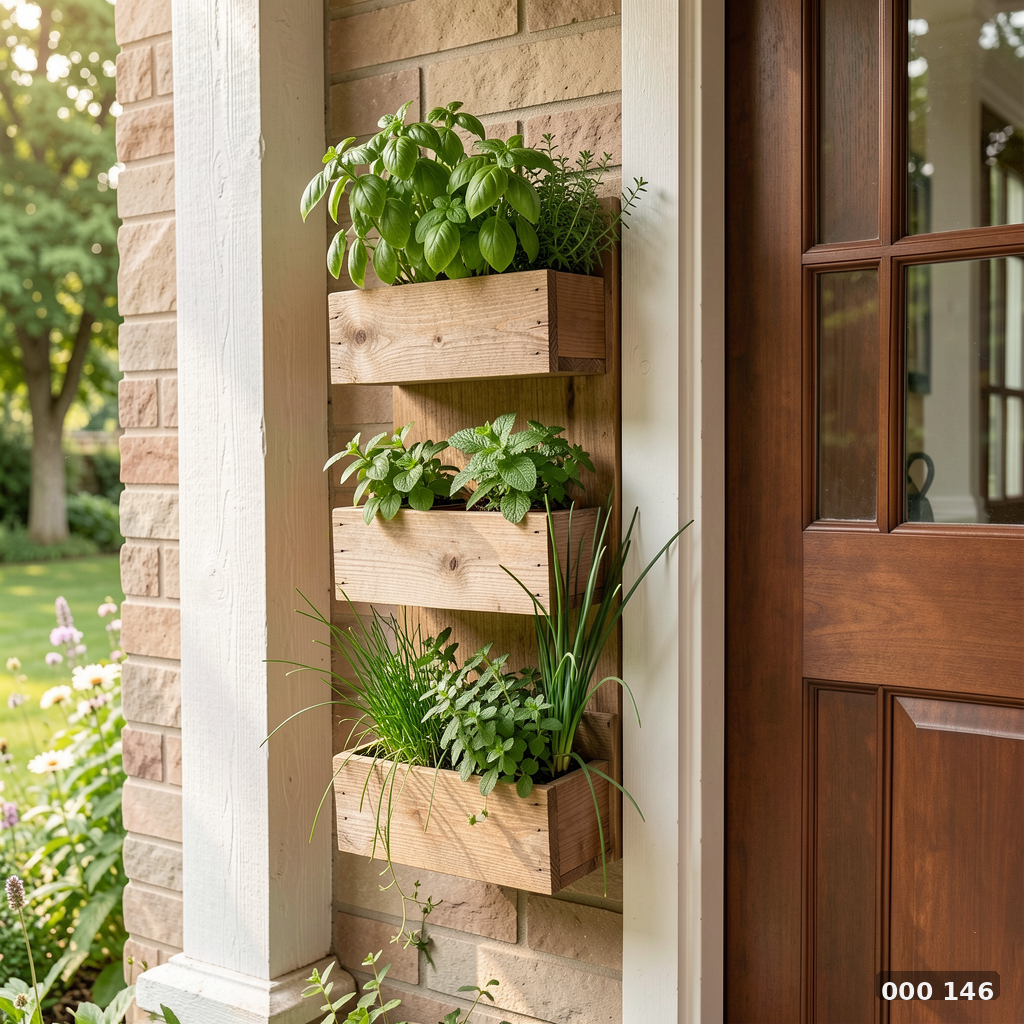
A wall-mounted wooden shelf holding three small herb pots: basil, mint, and chives. Each pot is within arm's reach of the door. Snip basil for pasta, mint for tea, chives for salad — without stepping off the porch. Practical and beautiful.
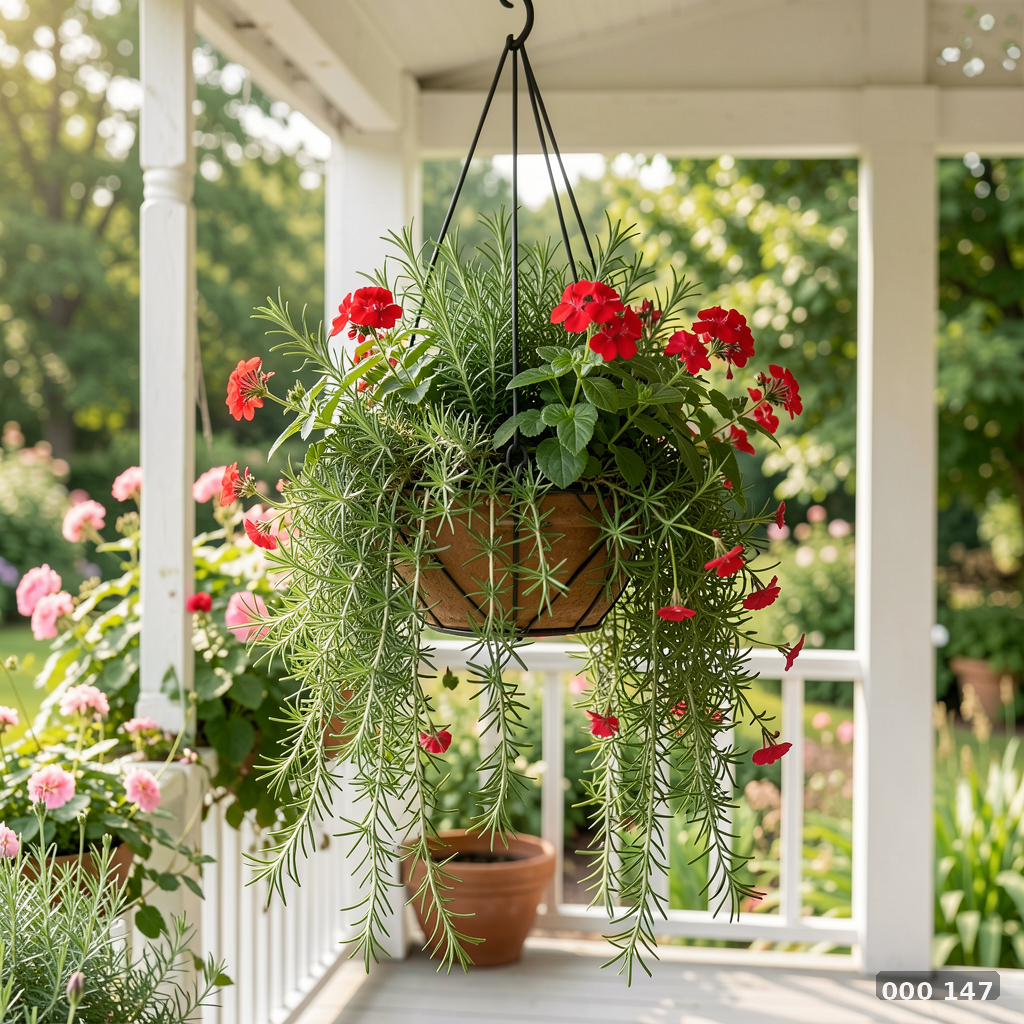
A hanging wire basket lined with trailing rosemary and scented geraniums. The aromatic vines cascade within easy reach. Rosemary releases its pine-like scent with every brush. The geraniums add rose and lemon notes at eye level.
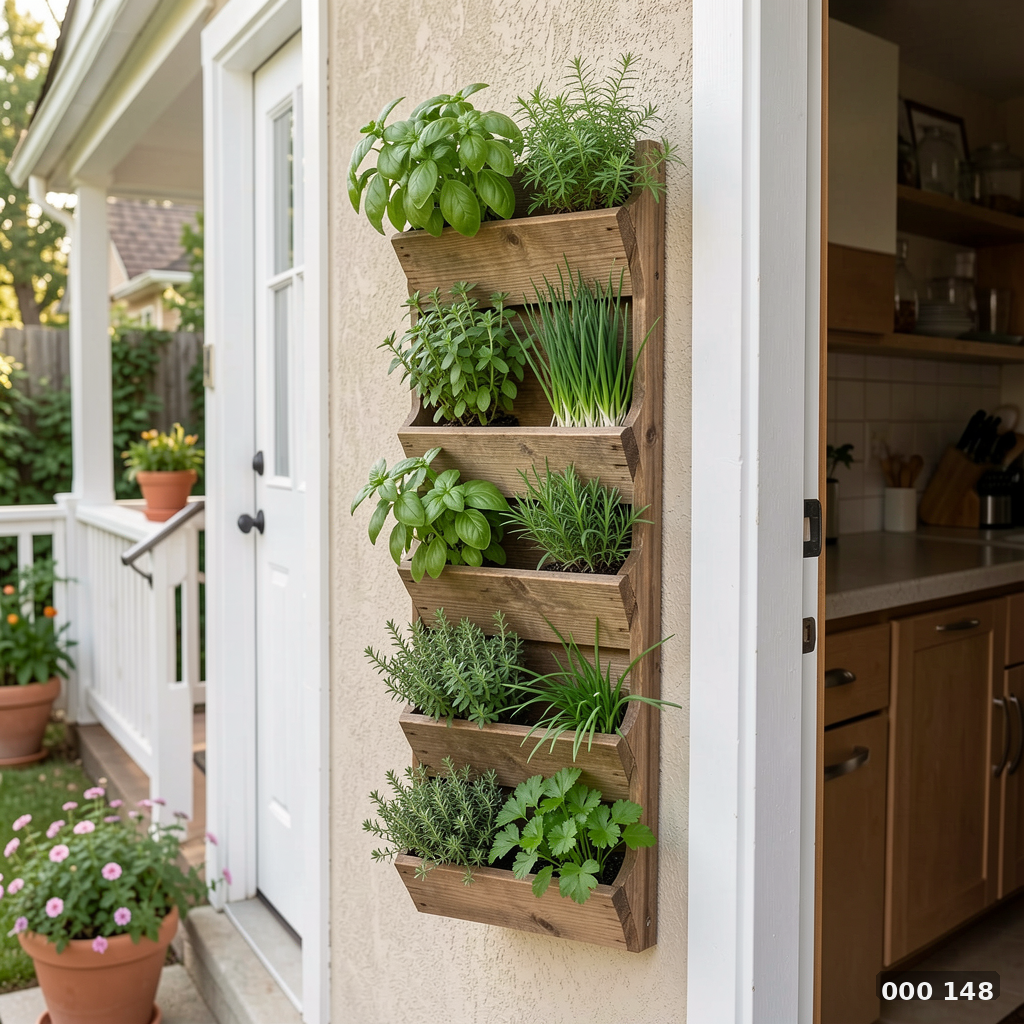
A vertical tiered herb planter with individual compartments: basil, oregano, thyme, chives, and parsley. Each herb has its own space and drainage. The living herb wall sits just outside the kitchen door — the shortest walk from garden to plate.
Panorama
When the herb bowl anchors the doorstep, fragrant pots line the stairs, and vertical herbs climb the wall — your porch becomes an aromatic kitchen garden.
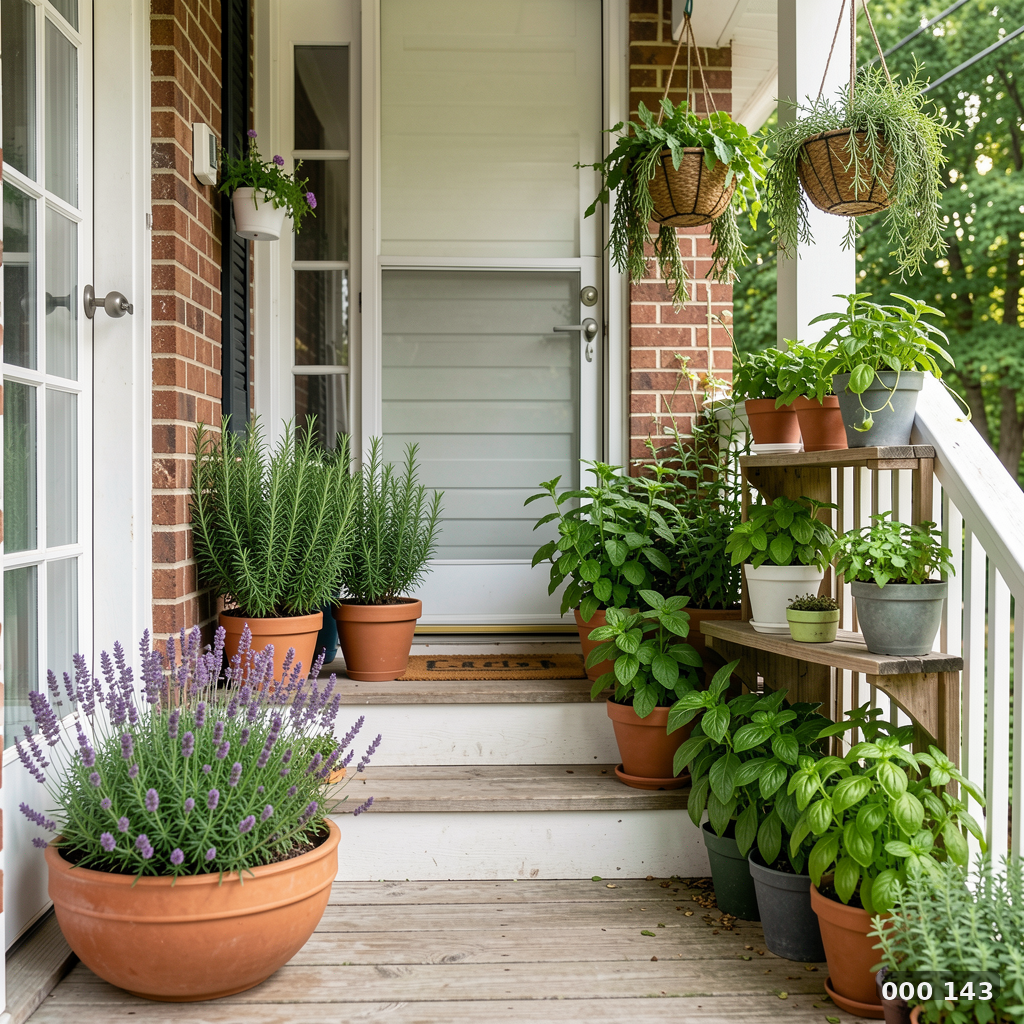
A lavender bowl at the doorstep, rosemary pots on the stairs, a wooden corner shelf with mint and basil, a hanging rosemary basket above. Every step releases a different scent. The entire porch is an aromatic herb garden you walk through daily.
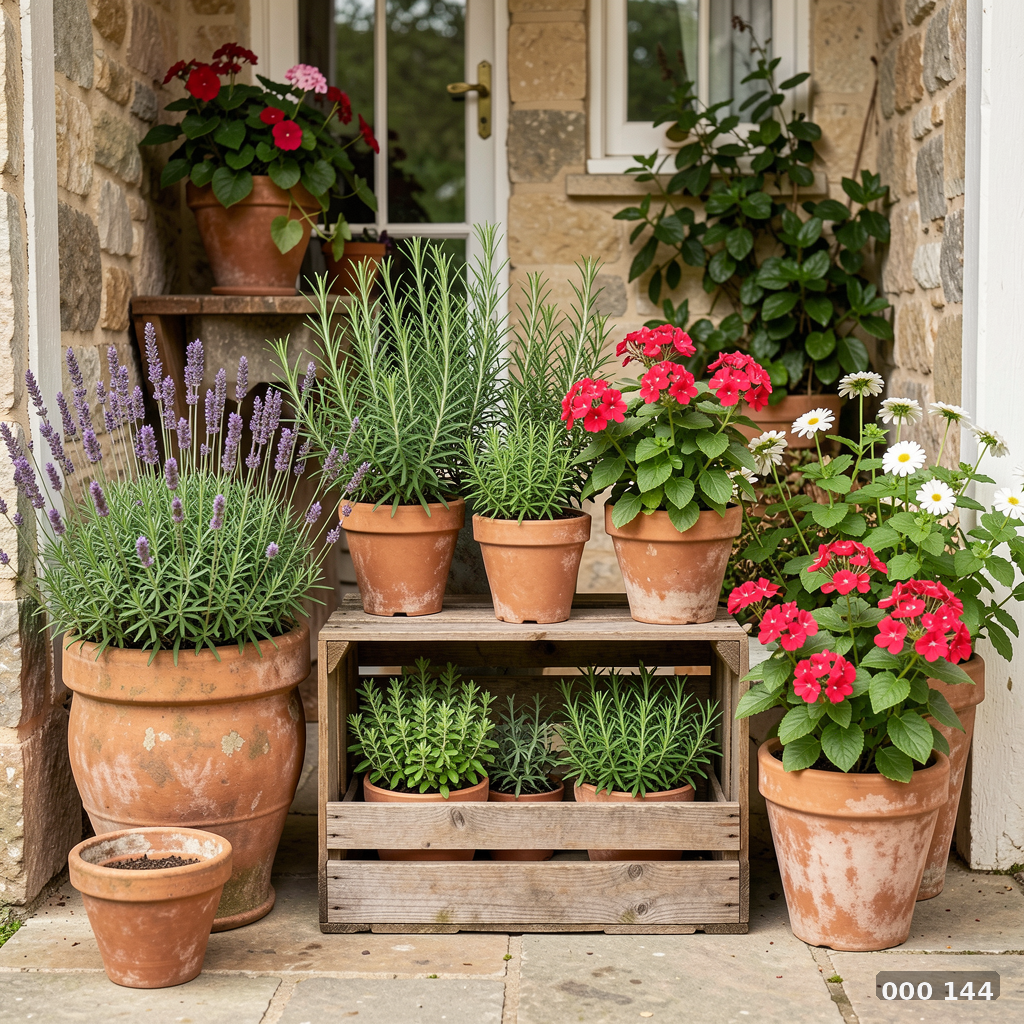
Cottage-style: lavender, rosemary, lemon balm, and scented geraniums in weathered terracotta pots of varying sizes. A wooden crate holds three herb pots at different heights. Rustic, aromatic, and effortlessly charming.
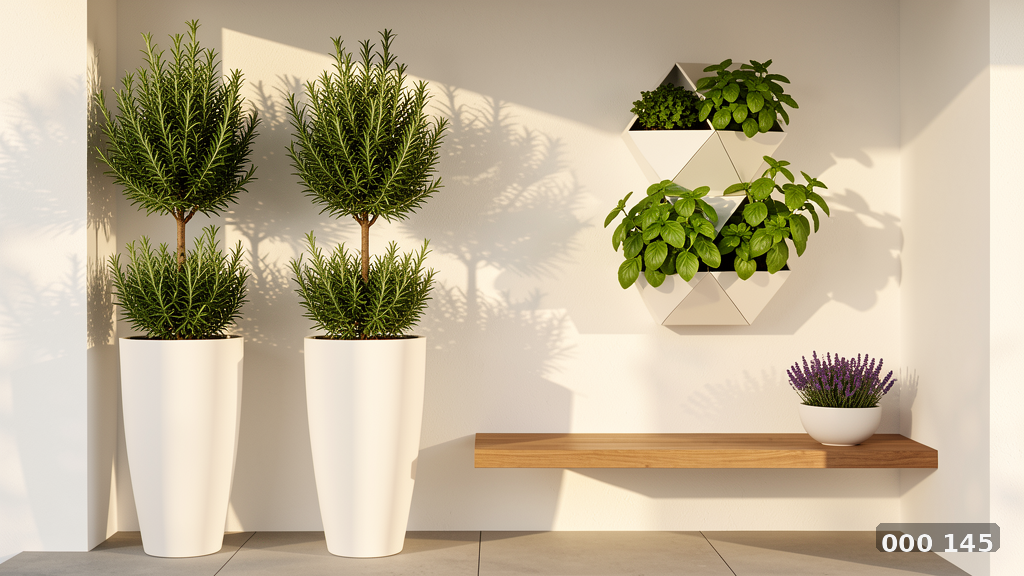
Modern herb porch: clean white ceramic pots with structured rosemary topiaries, a geometric wall herb planter, and a single lavender bowl. Minimalist arrangement delivering maximum fragrance. Proof that herb gardens suit modern clean lines.
Plant Care
Herbs are among the easiest plants for containers — most thrive on neglect and reward you with continuous harvests.
Watering
Water herbs when the top inch of soil is dry. Most culinary herbs prefer slightly dry conditions over wet. Lavender and rosemary are drought-tolerant. Mint and basil need consistent moisture. Check pots daily in summer heat.
Light
Most culinary herbs need full sun (6-8 hours). Lavender, rosemary, thyme, and basil are sun-lovers. Mint and lemon balm tolerate partial shade. South and west-facing porches provide the best conditions for vigorous herb growth.
Pruning
Harvest herbs regularly — frequent snipping promotes bushier growth. Pinch basil tips to prevent flowering. Cut lavender stems after blooming. Trim rosemary to maintain shape. Divide mint annually to prevent pot-bound roots.
Seasonal
Spring: plant after last frost. Summer: harvest peak, water regularly. Fall: bring tender herbs (basil, lemon balm) indoors. Winter: protect lavender and rosemary in pots. Perennial herbs return in spring with fresh growth.
FAQ
What are the best scented herbs for porch containers?
Lavender (English or French), rosemary, lemon balm, mint (spearmint, chocolate mint, apple mint), thyme, basil (sweet or purple), scented geraniums, chives, oregano, and marjoram. Choose 4-5 for a diverse aromatic experience.
Do herbs need full sun on a porch?
Most culinary herbs need 6-8 hours of direct sun. Lavender, rosemary, thyme, and basil are sun-worshippers. Mint and lemon balm tolerate partial shade. For shaded porches, choose mint, chives, and lemon balm as your primary herbs.
How do I keep herbs from getting leggy?
Regular harvesting is the best prevention — snip herbs weekly whether you need them or not. Pinch growing tips to encourage branching. Rotate pots for even light exposure. Replace annual herbs (basil) mid-season if they become too woody.
Can I grow mint and basil together?
Yes, but use separate pots — mint is invasive and will crowd out basil in a shared container. Mint also needs more water than basil. Keep them in individual pots placed close together for convenience but with separate root systems.
What pot size do herbs need?
Most herbs need 10-12 inch pots with drainage holes. Rosemary and lavender benefit from deeper pots (14 inches). Mint needs a wide pot (12-14 inches) as it spreads aggressively. Group small pots on a tray for a unified look.
How to dry herbs from the porch?
Harvest in the morning after dew dries. Tie stems in small bundles and hang upside down in a dark, airy spot. Most herbs dry in 1-2 weeks. Store in airtight jars away from light. Lavender and rosemary dry particularly well for winter use.
Do herbs attract pests on the porch?
Herbs are naturally pest-resistant due to their essential oils. Aphids may attack basil — hose them off or use neem oil. Spider mites can affect rosemary in dry conditions. Mint repels ants. Lavender repels mosquitoes — a bonus for evening porch use.
Can I leave herb pots out in winter?
Hardy herbs (lavender, rosemary, thyme, chives) survive winter in containers in zones 7+. In colder zones, move pots to a protected area against the house or an unheated garage. Tender herbs (basil, lemon balm) must come indoors before frost.
Related
Download the Complete Design Checklist
Get a printable herb garden guide: best varieties for containers, companion planting chart, harvest calendar, drying guide — ready for the nursery.