
This post contains affiliate links. As an Amazon Associate I earn from qualifying purchases.
Cottage Garden Overflow — Abundant Blooms for Your Porch
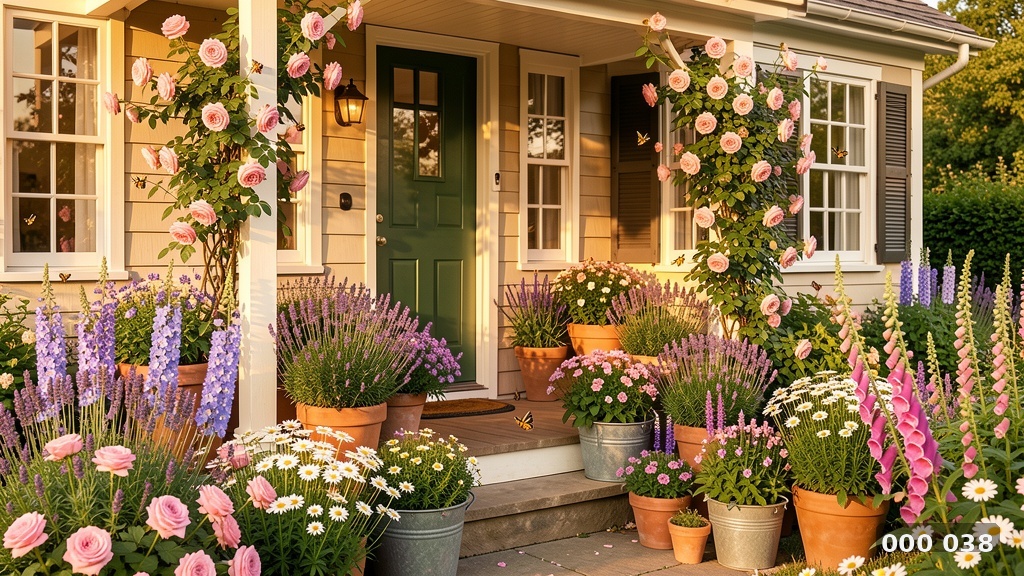
An abundant cottage garden on your front porch — layers of lavender, roses, daisies, and foxglove that spill and trail in glorious profusion.
Design Philosophy
The cottage garden on a porch is deliberate chaos — layers of blooming color that spill, trail, and climb with no visible effort. Lavender, roses, daisies, delphinium, and foxglove packed into pots create the feeling of an English garden compressed onto your doorstep.
Cottage Bowl
A wide bowl overflowing with cottage favorites — lavender, daisy, and trailing lobelia in a dense, fragrant cluster at the doorstep.
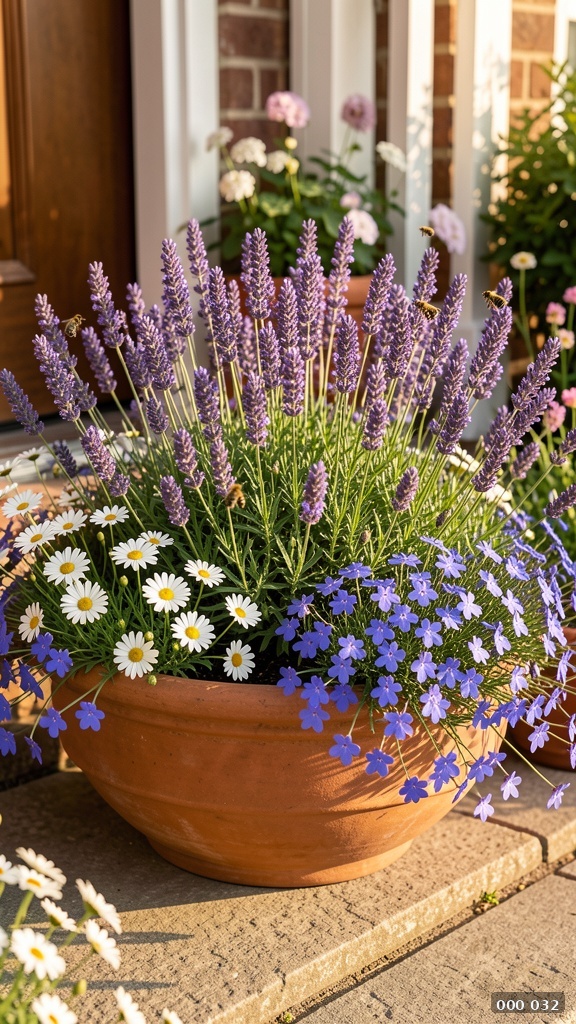
A wide terracotta bowl packed with lavender center stage, white daisies clustered around, and blue lobelia spilling over the rim. The purple-white-blue palette is classic cottage. Bees work the lavender all morning.
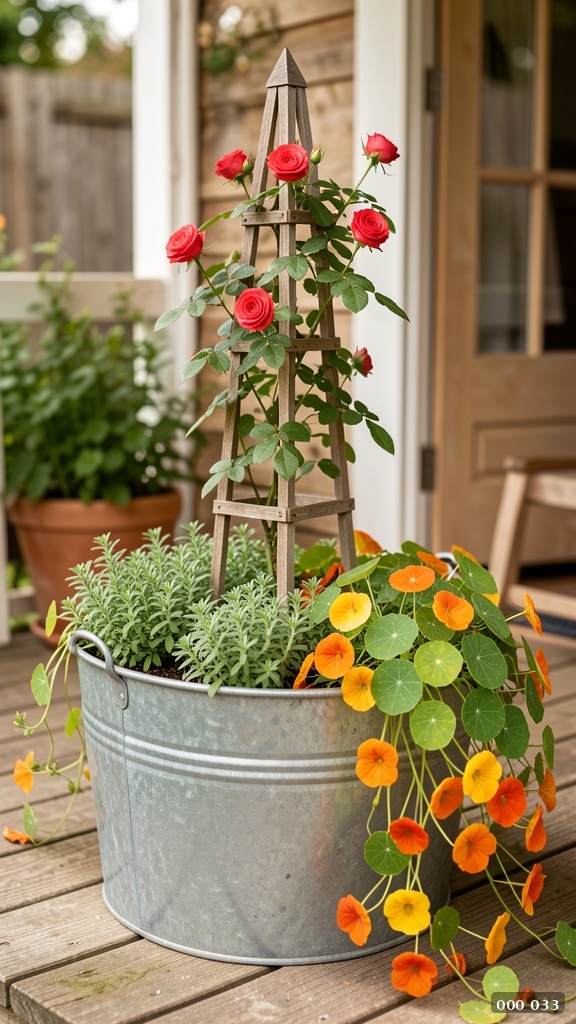
A galvanized metal tub with climbing rose trained on a small obelisk, catmint at the base, and trailing nasturtium in orange and yellow spilling down the sides. Rustic, romantic, and fragrant.
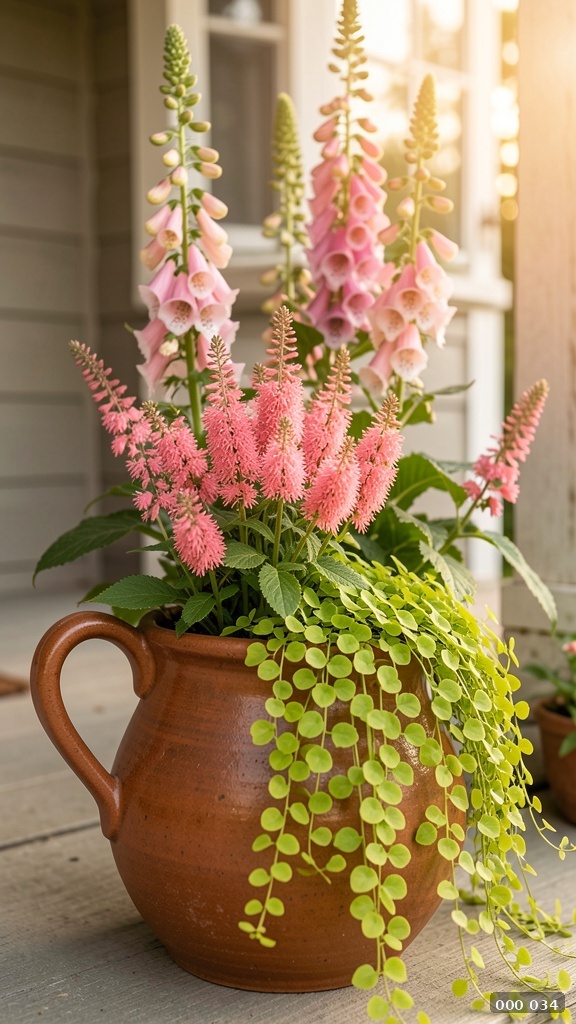
A ceramic pitcher-shaped pot with foxglove rising tall in back, coral bells in pink in the middle, and creeping jenny chartreuse trailing over the front. A miniature cottage border in one pot.
Overflowing Clusters
Grouped pots on steps and corners — each pot a different cottage flower, together forming a layered cottage border.
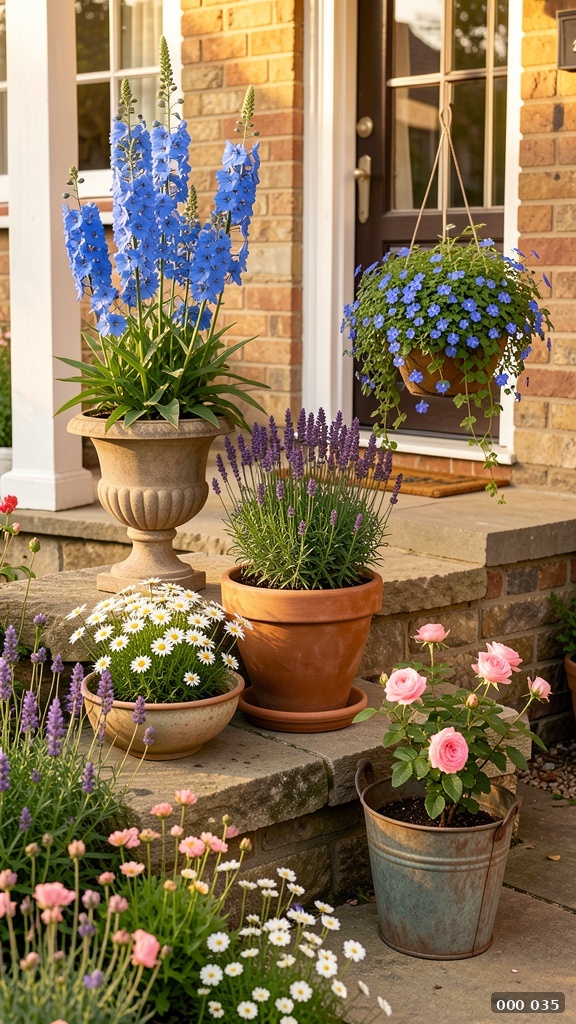
Five pots clustered on porch steps: tall delphinium in a tall urn, medium lavender in terracotta, low daisy in a bowl, trailing lobelia in a hanging pot, and a small rose bush in a bucket. A cottage border in miniature.
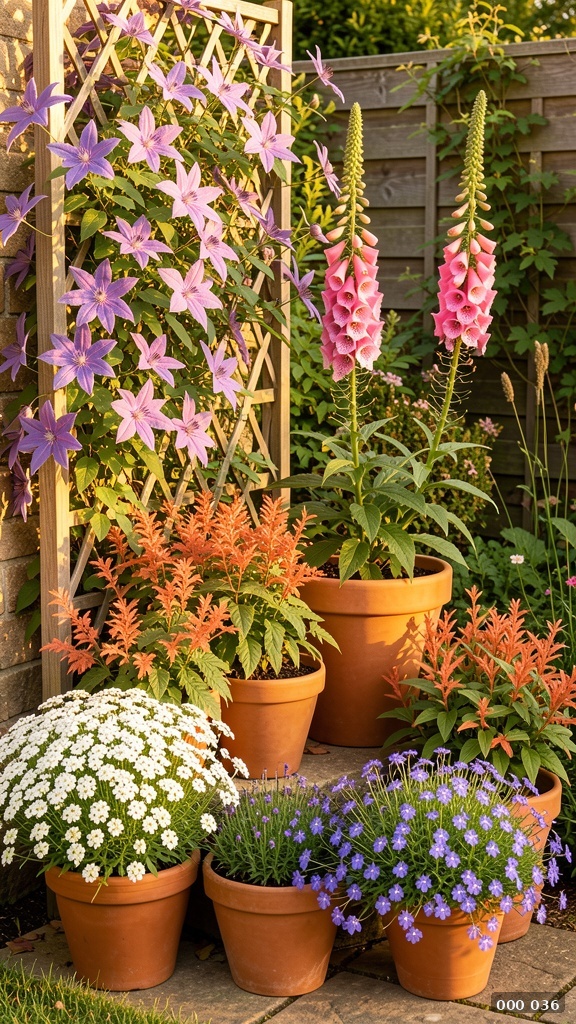
A corner cluster: climbing clematis on a trellis, foxglove in a tall pot, coral bells in midsize pots, and alyssum and lobelia trailing from smaller pots at the base. Layered heights create depth from street view.
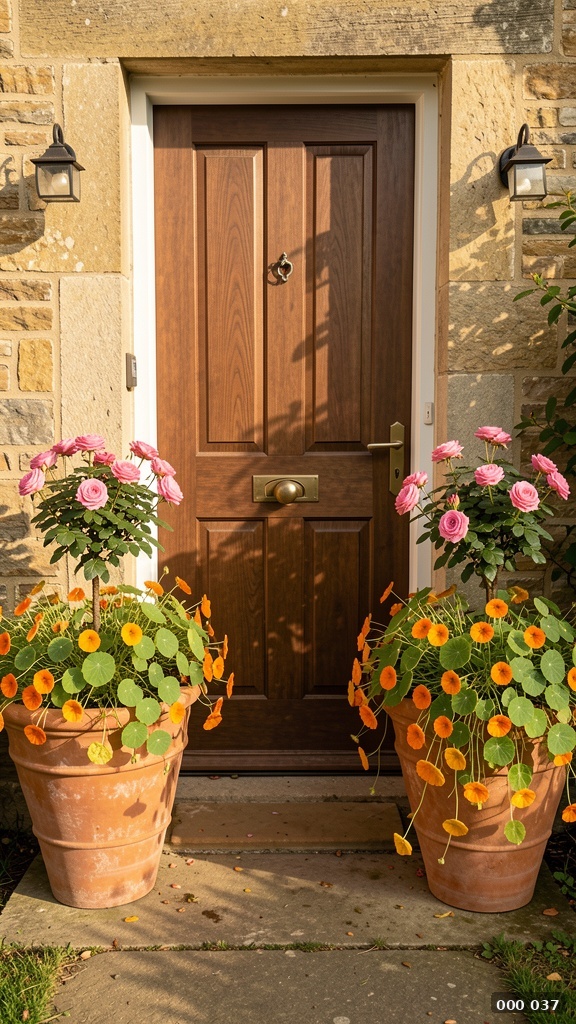
Matching terracotta pots flanking the door, each with a miniature rose bush and cascading nasturtium. The symmetry is softened by the overflowing wild growth — formal structure with cottage execution.
Cottage Vertical
Vertical cottage elements — climbing roses, hanging baskets, and wall-mounted blooms — fill the air with color and fragrance.
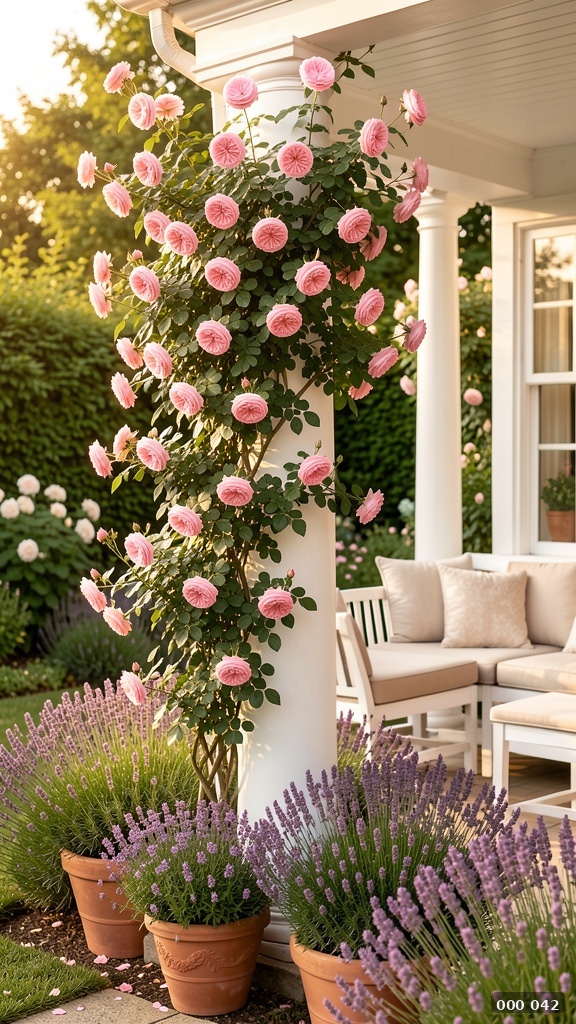
A climbing rose trained up a porch column, with lavender pots at the base. Roses bloom in pink clusters above head height while lavender perfumes the seating area below. Vertical layering at its most romantic.
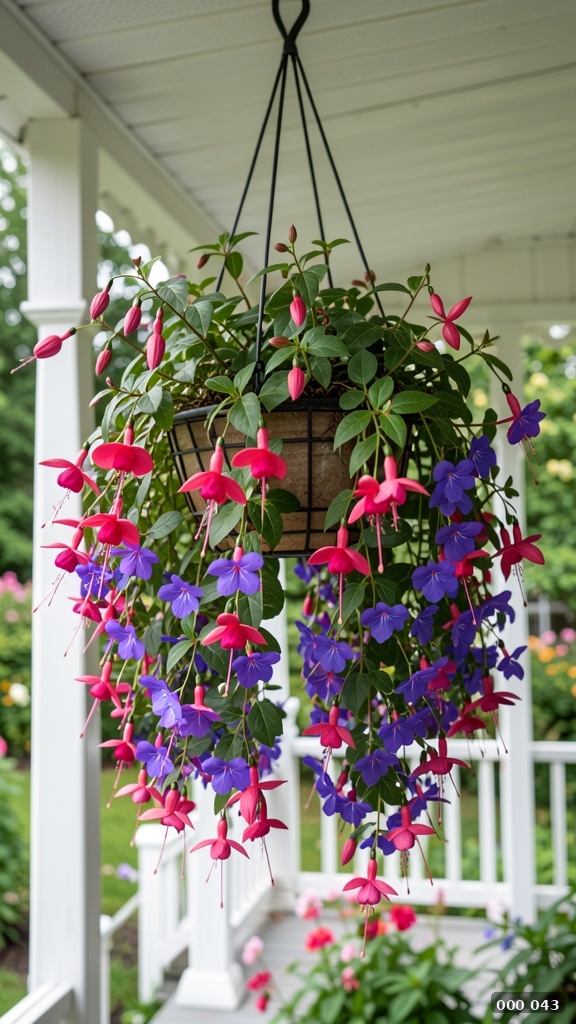
A hanging wire basket filled with trailing fuchsia and lobelia — pendulous pink and purple blooms at eye level. Fuchsia thrives in part shade, making it perfect for covered porches with indirect light.
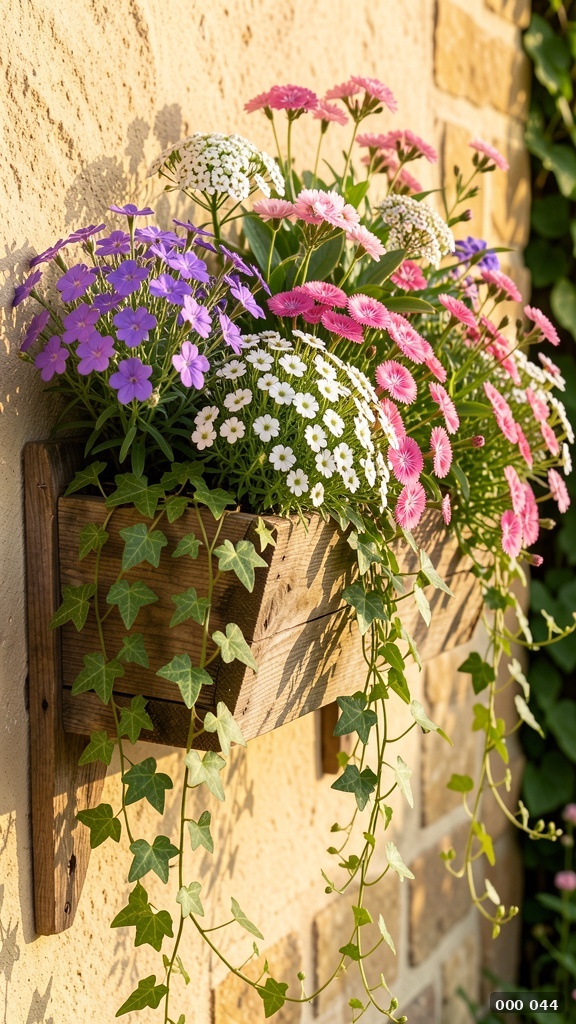
A wall-mounted trough planter with mixed cottage annuals: verbena, alyssum, dianthus, and trailing ivy. The dense planting creates a living tapestry against the wall. Snip verbena for tiny bouquets.
Panorama
When the cottage bowl anchors the doorstep and blooms climb every surface — your porch becomes an English garden in miniature.
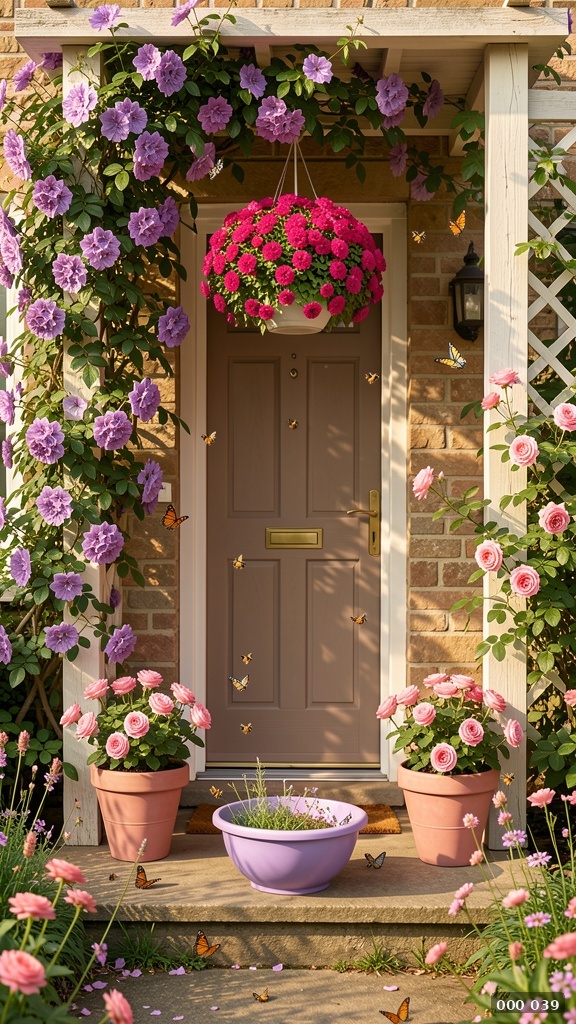
A lavender bowl at the doorstep, rose pots flanking the door, clematis climbing a trellis, fuchsia hanging above. Bees buzz, butterflies visit, fragrance wraps around you like a warm blanket.
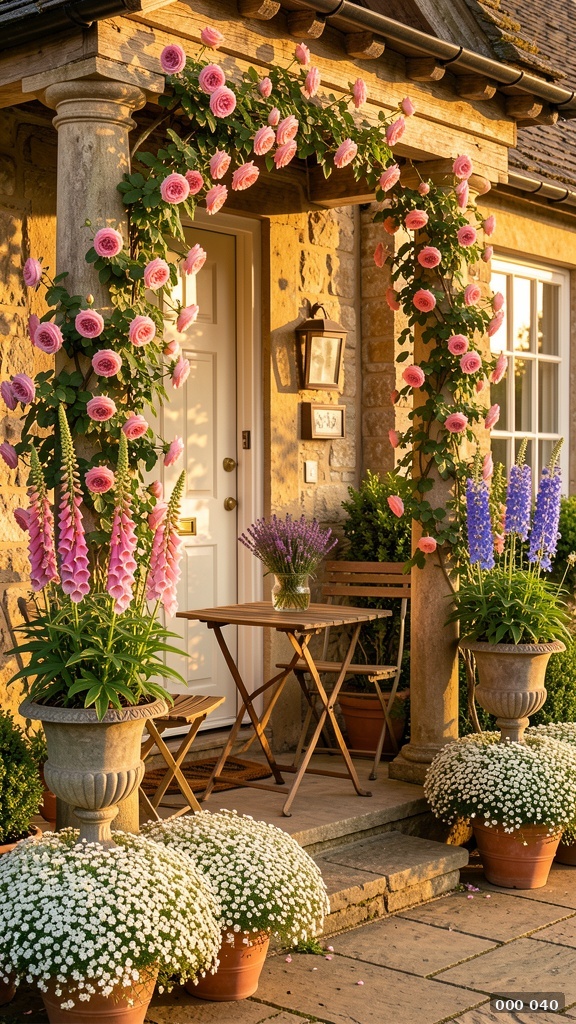
Romantic cottage: climbing roses on both columns, foxglove and delphinium in tall urns, alyssum carpeting the lower pots. A small bistro table with lavender completes the scene. Straight from the Cotswolds.
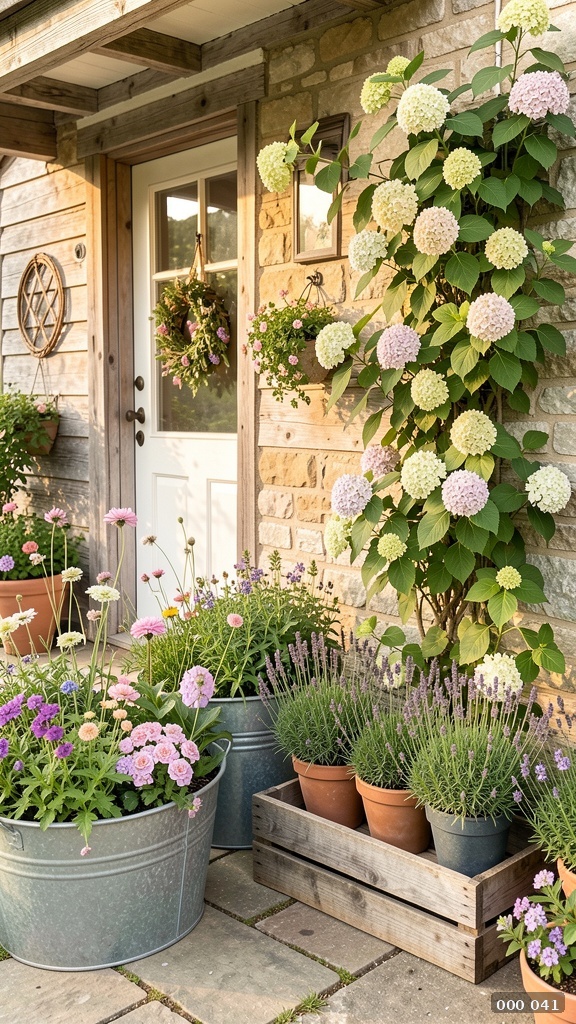
Rustic farmhouse: galvanized tubs with annuals, a wooden crate holding three pots of lavender, climbing hydrangea on the wall. Weathered textures, soft colors, comfortable chaos of a well-loved garden.
Plant Care
Keep your porch arrangement looking its best with these simple maintenance tips.
Watering
Water cottage pots daily in summer — dense planting means lots of competition for moisture. Check twice daily in heat waves. Morning watering with soaker hoses is ideal.
Light
Most cottage plants need full sun (6+ hours). Fuchsia and impatiens work for shade porches. Roses need at least 6 hours direct sun for best blooming.
Pruning
Deadhead spent blooms daily — cottage gardens look messy naturally but deadheading keeps them blooming. Cut back lavender after flowering. Trim climbing roses in late winter.
Seasonal
Spring: plant annuals after last frost. Summer: deadhead and water daily. Fall: cut back perennials, add late bloomers like aster. Winter: protect terracotta from freeze with covers.
FAQ
What plants create a cottage garden look?
Lavender, roses, foxglove, delphinium, daisy, catmint, nasturtium, lobelia, coral bells, and verbena. Pack them tightly and let them overlap for the authentic cottage look.
How do I keep cottage pots from looking messy?
Cottage gardens are supposed to look abundant — the trick is editing. Remove dead leaves and spent blooms daily. Let plants touch but don’t let one completely smother its neighbor.
Can I do cottage garden on a small porch?
Absolutely — use vertical space. A climbing rose on a trellis takes almost no floor space. Hanging baskets of fuchsia and lobelia. Small pots of lavender on windowsills.
What colors work in a cottage garden?
All of them — but stick to a loose palette: pink, purple, blue, white, and soft yellow. Avoid hot colors unless going for a wild cottage mix.
Do cottage gardens need fertilizer?
Yes — dense planting depletes soil quickly. Use balanced liquid fertilizer every two weeks during growing season. Add compost to potting mix at planting time.
What pots work for cottage style?
Weathered terracotta, galvanized metal, wooden crates, and ceramic in earthy tones. Avoid modern sleek containers — cottage is about warmth and imperfection.
How to make cottage pots last all season?
Plant in succession: spring bulbs first, then summer annuals, then fall asters. Deadhead continuously. Replace tired annuals with fresh ones in late summer.
Best fragrant plants for cottage porch?
Lavender (English or French), climbing rose (David Austin varieties), catmint, heliotrope, and sweet alyssum. Place fragrant plants near seating areas.
Related
Download the Complete Design Checklist
Get a printable PDF with plant recommendations, container sizes, and a full maintenance calendar — ready for the garden center.